





16 min read
Introduction
Ghana’s retail market is big. Estimates put it somewhere between $33 billion and $37 billion in recent years, with projections pointing toward $60 billion or more by the early 2030s . On paper, that is a massive opportunity. A young population, growing urbanization, and falling inflation should mean more people buying more things.
But walk through the markets and malls of Accra, and the picture is more complicated.
Key Takeaways
- Yet the same association is raising alarm about Chinese-owned shopping malls, which it claims now control about 60 percent of the retail market .
- In 2026, Melcom launched the NOW app, promising 20-minute delivery in Accra—a direct challenge to both Jumia and informal convenience .
- GUTA claims Chinese-owned malls control about 60% of the retail market, undercutting local traders with lower prices and repatriating profits outside Ghana .
The Ghana Union of Traders’ Associations (GUTA) says 2026 has been “relatively good” for traders, thanks to improvements in the economy . Yet the same association is raising alarm about Chinese-owned shopping malls, which it claims now control about 60 percent of the retail market . Local traders operating from small shops and tabletop stalls are finding it harder to compete. Meanwhile, Melcom—the Ghanaian retail giant with 65 stores—is launching a 20-minute delivery app, betting that the future belongs to whoever can move goods fastest . And Jumia, the online marketplace, is fighting its own battle against trust and logistics problems that have slowed e-commerce across Africa .
This ASJ article explains how Ghana’s retail industry actually works. It covers who the major players are, how they make money, the forces reshaping consumer behavior, the challenges that keep prices high and margins thin, and why all of this matters to the ordinary Ghanaian who just wants to buy what they need at a fair price.
Background: From Open Markets to Shopping Malls
Ghana’s retail sector has traditionally been dominated by informal trade. Open-air markets like Makola in Accra and Kejetia in Kumasi are the beating heart of commerce. Tabletop sellers, hawkers, and small corner shops serve the majority of Ghanaians, especially for food and everyday essentials.
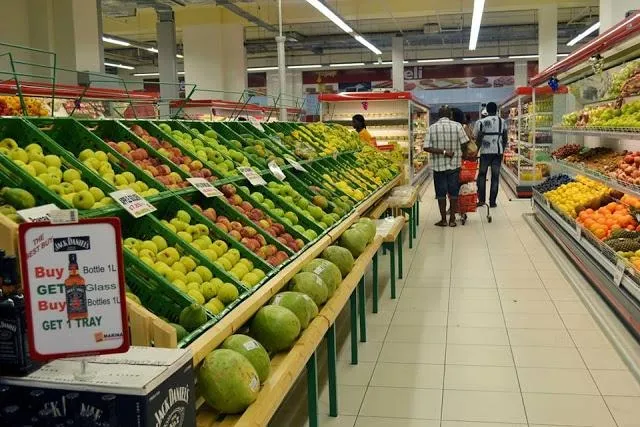
The formal retail sector—supermarkets, malls, and chain stores—is much smaller, but it has been growing. The arrival of shopping mall culture, with places like Accra Mall, West Hills Mall, and Kumasi City Mall, introduced global brands, food courts, and air-conditioned shopping to a segment of the population that could afford it . Melcom, founded in 1989, expanded steadily across the country, becoming a household name synonymous with “where Ghana shops” .
But the formal sector still serves a minority. The USDA’s Foreign Agricultural Service notes that Ghana’s food market is split between low-income consumers who rely on informal channels for staples, and middle-income consumers who seek out value-added products in supermarkets but still sometimes prefer open markets for staple foods . This segmentation is key to understanding everything about Ghanaian retail: there is not one market, there are several, and they operate by different rules.
How the Retail Business Works
Retail in Ghana is a chain of businesses, each with its own economics.
Sourcing and supply. Retailers buy goods from manufacturers, importers, or wholesalers. For local products like Kasapreko beverages or Melcom’s own plastics and electronics, the supply chain is domestic. For imported goods—which make up a large share of what formal retailers sell—the cedi’s value against the dollar directly affects costs. When the cedi weakens, imported goods become more expensive, squeezing margins or forcing price increases.
Distribution. Getting goods from warehouse to shelf is a logistical challenge. In major cities like Accra, Kumasi, Takoradi, and Tamale, distribution is relatively quick and reliable. Outside these centers, infrastructure is less developed, and retailers must decide whether the cost of reaching remote areas is worth the potential sales . Kasapreko’s distribution network, which reaches all 16 regions and 14 export markets, is a competitive advantage that few can replicate .

The selling floor. This is where the different retail models diverge. Informal traders sell from stalls, tables, or small shops, with low overheads and personal relationships with customers. Formal retailers operate supermarkets and malls, with higher costs for rent, staff, electricity, and compliance. Online platforms like Jumia connect sellers to buyers through a marketplace model, but they must solve payment and delivery problems that physical retailers do not face .
How the money flows. Retailers earn a margin—the difference between what they pay for goods and what they sell them for. In the informal sector, margins are often thin, volumes are small, and cash flow is king. In the formal sector, margins are higher but so are costs. The most successful players are those who can control their supply chains, negotiate better prices, and operate efficiently.

Who pays. Consumers pay. But the price they pay reflects everything in the chain: import duties, transport costs, rent, electricity, staff salaries, and the retailer’s margin. When any of these rise, prices rise. When the cedi falls, prices rise. When inflation is high—even if it is falling—prices do not automatically come down .
The Major Players
Ghana’s retail landscape is shaped by a mix of local giants, foreign entrants, and informal traders.
Melcom Group. This is the dominant local retailer. Founded in 1989, Melcom now operates 65 stores with 1.7 million square feet of retail space . It has pursued backward integration, manufacturing its own plastics and electronics through Century Industries and Crownstar Electronics, which reduces its dependence on imports and protects its margins . In 2026, Melcom launched the NOW app, promising 20-minute delivery in Accra—a direct challenge to both Jumia and informal convenience . Melcom’s strength is its physical footprint and brand trust. Its weakness is that it is not the cheapest option; open markets will always undercut formal retail on price.
Jumia Ghana. The largest online marketplace, selling electronics, fashion, and groceries . Jumia’s model is a marketplace: it provides the platform, logistics, and payment infrastructure, while third-party sellers provide the products . The challenge has been trust (many Ghanaians want to see products before buying), payment (cash on delivery remains dominant, which increases costs), and logistics (delivery times are measured in days, not hours) . Jumia’s advantage is reach and convenience. Its weakness is the same as e-commerce across Africa: the last mile is expensive and slow.
Chinese-owned shopping malls. GUTA claims these malls now hold 60 percent of the market . Whether that figure is precise or not, the concern is real. These malls benefit from bulk purchasing power, low pricing, and often direct relationships with Chinese manufacturers. Local corner shops, operating on thin margins, struggle to compete . The profits, GUTA argues, are repatriated outside Ghana, rather than circulating in the local economy .
Kasapreko. Not a retailer, but a manufacturer whose distribution model offers lessons. Kasapreko’s beverages, including Alomo Bitters, reach all 16 regions of Ghana and 14 export markets. Its FY-2024 revenue grew 45 percent to GHS 2.7 billion, with net profit surging 574 percent . The lesson: distribution is a moat. Anyone can brew a drink; not everyone can get it to every corner shop in the country.
Foreign retailers. Shoprite, the South African grocery chain, has had a presence in Ghana but has struggled to make the model work at scale. The USDA notes that multinational retailers cannot simply transplant their models and expect to win; local players who understand the terrain have advantages that cannot be replicated quickly .
The Forces Reshaping Consumer Behavior
Several forces are changing how Ghanaians shop, and they are reshaping the retail industry in the process.
Falling inflation, but not falling prices. Ghana’s inflation fell dramatically in 2025 and 2026, reaching 3.2 percent in March 2026 . But as ISSER economist Professor Fred Dzanku explained, lower inflation does not mean lower prices. A bag of rice that cost GH¢500 two years ago might now cost GH¢510 or GH¢520, rather than GH¢600. The price has not fallen; it is just rising more slowly . For households with stagnant incomes, this is cold comfort. Consumer purchasing power remains constrained, and retailers must operate in a market where customers are extremely price-sensitive .
The services squeeze. While goods inflation has fallen, services inflation has risen. In March 2026, services inflation was 7.2 percent, nearly double the previous month, driven by housing, utilities, and private education fees . For retailers, this means higher operating costs—rent, electricity, transport—even as their customers struggle with their own rising bills. The squeeze on margins is real.

Mobile money and digital payments. Mobile money is the backbone of how Ghanaians pay for things, including online. Roughly half of online payment activity runs through mobile money, with MTN MoMo holding an estimated 73 percent share. Cash on delivery makes up most of the other half . For retailers, this means payment infrastructure is not the main barrier; the barriers are logistics and trust.
Social media as a shopping channel. WhatsApp is used by 90 percent of social media users in Ghana, and it has become a tool for business, customer service, and product promotion. Instagram (65 percent) is a channel for influencer marketing and direct sales. TikTok (60 percent) is growing fast among young people, with viral trends directly driving sales . For small retailers and informal traders, social media offers a way to reach customers beyond their physical location without building a website.
The quick-commerce challenge. Melcom’s NOW app, with its 20-minute delivery promise, sets a new standard. If a customer can get groceries delivered in 20 minutes, the convenience of walking to the market or waiting days for an online order becomes less attractive . Whether Melcom can execute at scale remains to be seen, but the ambition signals where the market is heading: speed and convenience are becoming competitive battlegrounds.
Challenges
The retail sector faces obstacles that are structural and not easily solved.
The informal vs. formal divide. Most retail in Ghana is informal. Formal retailers must compete with informal traders who have lower overheads, pay less tax, and operate with greater flexibility. This is not a level playing field, and it shapes everything from pricing to location strategy.
Import dependence. Many of the goods sold in formal retail are imported. This exposes retailers to exchange rate risk. When the cedi weakens, costs rise. Melcom’s backward integration strategy—manufacturing its own plastics and electronics—is a response to this vulnerability .
Logistics and last-mile delivery. Outside major cities, distribution is slow and expensive. For e-commerce, the challenge is even greater. Jumia and other online platforms must deliver to customers who may live on unpaved roads, without reliable addresses, and who expect cash-on-delivery options . Solving this requires investment in logistics infrastructure that is expensive and slow to build.
Consumer trust. Many Ghanaians prefer to see and touch products before buying. This is a cultural barrier to e-commerce that will take time and consistent positive experiences to overcome. Sellers who invest in clear communication, realistic delivery windows, and responsive customer service can build trust, but it is a slow process.
Competition from foreign-owned malls. GUTA’s concern about Chinese malls is not just about market share. It is about the structure of the economy. When profits are repatriated rather than reinvested locally, the multiplier effects are weaker. Local retailers who source locally, employ locally, and spend locally contribute more to the domestic economy . But protecting local retailers without making consumers pay higher prices is a difficult balance.
Stagnant incomes. The fundamental problem is that many Ghanaians do not earn enough to buy more than the basics. Professor Dzanku’s point is crucial: if incomes are not rising at the same rate as prices, households are worse off even if inflation is lower . Retailers can only sell what people can afford to buy.
Why It Matters to Ordinary Ghanaians
Retail is where the economy meets daily life. What happens in the sector affects everyone.
Prices. Retail competition—or the lack of it—determines what people pay for food, clothing, electronics, and household goods. When Chinese malls undercut local traders, prices may be lower in the short term, but local businesses may close, reducing competition and choice in the long term. When formal retailers face high costs, those costs are passed on to customers.
Jobs. Retail employs thousands of Ghanaians, from market traders to supermarket cashiers to delivery riders. The shift toward formal retail and e-commerce creates new types of jobs but also displaces old ones. A delivery rider for Melcom’s NOW app has a different job than a tabletop seller in Makola, and the transition is not always smooth.
Convenience. For busy professionals, for the elderly, for people in areas with limited shops, e-commerce and quick-commerce offer real improvements in daily life. The ability to order groceries and have them delivered in 20 minutes is not a luxury for everyone; it can be a necessity.
The local economy. When Ghanaians buy from locally owned businesses, more of the money stays in the country. When they buy from foreign-owned malls, profits may leave. This is not about xenophobia; it is about the circulation of money within the economy. A cedi spent at a Ghanaian-owned shop is more likely to pay a Ghanaian salary, which is more likely to be spent at another Ghanaian business.
The future of work. Retail is changing. The skills that matter—digital literacy, customer service, logistics management—are different from those that sustained informal trade for generations. Young Ghanaians entering the workforce need to be prepared for the retail economy that is emerging, not the one that existed twenty years ago.
Future Outlook
The direction of Ghana’s retail sector is becoming clearer. The question is who will capture the growth.
If current trends continue, formal retail will grow, but informal trade will remain dominant for staples and price-sensitive consumers. E-commerce will expand, driven by mobile money and improving logistics, but it will remain a small share of total retail. Melcom will defend its physical dominance while building its digital business. Jumia will fight for market share in a crowded online space. Chinese malls will continue to expand, unless regulation changes.
The risks are significant. If the cedi depreciates sharply, import-dependent retailers will face margin pressure. If consumer incomes remain stagnant, price sensitivity will intensify. If logistics do not improve, e-commerce will underperform its potential. And if local retailers are squeezed out by foreign competition, the structure of the sector will shift in ways that may not benefit Ghanaian workers and entrepreneurs.
The opportunities are also real. Ghana’s young, urbanizing population is a growing market. Mobile money adoption makes digital payments accessible. Social media offers low-cost marketing channels. And the African Continental Free Trade Area could open new markets for Ghanaian retailers and manufacturers.
The most likely scenario is a retail sector that becomes more formalized and more digital, but slowly and unevenly. Melcom’s NOW app may succeed in Accra but struggle elsewhere. Jumia may grow but not dominate. Chinese malls may face regulatory scrutiny but continue to operate. And the informal sector—the market women, the tabletop sellers, the corner shops—will remain the backbone of Ghanaian retail for years to come.
The wild card is consumer income growth. If the economy creates enough jobs and raises household incomes, the retail sector will boom. If it does not, retailers will continue to fight over a market where most customers can only afford the basics.
ASJ Conclusion
Ghana’s retail industry is a story of contrasts. It is worth tens of billions of dollars, yet most of it operates in the informal economy. It has homegrown giants like Melcom and Kasapreko, yet foreign-owned malls are capturing a growing share. It has falling inflation, yet consumers still feel squeezed. It has digital platforms and 20-minute delivery ambitions, yet trust and logistics remain barriers that no app can solve overnight.
For ordinary Ghanaians, retail is not an abstraction. It is where they buy their food, clothes, and phones. It is where they work, or hope to work. It is where the economy’s health is felt most directly—in prices, in choices, in the quality of what is available and the convenience of getting it.
The businesses that shape Ghana’s retail future will be those that can navigate these contradictions: controlling costs while keeping prices affordable, building digital capabilities while respecting the enduring power of physical markets, and competing with foreign entrants while earning the loyalty of Ghanaian consumers.
Melcom’s bet on quick commerce, Jumia’s fight for e-commerce trust, Kasapreko’s distribution moat, and the informal trader’s resilience—these are the threads that will weave the next chapter of Ghana’s consumer economy. How it unfolds will determine not just who profits, but what daily life looks like for millions of Ghanaians.
Quick Facts
Topic: Ghana’s Retail Industry
Market Size (2025 estimate): $33–37 billion
**Projected Size (2033):** ~$62 billion
Inflation (March 2026): 3.2%
Services Inflation (March 2026): 7.2%
Dominant Payment (Online): Mobile money (~50%), Cash on Delivery (~50%)
Melcom Stores: 65
Chinese Mall Market Share (GUTA claim): ~60%
Kasapreko Revenue (FY2024): GHS 2.7 billion
Key Challenge: Stagnant consumer incomes, import dependence, informal vs formal competition
Key Opportunity: Young urban population, mobile money adoption, quick commerce
FAQ Section
1. How big is Ghana’s retail market?
Estimates vary, but the market was valued at roughly $33–37 billion in recent years, with projections reaching $60 billion or more by the early 2030s .
2. Who is the biggest retailer in Ghana?
Melcom Group is the dominant local retailer, with 65 stores across the country and a growing digital presence through its NOW app .
3. Why are Chinese shopping malls a concern?
GUTA claims Chinese-owned malls control about 60% of the retail market, undercutting local traders with lower prices and repatriating profits outside Ghana .
4. Is e-commerce growing in Ghana?
Yes, but from a small base. The market is estimated at $1–1.65 billion in 2025, with mobile money driving online payments. Trust and logistics remain barriers .
5. Why is inflation falling but prices are still high?
Falling inflation means prices are rising more slowly, not that they are going down. A bag of rice that cost GH¢500 may now cost GH¢520—higher, but less than it would have been without disinflation .
6. What is Melcom’s NOW app?
A quick-commerce platform launched in 2026 promising 20-minute delivery of groceries and essentials in Accra, directly challenging Jumia and informal convenience .
7. How do Ghanaians pay for online purchases?
Mobile money (especially MTN MoMo) accounts for roughly half of online payments. Cash on delivery makes up most of the other half .
8. What happened to Shoprite in Ghana?
Shoprite has struggled to make its model work at scale in Ghana, reflecting the challenges multinational retailers face competing with local players who understand the market .
9. What is Kasapreko’s advantage?
Distribution. Kasapreko’s beverages reach all 16 regions of Ghana and 14 export markets, a network that is difficult and expensive to replicate .
10. Will formal retail replace open markets in Ghana?
Unlikely in the near term. Informal trade remains dominant for staples and price-sensitive consumers. Formal retail is growing but serves a minority of the market .
11. What are the biggest challenges for retailers in Ghana?
Import dependence, exchange rate risk, logistics outside major cities, stagnant consumer incomes, and competition from both informal traders and foreign-owned malls.
12. How does retail affect ordinary Ghanaians?
Retail determines prices, product availability, and convenience. It also provides jobs and shapes how money circulates in the local economy.
Source: Accra Street Journal
Last Updated on November 20, 2026 by Samuel Kwame Boadu
Disclaimer: Some content on Accra Street Journal may be aggregated, summarized, or edited from third-party sources for informational purposes. Images and media are used under fair use or royalty-free licenses. Accra Street Journal is a subsidiary of SamBoad Publishing Hub under SamBoad Business Group Ltd, registered in Ghana since 2014.
For concerns or inquiries, please visit our Privacy Policy or Contact Page.

Samuel Kwame Boadu is a Ghanaian media entrepreneur and storyteller with a passion for amplifying urban voices and uncovering everyday truths. He is the Editor-in-Chief and Founder of Accra Street Journal, a dynamic digital platform dedicated to capturing the pulse of Ghana’s capital—its people, culture, challenges, business, sports and innovations.
Use the following reference when citing or referencing this article.
Your feedback helps us improve our journalism.
Report an Error
Help us maintain accuracy. Let our editorial team know if you spot an issue in this article.
Report a problem with this article