







4 min read
Dr Alhassan Iddrisu has called for permanent budget allocations for data production across all Ministries, Departments and Agencies, arguing that dependence on short-term donor-funded statistical projects leaves Ghana’s evidence base fragile and its policymaking exposed to guesswork.
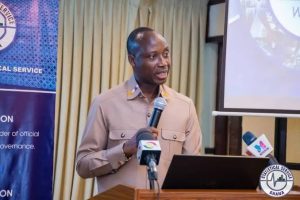
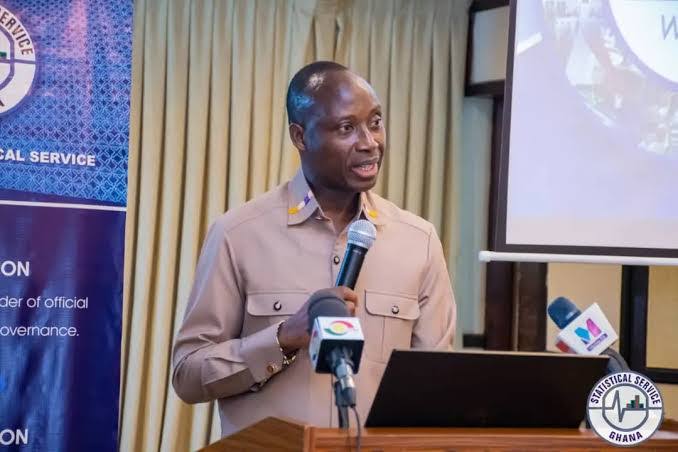
The Government Statistician, Dr Alhassan Iddrisu, has called on the government to introduce dedicated budget allocations for data production across all Ministries, Departments and Agencies (MDAs) to strengthen evidence-based policymaking and national development planning.
Key Takeaways
- He said predictable government funding would reduce MDAs' reliance on donor-funded statistical projects, which were often short-term and unsustainable, and establish data production as a permanent institutional responsibility.
- He appealed to Dr Evans Aggrey-Darkoh, Head of the Civil Service and Special Guest of Honour, to support the proposal for implementation in the 2027 Budget or, alternatively, the 2028 fiscal year.
- Dr Iddrisu said dedicated funding would require public institutions to incorporate data production, management and utilisation into their annual plans, while making Chief Directors accountable for investments in generating usable statistics.
He said predictable government funding would reduce MDAs’ reliance on donor-funded statistical projects, which were often short-term and unsustainable, and establish data production as a permanent institutional responsibility.
The Forum
Dr Iddrisu made the call at the 2026 Annual Forum for Data Producers, Users and Enhancers in Accra, held on the theme: “From Data to Impact: Strengthening the Data Value Chain through Data Governance, Partnerships and Sustainable Financing.”
He said reliable and timely statistics were critical for effective resource allocation, tracking development outcomes and ensuring that government decisions addressed the actual needs of the population.
The Budget Ask
He appealed to Dr Evans Aggrey-Darkoh, Head of the Civil Service and Special Guest of Honour, to support the proposal for implementation in the 2027 Budget or, alternatively, the 2028 fiscal year.
Dr Iddrisu said dedicated funding would require public institutions to incorporate data production, management and utilisation into their annual plans, while making Chief Directors accountable for investments in generating usable statistics.
He explained that the proposal was part of efforts to establish predictable, sustainable and nationally owned financing for Ghana’s statistical system, rather than depending on donor support and temporary projects.
The Water Supply Analogy
Using an analogy of water supply, he said data was collected at its source, cleaned, safely stored and distributed to users, while data governance ensured its quality, partnerships provided the channels for its distribution and financing sustained the entire process.
“If any one of these three elements is removed, the tap runs dry, funding disappears, and decisions are left to guesswork,” he said.

That framing captures a genuine structural weakness. Ghana’s statistical system has produced increasingly sophisticated outputs in recent years — the monthly economic growth indicator, the rebased GDP series, the financial inclusion surveys — but much of that capacity has been built through project financing tied to specific donor programmes. When a project ends, the survey series often ends with it.
Recognition and Endorsement
Dr Iddrisu expressed appreciation to the government, through the Ministry of Finance, for its continued support to the Ghana Statistical Service (GSS), but stressed the need for increased investment to sustain the broader national statistical system.

Dr Aggrey-Darkoh endorsed the proposal, saying the production of quality statistics required consistent investment in human resources, technology, infrastructure, data collection and dissemination.
He said statistical activities could not depend solely on irregular donor-funded projects but required predictable and adequate financing to ensure continuity and reliability.
The Accountability Mechanism
The proposal’s most consequential element is not the money but the accountability structure attached to it. By making Chief Directors responsible for data investments within their annual plans, the reform would shift statistics from a specialist function performed by the GSS on behalf of others into a mainstream management obligation across government.
That matters because the weakest link in Ghana’s data value chain is often not the central statistical office but the sector ministries that hold administrative data — health records, education enrolment, agricultural extension figures — and frequently fail to compile or share them in usable form.
Quick Facts
Government Statistician Dr Alhassan Iddrisu has called for dedicated budget allocations for data production across all MDAs, arguing that dependence on short-term donor-funded statistical projects undermines evidence-based policymaking, speaking at the 2026 Annual Forum for Data Producers, Users and Enhancers in Accra under the theme “From Data to Impact.”
He asked Dr Evans Aggrey-Darkoh, Head of the Civil Service, to back the proposal for the 2027 Budget or 2028 fiscal year, with dedicated funding requiring institutions to incorporate data production into annual plans and making Chief Directors accountable for statistics investments.
Using a water supply analogy, he warned that removing data governance, partnerships or financing means “the tap runs dry, funding disappears, and decisions are left to guesswork.” Dr Aggrey-Darkoh endorsed the proposal, stressing the need for predictable financing across human resources, technology, infrastructure, collection and dissemination rather than irregular donor projects.
Source: Accra Street Journal
Last Updated on November 21, 2026 by Samuel Kwame Boadu
Disclaimer: Some content on Accra Street Journal may be aggregated, summarized, or edited from third-party sources for informational purposes. Images and media are used under fair use or royalty-free licenses. Accra Street Journal is a subsidiary of SamBoad Publishing Hub under SamBoad Business Group Ltd, registered in Ghana since 2014.

For concerns or inquiries, please visit our Privacy Policy or Contact Page.

Samuel Kwame Boadu is a Ghanaian media entrepreneur and storyteller with a passion for amplifying urban voices and uncovering everyday truths. He is the Editor-in-Chief and Founder of Accra Street Journal, a dynamic digital platform dedicated to capturing the pulse of Ghana’s capital—its people, culture, challenges, business, sports and innovations.
Use the following reference when citing or referencing this article.
Your feedback helps us improve our journalism.
Report an Error
Help us maintain accuracy. Let our editorial team know if you spot an issue in this article.
Report a problem with this article