





15 min read
Introduction
Ghana’s development challenges are often discussed in terms of what government must do. Build more roads. Fix the energy sector. Improve healthcare. But there is another side to the equation that gets far less attention: what citizens must do, and what happens when they are excluded from the decisions that shape their lives.
The National Commission for Civic Education’s own planning documents rank “weak citizen participation in governance, and fragile national cohesion” as the number one prioritised development issue facing the country . That is a striking admission. It sits above corruption, above security threats, above environmental degradation. The institutions responsible for building civic awareness are saying, in effect, that the foundation of Ghana’s development—an engaged, informed citizenry—is not yet strong enough.
Key Takeaways
- The National Commission for Civic Education's own planning documents rank "weak citizen participation in governance, and fragile national cohesion" as the number one prioritised development issue facing the country .
- In 2023 alone, the NCCE held over 110,000 public education activities, reaching approximately 13.8 million citizens through face-to-face engagements, not counting media and social media outreach .
- Article 41 of the 1992 Constitution sets out 11 duties, including respecting national symbols, upholding the Constitution, respecting others' rights, working conscientiously, paying taxes honestly, protecting public property, and safeguarding the environment .
This article explains why civic engagement matters, what the evidence says about its current state in Ghana, and what is being done to strengthen it. It covers the legal framework for public consultation, the work of the NCCE, the reality of social auditing, and the responsibilities that come with citizenship. It is written for anyone who wants to understand why development is not just a government job.
The Legal Framework: What the Law Says About Participation
Ghana’s laws do not leave citizen participation to chance. There are specific regulations that require public consultation before certain decisions are made.
The Local Governance (Consultations) Regulations, 2020 (L.I. 2406) sets out clear rules for District Assemblies. Before granting a permit for facilities like waste disposal sites, mortuaries, fuel stations, or mining operations, the Assembly must hold a public consultation with the affected community . It must also consult before revising the rates it charges for services.
The regulations specify how consultation should happen. Notice must be given at least fourteen days in advance, posted on the Assembly’s website and notice board, circulated at local information centres, announced by information vans, and even communicated by “beating the gong gong” where applicable . The people required to attend include representatives of traditional authorities, community-based organisations, women’s groups, youth associations, and persons with disabilities. The proceedings must be recorded, including the concerns and recommendations raised.
This is a strong legal framework on paper. It recognises that decisions about local facilities and fees affect people directly, and that those people have a right to be heard before the decision is made. But laws only matter if they are implemented. And the gap between what the regulations say and what happens in practice is where the real story of civic engagement in Ghana lies.
The NCCE: The Institution Behind Civic Education
The National Commission for Civic Education is the body charged with educating Ghanaians about their rights, responsibilities, and the Constitution. Its mandate comes from the 1992 Constitution, and it operates through sixteen regional offices and offices in over 260 districts .
The scale of its work is significant. In 2023 alone, the NCCE held over 110,000 public education activities, reaching approximately 13.8 million citizens through face-to-face engagements, not counting media and social media outreach . The focus of that work includes local governance participation, voter education, conflict prevention, and constitutional awareness.
But the NCCE’s own SWOT analysis reveals serious constraints. Chronic underfunding is the most persistent problem, with inadequate budgetary allocations and delayed releases of funds. The Commission relies heavily on donor support for its flagship programmes. It has limited vehicles, ICT tools, and office infrastructure. Its digital presence is weak. And an ageing staff combined with slow recruitment has created workforce gaps .

There is a tension here. The institution responsible for building the civic foundation of Ghana’s democracy is itself operating on a fragile base. When the NCCE cannot reach communities because it lacks vehicles, or cannot engage young people online because its digital capacity is limited, the consequences are not just institutional. They are national. A citizenry that does not understand its rights and responsibilities is a citizenry that cannot hold power accountable.
Social Auditing: Citizens Assessing What Government Has Done
One of the most practical forms of civic engagement in Ghana is social auditing. This is a process where citizens come together to assess the performance of public institutions and development projects in their communities. It is not a protest. It is a structured dialogue between duty bearers and constituents.

The NCCE organises these forums across the country. In Danchira, in the Ga South Municipality, residents gathered with traditional authorities, assembly members, and NCCE officials to review projects in education, health, infrastructure, agriculture, and security. They raised concerns about stalled projects, inadequate drainage, limited access to potable water, and communication gaps between public officers and citizens. The Assembly Member answered the questions and promised to work with the Municipal Assembly to complete stalled projects.
A similar forum in Salaga, in the East Gonja Municipality, brought together 87 participants including municipal officials, traditional authorities, youth and women’s groups, and persons with disabilities. Stakeholders raised concerns about delays in infrastructure projects, poor road maintenance, and youth unemployment. They recommended institutionalising quarterly social audit meetings and publishing project information regularly .
These forums matter because they create a space where citizens can ask questions and receive answers. They are not perfect. The academic literature on local governance in Ghana notes that while mechanisms for public participation exist, “greater forms of tokenism prevail” and people’s voices are often not incorporated into policy outputs . But the forums are a start. They establish the principle that public officials must account for what they have done, or failed to do.
The Reality of Public Consultations
The legal framework for consultation is strong, but implementation is uneven. The Northern Region offers an example of what it can look like when there is political will.
In May 2026, the Northern Regional Information Officer deployed information vans fitted with giant digital screens and public address systems to all 16 Metropolitan, Municipal, and District Assemblies in the region. The purpose was to enhance public participation in stakeholder engagement forums where MMDCEs accounted for projects undertaken since 2025 and received feedback from residents .
The vans mattered because without them, many residents in overcrowded venues would have been excluded from the proceedings. The screens and sound systems allowed people who could not get into the main venue to follow from designated public viewing points. The initiative encouraged participation from youth, women, traditional authorities, and persons with disabilities .
This is a practical example of what inclusive consultation looks like. It is not enough to hold a meeting and say people were invited. You have to make sure people can actually hear, see, and participate. The Northern Region’s approach recognised that, and the response from residents was positive.
But this kind of effort is not universal. Too often, consultations are held in ways that exclude the people most affected. They are held in English in areas where most residents speak a local language. They are held at times when working people cannot attend. They are announced with too little notice. And sometimes they are not held at all.
The Responsibilities Side: What Citizenship Requires
Civic engagement is not just about demanding things from government. It is also about what citizens owe to the nation and to each other.
Article 41 of Ghana’s 1992 Constitution sets out eleven duties of a citizen. The NCCE has been actively educating people about these duties, and its public communications make uncomfortable reading for anyone who thinks citizenship is only about rights .

The duties include promoting Ghana’s prestige and respecting national symbols, upholding and defending the Constitution, and respecting the rights and freedoms of others. They include working conscientiously in your chosen occupation, declaring income honestly, and paying taxes. They include protecting public property and exposing the misuse and waste of public funds. They include contributing to the well-being of the community and protecting the environment .
The NCCE’s argument is straightforward: “We cannot consistently demand efficient public services while disregarding our own contribution to their effective functioning” . A teacher who neglects instructional duties, a public officer who misuses working hours, or a businessperson who evades taxes weakens the systems everyone depends on.
This is not about blaming citizens for systemic failures. It is about recognising that development is a shared endeavour. When citizens pay taxes honestly, public services have funding. When they protect public facilities, those facilities last longer. When they participate in local governance, decisions reflect community needs. When they refuse to spread misinformation, public discourse is healthier.
The NCCE’s Tema Metro office took this message to agricultural extension officers, urging them to see their work as a practical expression of citizenship. The officers were reminded that their advice influences farmers’ livelihoods, that protecting public equipment is a duty, and that environmental responsibility is part of their professional conduct . This is civic education that connects constitutional principles to daily work, which is where citizenship actually lives.
Why It Matters
The evidence from Ghana’s own institutions is clear: weak citizen participation is a development problem. It is ranked first among prioritised issues by the NCCE, above corruption and security threats . That ranking reflects a recognition that without engaged citizens, other reforms will not deliver.
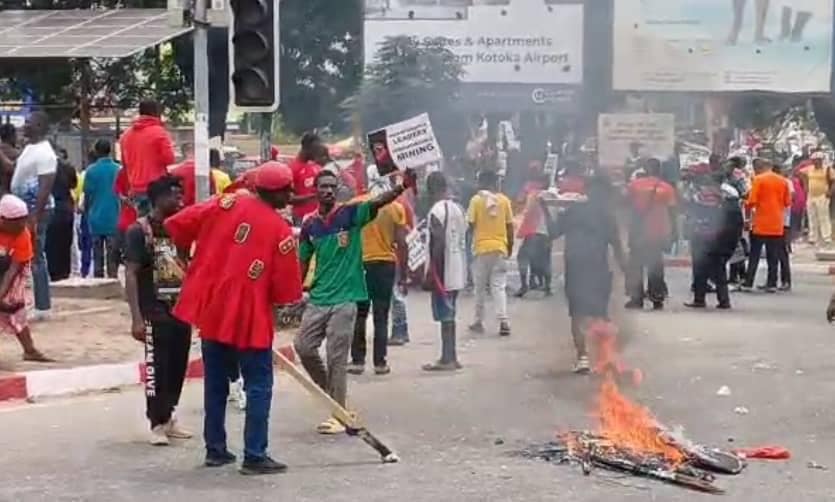
When citizens do not participate, decisions are made without their input. A waste dump is sited near a community that was never consulted. A fee increase is imposed without explanation. A project stalls and nobody is held accountable. These are not abstract failures. They affect health, livelihoods, and trust.
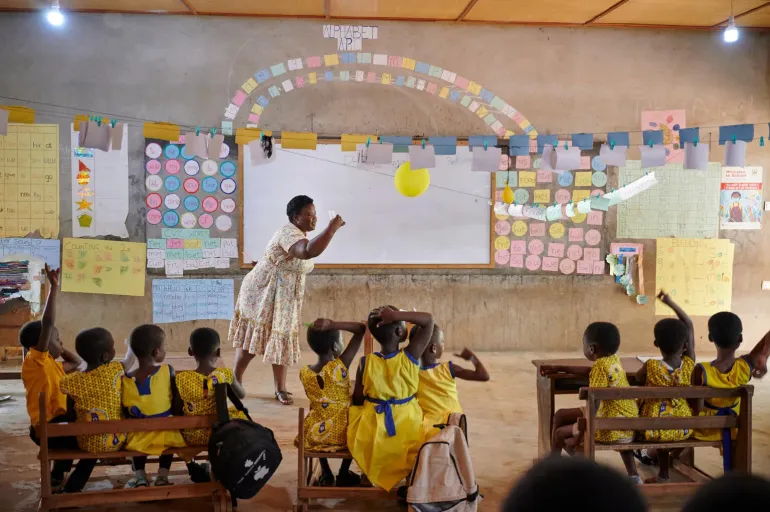
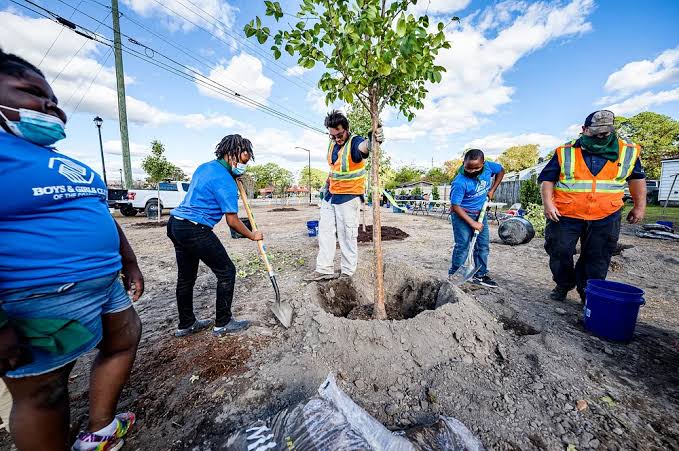
When citizens do participate, the dynamic changes. The social audit forums in Danchira and Salaga created space for questions and answers. The Northern Region’s information vans brought proceedings to people who would otherwise have been excluded. The Civic Education Clubs in Ayawaso North are teaching schoolchildren that responsibility begins early .
Civic engagement also matters for the quality of democracy itself. Ghana’s democratic stability is often praised, but stability without participation is hollow. The NCCE’s planning documents warn of “public apathy and distrust in institutions” as a threat, and note that “weakening of the social contract undermines citizens’ receptiveness to civic messages” . When people feel that their voices do not matter, they disengage. And when they disengage, the space for accountability shrinks.
The Challenges
Strengthening civic engagement in Ghana faces real obstacles.
Institutional fragility. The NCCE, the body responsible for civic education, is underfunded and under-resourced. It cannot do its job at the scale required without adequate support .
Tokenism. The academic literature and the lived experience of many communities suggest that consultations are often held to satisfy legal requirements rather than to genuinely incorporate citizen input. The forms are followed, but the substance is missing .
Misinformation and polarisation. The NCCE identifies rising misinformation and disinformation as a threat, along with the influence of money in politics and ethnic and religious intolerance . These forces make constructive civic engagement harder.
Economic pressure. When people are struggling to meet basic needs, participation in governance can feel like a luxury. The NCCE notes that youth unemployment and social discontent increase the risk of disengagement and radicalisation .
The gap between law and practice. The Local Governance (Consultations) Regulations are clear and specific. But enforcement is weak. There is no mechanism to ensure that Assemblies actually follow the rules, and no consequence when they do not.
Future Outlook
The direction of civic engagement in Ghana depends on whether the institutions and frameworks that exist are strengthened or allowed to decay.
The positive signs: The legal framework for consultation is in place. The NCCE has a nationwide presence and a track record of reaching millions of citizens. Social auditing is being practised in communities across the country. And there are examples of creative approaches, like the Northern Region’s information vans, that make participation more accessible.
The risks: If the NCCE remains underfunded, its reach will shrink. If consultations continue to be tokenistic, public cynicism will grow. If misinformation and polarisation intensify, the space for constructive dialogue will narrow.
The most likely scenario is uneven progress. Some districts will take participation seriously, and their communities will benefit. Others will continue to go through the motions. The national picture will improve slowly, driven by civil society pressure, media attention, and the efforts of institutions like the NCCE.
The wild card is the youth population. Over 70 percent of Ghanaians are under 35, and the NCCE sees this as an opportunity for “large-scale civic re-orientation” . If young people can be engaged through digital platforms and school-based programmes, the civic foundation of Ghana’s democracy could be transformed. If they are left out, the opposite is true.
ASJ Conclusion
Civic engagement is not a nice-to-have. It is the foundation on which everything else is built. Laws that protect rights mean little if citizens do not know what those rights are. Development projects that are supposed to serve communities mean little if those communities had no say in their design. Democracy that is praised for its stability means little if citizens feel their voices do not matter.
Ghana has the institutions, the laws, and the examples of good practice. The NCCE is present in every district. The consultation regulations are specific and enforceable. The social audit forums are happening. The information vans are reaching people who would otherwise be excluded.
What is missing is the scale and the consistency. The NCCE needs resources. The regulations need enforcement. The consultations need to be genuine. And citizens need to see that their participation makes a difference.
That last point is the most important. People participate when they believe it matters. When a community raises concerns at a social audit and sees action taken, they will come back. When a consultation leads to a change in a project design, people will take the next one seriously. When a citizen pays taxes and sees the money used well, they will keep paying.
Civic engagement is a relationship. It requires effort from both sides. The government must create genuine opportunities for participation. Citizens must show up, speak honestly, and take responsibility for their own role in development. When both sides do their part, the relationship works. When either side fails, the whole system suffers.
Quick Facts
Topic: Civic Engagement and Citizen Participation in Ghana
Top Prioritised Development Issue (NCCE): Weak citizen participation in governance and fragile national cohesion
NCCE Reach (2023): 110,856 public education activities, ~13.8 million citizens reached
Legal Framework: Local Governance (Consultations) Regulations, 2020 (L.I. 2406)
Consultation Notice Requirement: At least 14 days before the consultation
Social Audit Examples: Danchira (Ga South), Salaga (East Gonja)
Constitutional Duties: Article 41, 1992 Constitution (11 duties)
Key Institution: National Commission for Civic Education (NCCE)
Main Challenge: Tokenism, underfunding, misinformation, low citizen demand for accountability
Key Opportunity: Youth engagement, digital platforms, school-based civic clubs
FAQ Section
1. What is civic engagement?
Civic engagement is the participation of citizens in the public life of their community and country. It includes voting, attending public consultations, participating in social audits, paying taxes honestly, and holding public officials accountable.
2. Why is citizen participation important for development?
When citizens participate, decisions reflect community needs. Projects are better designed. Public officials are more accountable. And citizens feel ownership of development outcomes, which makes them more likely to protect public assets and contribute to national progress.
3. What does the law say about public consultations in Ghana?
The Local Governance (Consultations) Regulations, 2020 require District Assemblies to hold public consultations before granting permits for certain facilities (waste sites, fuel stations, mining) and before revising rates. Notice must be given at least 14 days in advance .
4. What is the NCCE doing to promote civic engagement?
The NCCE conducts public education across the country, reaching millions of citizens each year. It organises social auditing forums, supports Civic Education Clubs in schools, and educates citizens on their constitutional rights and responsibilities .
5. What is social auditing?
Social auditing is a process where citizens assess the performance of public institutions and development projects in their communities. It creates a structured dialogue between duty bearers and constituents, allowing residents to ask questions and raise concerns .
6. What are the duties of a Ghanaian citizen?
Article 41 of the 1992 Constitution sets out 11 duties, including respecting national symbols, upholding the Constitution, respecting others’ rights, working conscientiously, paying taxes honestly, protecting public property, and safeguarding the environment .
7. What are the biggest challenges to civic engagement in Ghana?
The NCCE identifies weak citizen participation and fragile national cohesion as the top development issue. Other challenges include tokenism in consultations, underfunding of civic education institutions, misinformation, and public apathy .
8. How can citizens participate in local governance?
Citizens can attend public consultations, participate in social audit forums, engage with their Assembly Members, attend District Assembly meetings, and join community-based organisations. The law requires Assemblies to consult before certain decisions .
9. What is the role of traditional authorities in civic engagement?
Traditional authorities are often trusted institutions in Ghanaian communities. They are required to be represented at public consultations and can serve as vehicles for mobilising communities and mediating disputes .
10. Why do some Ghanaians not participate in civic activities?
Reasons include apathy and distrust in institutions, the feeling that participation does not make a difference, economic pressures that make civic engagement feel like a luxury, and tokenistic consultations that do not genuinely incorporate citizen input
Source: Accra Street Journal
Last Updated on November 27, 2026 by Samuel Kwame Boadu
Disclaimer: Some content on Accra Street Journal may be aggregated, summarized, or edited from third-party sources for informational purposes. Images and media are used under fair use or royalty-free licenses. Accra Street Journal is a subsidiary of SamBoad Publishing Hub under SamBoad Business Group Ltd, registered in Ghana since 2014.
For concerns or inquiries, please visit our Privacy Policy or Contact Page.

Samuel Kwame Boadu is a Ghanaian media entrepreneur and storyteller with a passion for amplifying urban voices and uncovering everyday truths. He is the Editor-in-Chief and Founder of Accra Street Journal, a dynamic digital platform dedicated to capturing the pulse of Ghana’s capital—its people, culture, challenges, business, sports and innovations.
Use the following reference when citing or referencing this article.
Your feedback helps us improve our journalism.
Report an Error
Help us maintain accuracy. Let our editorial team know if you spot an issue in this article.
Report a problem with this article