


14 min read
Introduction
Ghana has spent decades getting children into school. Free basic education, free senior high school, capitation grants, school feeding programmes—the architecture of access has been built piece by piece. The 2026 budget allocated GH¢4.2 billion to GETFund and GH¢1.8 billion to Free SHS, with another GH¢537 million for the “No Fees Stress Policy” for tertiary students . A $300 million World Bank facility is set to build 10 new secondary schools, rehabilitate 150 more, and finally scrap the double-track system that has defined secondary education for years .
But access is not the same as learning. And learning is not the same as thinking.
Key Takeaways
- A $300 million World Bank facility is set to build 10 new secondary schools, rehabilitate 150 more, and finally scrap the double-track system that has defined secondary education for years .
- But the learning outcomes—critical thinking, civic literacy, foundational skills—may improve only slowly, because the structural barriers identified by research are not being addressed at scale.
- The government has secured $300 million from the World Bank for secondary education reform, signed an MoU with Cambridge University Press & Assessment, and launched the One Million Coders Programme for digital skills .
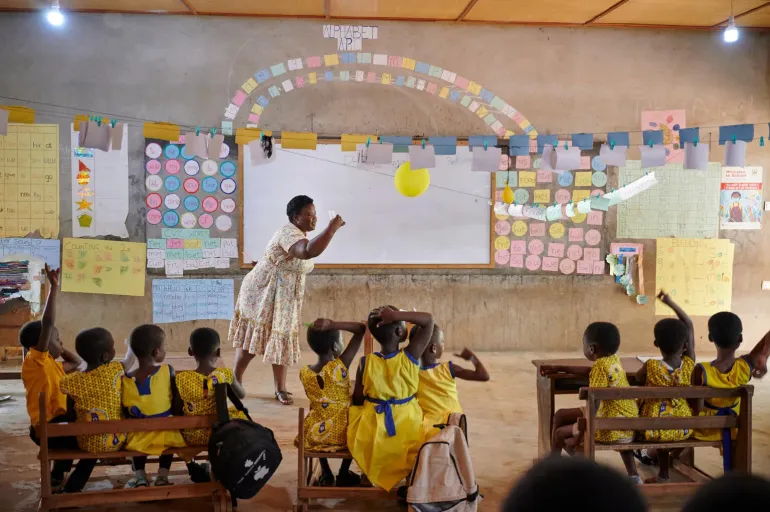
The evidence from Ghana’s own classrooms and research institutions paints a troubling picture. A 2026 Brookings study on foundational learning found that while commitment to literacy and numeracy is expressed at the policy level, those responsible for implementation “face multiple constraints and limited support to translate policy into action” . A separate study from the University of Cape Coast found that children in basic schools often “stayed dormant in the classroom because they could not engage in any meaningful discourse that could enhance their thought processes.” Silence and unquestionable acceptance of knowledge, the researchers observed, appeared to be “the culture of the classrooms” .
This is the gap that matters most for Ghana’s future. Not whether children are sitting in classrooms, but whether they are learning to think, question, and participate as citizens. This article examines the state of critical thinking and civic literacy in Ghana’s education system, what the research says about why the gap exists, and what is being done—and not done—to close it.
The Critical Thinking Deficit
The University of Cape Coast study offers one of the clearest diagnoses of the problem. Researchers Ernest Nyamekye and Abdul-Rahman Mutawakil investigated why critical thinking skills are not developing in Ghanaian basic school learners. Their finding was stark: the realisation of critical thinking is “severely hampered by children’s limited proficiency in the language of the curriculum (English)” .
Children who cannot fully understand the language of instruction cannot engage in the kind of discourse that builds analytical thinking. They sit silently, absorbing what the teacher says, because they lack the linguistic tools to question, challenge, or explore. Limited attempts at demonstrating critical thinking were observed “except for situations where the learners were given the opportunity to use their native language” .
The researchers recommended revising the language education policy and adopting translanguaging pedagogy—allowing students to move between languages—at early ages. This is not a radical proposal. It is a recognition that thinking happens in the language you understand best, and that forcing children to think in a language they are still learning creates a bottleneck that stunts intellectual development.
The Brookings study reinforces the point from a different angle. It found that foundational learning in Ghana suffers from “capacity constraints—from insufficient teaching materials and overcrowded classrooms to limited professional development and fragmented teacher development.” More importantly, “cohesion across the ecosystem remains fragmented with actors reporting that current reforms are not moving in a unified direction” .
In plain terms: teachers are being asked to build critical thinking skills in environments that do not support it. Classrooms are overcrowded. Materials are scarce. Training is episodic rather than continuous. And the various reforms—curriculum changes, teacher training initiatives, infrastructure projects—are not pulling in the same direction.
UNICEF’s education specialists have noted a related problem. The 2025 WASSCE results showed that outright failure rates (Grade F9) in some core subjects “more than quadrupled,” highlighting “persistent weaknesses in foundational learning” . The problem is not confined to basic schools. It follows students through the system, surfacing in national examinations and in the workforce.

Civic Literacy: The Missing Subject
If critical thinking is underdeveloped, civic literacy is barely present at all.
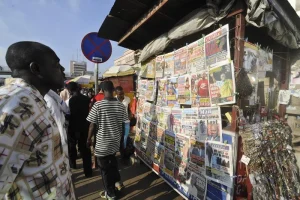
A 2026 study on media and information literacy (MIL) among senior high school students in Ghana found that “the teaching of MIL as part of the core curriculum is largely absent at the senior high school level” . Teachers who do address media literacy do so through “ingenuity”—using advisory sessions, indirect opportunities in English or Social Studies lessons, library resources, and extracurricular clubs. There is no structured, intentional curriculum for teaching students how to evaluate information, understand media bias, or navigate the digital world .

This is a serious gap in a country where misinformation spreads faster than fact. The same study noted that while policy efforts emphasise digital literacy, “not much effort has been made to develop the MIL skills of students through intentional curriculum content provision” . Students are being taught to use computers. They are not being taught to think critically about what those computers deliver.
The National Commission for Civic Education is trying to fill the gap. Its 2026 Citizenship Week, themed “Upholding Our Constitution in the Digital Age: Our Collective Responsibility,” took digital citizenship education into basic schools across the Ashanti Region. NCCE officials encouraged pupils to “think critically before sharing information online, respect the rights of others on social media, safeguard their personal information, reject misinformation, and avoid cyberbullying” .
This is valuable work. But it is a week-long intervention, not a sustained curriculum. Citizenship Week reaches selected schools with a specific message. It does not replace the daily, embedded civic education that a functioning democracy requires.
The consequences of this gap are visible in the public sphere. A separate report noted that the Information Services Department has partnered with Penplusbytes to train its officers in fact-checking and verification, using an AI-powered platform called Kasagadi. The ISD Director acknowledged that officers are “often confronted with unverified flyers, social media content and other materials purported to originate from government institutions” . If the government’s own information officers need training to distinguish fact from fiction, what hope do ordinary citizens have?
The Policy Response: What Is Being Done
The government is not blind to these problems. Several initiatives are underway that address, directly or indirectly, the deficits in critical thinking and civic literacy.
The One Million Coders Programme, launched in March 2025, is targeting 400,000 trained Ghanaians in 2026 across data analytics, cybersecurity, and artificial intelligence. Phase two adds virtual training sessions to the existing physical centres in Accra, Kumasi, Sunyani, and Bolgatanga. This is digital skills training, not critical thinking in the broader sense, but it creates a foundation for engaging with technology rather than simply consuming it.
The $300 million World Bank secondary education project includes a commitment to “improve learning outcomes, particularly in Mathematics and Science” and to equip young Ghanaians with “digital, technical, and green skills required for the jobs of the future” . The focus on STEM is welcome, but the project’s success will depend on whether it addresses the language and pedagogy issues that the research identifies as barriers to critical thinking.
Ghana has also signed an MoU with Cambridge University Press & Assessment to access expertise in “system analysis, strengthening of curriculum and assessment, teacher professional development, and the integration of cross-cutting priorities such as climate education and artificial intelligence.” The Education Minister described the partnership as offering “a clear and practical framework to support Ghana’s education reform agenda while preserving full national ownership” . Whether this translates into classroom-level change remains to be seen, but it signals an awareness that the current system is not delivering.
The NCCE’s Citizenship Week and its broader civic education mandate remain the primary vehicle for civic literacy. The Commission reaches millions of citizens each year, but it operates with chronic underfunding and limited resources. Its ability to embed civic literacy in the school system depends on collaboration with the Ghana Education Service and on whether civic education is treated as a core subject or an occasional add-on .
Why It Matters
The stakes are not abstract. A generation of Ghanaians who cannot think critically is a generation that cannot solve problems, innovate, or hold power accountable.

For the economy: The jobs of the future—in technology, green energy, advanced manufacturing—require workers who can analyse, adapt, and learn. The World Bank project explicitly aims to equip students with “digital, technical, and green skills” . But these skills are built on a foundation of literacy, numeracy, and critical thinking. If that foundation is weak, the skills training will not stick.
For democracy: Ghana’s democratic stability depends on citizens who can evaluate claims, resist manipulation, and participate meaningfully in public life. The rise of misinformation, the polarisation of media, and the weaponisation of social media all make civic literacy more urgent, not less. When the ISD itself needs training to verify information , the gap between what citizens need and what they have is enormous.
For ordinary Ghanaians: A parent in Kumasi wants their child to learn to think, not just to pass exams. A young person in Accra wants to understand the world well enough to make good decisions about work, money, and politics. A community wants to hold its leaders accountable, which requires the ability to ask questions and assess answers. Critical thinking and civic literacy are not luxuries for the educated elite. They are the basic tools of citizenship.
The Challenges
The obstacles to building critical thinking and civic literacy in Ghana are structural and deeply embedded.
Language of instruction. The research is clear that English-language instruction is a barrier to critical thinking for many children . Changing this requires political courage, because English is associated with status and opportunity. But the evidence suggests that allowing children to think in their native languages, at least in early years, would build the cognitive foundation that later learning depends on.
Teacher capacity and support. The Brookings study found that teachers face “multiple constraints and limited support” . UNICEF’s education specialists noted that professional development is “too often treated as an event rather than a continuous, school-embedded process,” and that “high-performing schools aren’t necessarily those with the most workshops, but those where teachers receive regular classroom observations, tailored feedback, and opportunities to plan, reflect, and learn together” . Investing in teachers means investing in ongoing, embedded support, not one-off training sessions.
Curriculum overcrowding. Teachers are asked to cover a crowded curriculum with limited time and resources. Civic education and critical thinking are not examinable in the same way as mathematics or English, which means they get pushed to the margins. Until they are embedded in the core curriculum and assessment framework, they will remain optional extras.
Fragmentation. The Brookings study identified “coordination gaps between national, district, and school levels” and noted that “current reforms are not moving in a unified direction” . Infrastructure projects, teacher training, curriculum reform, and civic education initiatives are all happening, but they are not aligned. Without a shared vision and coordinated implementation, the sum of the parts is less than the whole.
The digital divide. Media and information literacy training is most accessible to students in well-resourced schools with computer labs and internet access. Students in rural areas, who may have less exposure to digital tools and more exposure to misinformation when they do encounter it, are least likely to receive the training they need .
Future Outlook
The direction of Ghana’s education system will be shaped by whether the current wave of investment and reform translates into classroom-level change.
If current trends continue, access will improve. More schools will be built. More students will be enrolled. The double-track system will be scrapped. But the learning outcomes—critical thinking, civic literacy, foundational skills—may improve only slowly, because the structural barriers identified by research are not being addressed at scale.
The opportunities are real. The World Bank project, the Cambridge partnership, the One Million Coders Programme, and the NCCE’s civic education work all point in the right direction. If they are coordinated and if they prioritise teacher capacity and language policy, they could produce meaningful change.
The most likely scenario is uneven progress. Some schools, particularly in urban areas and well-resourced districts, will improve. Others will lag. The gap between the rhetoric of reform and the reality of the classroom will narrow, but not close.
The wild card is political will. The research on language of instruction, teacher professional development, and civic literacy has been available for years. The question is whether policymakers will act on it, even when the solutions are politically difficult or require long-term investment rather than quick wins.
ASJ Conclusion
Ghana has built an impressive architecture of educational access. But access without learning is a hollow achievement, and learning without thinking is incomplete. The research is clear that critical thinking is being stifled by language barriers, teacher constraints, and curriculum priorities. Civic literacy is barely taught at all, leaving young Ghanaians vulnerable to misinformation and ill-equipped for democratic participation.
The solutions are not secrets. Teach children in a language they understand. Invest in teachers continuously, not episodically. Embed civic and media literacy in the core curriculum. Coordinate reforms so they pull in the same direction. Measure learning outcomes, not just enrolment figures.
What is missing is not knowledge. It is the sustained, coordinated commitment to act on what the research says. Ghana’s future depends on whether its children learn to think. That is not a slogan. It is the foundation of everything else.
Quick Facts
Topic: Education, Critical Thinking and Civic Literacy in Ghana
2026 Education Budget: GH¢4.2B GETFund, GH¢1.8B Free SHS, GH¢537M tertiary fee support
World Bank Secondary Education Project: $300M, 10 new schools, 150 rehabilitated, double-track elimination
Key Research Finding: English-language instruction severely hampers critical thinking development in basic schools
MIL in SHS Curriculum: Largely absent as a core subject; taught indirectly through other subjects and clubs
NCCE Citizenship Week 2026: Digital citizenship focus in schools across regions
WASSCE 2025: Outright failure rates (F9) in some core subjects more than quadrupled
Teacher Training Gap: PD treated as “event rather than continuous, school-embedded process”
Key Policy Opportunity: Translanguaging pedagogy, sustained teacher support, embedded civic literacy
FAQ Section
1. Why is critical thinking low in Ghanaian schools?
Research shows that limited proficiency in English, the language of instruction, prevents many children from engaging in meaningful classroom discourse. Silence and unquestioning acceptance of knowledge are common because students lack the linguistic tools to question or analyse .
2. Is civic education taught in Ghanaian schools?
Not as a core subject at the senior high level. Media and information literacy is largely absent from the curriculum, and teachers use indirect opportunities—English lessons, clubs, library sessions—to address it. The NCCE runs Citizenship Week programmes, but these are not a substitute for sustained curriculum content .
3. What is the government doing to improve education quality?
The government has secured $300 million from the World Bank for secondary education reform, signed an MoU with Cambridge University Press & Assessment, and launched the One Million Coders Programme for digital skills .
4. What does the Brookings study say about Ghana’s foundational learning?
It found that policy commitment to foundational learning exists, but implementation is constrained by insufficient materials, overcrowded classrooms, limited professional development, and fragmented coordination across the education system .
5. Why are WASSCE failure rates high in Ghana?
UNICEF notes that the 2025 WASSCE results showed failure rates in some core subjects more than quadrupled, reflecting “persistent weaknesses in foundational learning” that begin in basic school and continue through the system .
6. What is translanguaging and why does it matter?
Translanguaging is a pedagogy that allows students to move between languages in the classroom. Research recommends it for Ghana because children think better in their native languages, and forcing them to think only in English stunts their critical thinking development .
7. What is the NCCE doing for civic literacy?
The National Commission for Civic Education runs Citizenship Week in schools, focusing on constitutional values, digital citizenship, and responsible online behaviour. It also conducts broader public education on rights and responsibilities .
8. How is media literacy being addressed in Ghana?
The Information Services Department has partnered with Penplusbytes to train its officers in fact-checking and verification. In schools, media literacy is taught indirectly through subjects like English and Social Studies, and through extracurricular clubs, but it is not a core curriculum subject .
9. What can parents do to support critical thinking at home?
Parents can encourage children to ask questions, discuss issues in their native language, and engage with them about what they see online. The research suggests that children demonstrate critical thinking when given the opportunity to use a language they understand well .
10. Will the World Bank project improve learning outcomes?
The project aims to improve Mathematics and Science outcomes and equip students with digital and green skills. Whether it succeeds depends on whether it addresses the deeper issues of language of instruction, teacher capacity, and curriculum coherence that research identifies as barriers to learning
Source: Accra Street Journal
Last Updated on November 27, 2026 by Samuel Kwame Boadu
Disclaimer: Some content on Accra Street Journal may be aggregated, summarized, or edited from third-party sources for informational purposes. Images and media are used under fair use or royalty-free licenses. Accra Street Journal is a subsidiary of SamBoad Publishing Hub under SamBoad Business Group Ltd, registered in Ghana since 2014.
For concerns or inquiries, please visit our Privacy Policy or Contact Page.

Samuel Kwame Boadu is a Ghanaian media entrepreneur and storyteller with a passion for amplifying urban voices and uncovering everyday truths. He is the Editor-in-Chief and Founder of Accra Street Journal, a dynamic digital platform dedicated to capturing the pulse of Ghana’s capital—its people, culture, challenges, business, sports and innovations.
Use the following reference when citing or referencing this article.
Your feedback helps us improve our journalism.
Report an Error
Help us maintain accuracy. Let our editorial team know if you spot an issue in this article.
Report a problem with this article