
6 min read
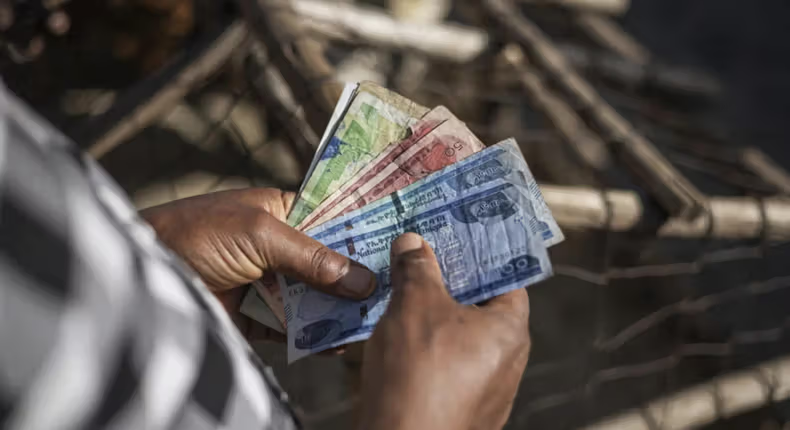
Ethiopia’s decision to localize the production of its national currency, the Ethiopian Birr, marks a quiet but consequential shift in how African states are thinking about economic sovereignty, risk management, and long-term stability. While often overlooked in broader reform discussions, control over currency production sits at the heart of monetary independence. For Ethiopia, the move reflects both pragmatic risk reduction and a strategic vision for state-led development.
The announcement, made by Prime Minister Abiy Ahmed at the Finance Forward Ethiopia 2026 conference, places the initiative within a wider reform agenda that seeks to consolidate national assets, strengthen institutions, and reduce exposure to external shocks. At the center of this effort is Ethiopian Investment Holdings (EIH), the government’s sovereign investment arm, which has been tasked with overseeing the project.
Key Takeaways
- While often overlooked in broader reform discussions, control over currency production sits at the heart of monetary independence.
- Placing currency production under EIH aligns monetary infrastructure with broader investment and governance reforms.
- What is Ethiopian Investment Holdings (EIH)?EIH is Ethiopia’s state-owned investment and asset management institution, established in 2021 to manage public assets and support long-term development.
Why Currency Printing Matters More Than It Appears
For many countries, especially in Africa, the physical printing of banknotes is outsourced to foreign firms. While this arrangement is common and often efficient, it introduces vulnerabilities. External currency printing exposes a country to geopolitical risks, supply disruptions, foreign exchange pressures, and security concerns.
In times of conflict, sanctions, or global logistical stress—as witnessed during the COVID-19 pandemic and subsequent supply-chain breakdowns—access to physical currency can become constrained. For a country with a large population and cash-dependent sectors, this is not a theoretical risk.
By bringing currency production home, Ethiopia is seeking to close this vulnerability. Domestic printing ensures continuity, enhances security, and strengthens institutional control over one of the most fundamental tools of economic management.
A Strategic Role for Ethiopian Investment Holdings
The responsibility for this initiative rests with Ethiopian Investment Holdings, a state-owned investment entity established in 2021. EIH was designed to consolidate public assets under professional management, applying commercial discipline while pursuing long-term national objectives.
According to Prime Minister Abiy Ahmed, EIH is expected to become one of Ethiopia’s most strategic institutions, developing what he described as “key, untold strategic arms.” By 2030, the holding company is projected to contribute approximately 20 percent of Ethiopia’s GDP—a signal of how central it is to the country’s economic vision.
Placing currency production under EIH aligns monetary infrastructure with broader investment and governance reforms. It ensures that the project is not treated as a narrow technical exercise but as part of a long-term national asset-building strategy.
Reducing External Dependence in a Volatile Global Economy
The push to localize currency production comes at a time when global economic fragmentation is accelerating. Trade tensions, geopolitical rivalries, and the weaponization of financial systems have prompted many countries to reassess their exposure to external dependencies.
For African economies, which often operate at the margins of global decision-making, reducing reliance on external systems is increasingly seen as a matter of resilience rather than ideology. Ethiopia’s move echoes broader continental conversations around de-dollarization, local currency usage, and financial self-determination.
While printing currency domestically does not eliminate macroeconomic challenges such as inflation or fiscal imbalances, it does provide greater operational control. It allows central banks and governments to manage logistics, security, and timing without relying on external actors.

Joining a Select Group of African States
If fully implemented, Ethiopia will join a relatively small group of African countries that possess the capability to print their own national currencies. These include Nigeria, South Africa, Egypt, Morocco, Algeria, and Kenya. Across the continent, fewer than a dozen countries have achieved this level of monetary infrastructure.
This places Ethiopia in an emerging category of African states that are investing not only in policy reform but also in the physical and institutional foundations of sovereignty. It reflects a recognition that long-term stability depends as much on infrastructure and institutions as it does on fiscal targets and growth rates.

Long-Term Stability Versus Short-Term Perceptions
Critics may argue that domestic currency printing carries inflationary risks if mismanaged. However, currency production itself does not create inflation; policy choices do. Inflation is driven by excessive money supply growth, fiscal indiscipline, and weak institutions—not by the location of the printing press.
By pairing localization with stronger governance under EIH and central bank oversight, Ethiopia is signaling that the objective is control, not excess. The emphasis on long-term sustainability suggests a deliberate effort to separate operational sovereignty from reckless monetary expansion.
A Broader Vision of State Capacity
Beyond currency printing, the initiative reflects a deeper philosophical shift in how Ethiopia views the role of the state. Rather than retreating entirely from economic participation, the government is repositioning itself as a strategic owner, investor, and steward of national assets.
EIH’s mandate to manage over 40 state-owned enterprises across key sectors underscores this approach. The goal is not to crowd out private enterprise but to create stable platforms that can attract investment, improve governance, and support development objectives.
Currency production, in this context, becomes symbolic. It represents a state that is rebuilding capacity, reclaiming control over critical systems, and planning beyond electoral cycles.
What This Means for Africa
Ethiopia’s move may encourage other African nations to reassess their own monetary infrastructure. As debates around currency sovereignty, regional trade, and financial independence intensify, practical steps—rather than rhetoric—will define outcomes.
Localizing currency production is not a cure-all, but it is a foundational step. It signals seriousness about institutional strength and long-term planning. For a continent seeking to move from vulnerability to resilience, such steps matter.
Conclusion From ASJ
Ethiopia’s plan to take full control of its currency production is less about symbolism and more about strategy. It reflects a calculated effort to reduce risk, strengthen institutions, and align monetary infrastructure with national development goals.
If executed with discipline and transparency, the initiative could enhance Ethiopia’s economic resilience and serve as a model for how African states can quietly but effectively reclaim critical elements of sovereignty in an uncertain global economy.
FAQs
Why is Ethiopia localizing the production of its currency?
To reduce external risks, improve security, and strengthen control over its monetary infrastructure.

Who will oversee the currency production project?
The initiative will be managed by Ethiopian Investment Holdings (EIH), the government’s sovereign investment arm.
Does printing currency domestically cause inflation?
No. Inflation depends on monetary and fiscal policy decisions, not where currency is printed.
How many African countries print their own currency?
Fewer than twelve African countries currently have domestic currency printing capabilities.
What is Ethiopian Investment Holdings (EIH)?
EIH is Ethiopia’s state-owned investment and asset management institution, established in 2021 to manage public assets and support long-term development.
Source: Accra Street Journal
Last Updated on March 9, 2026 by Samuel Kwame Boadu
Disclaimer: Some content on Accra Street Journal may be aggregated, summarized, or edited from third-party sources for informational purposes. Images and media are used under fair use or royalty-free licenses. Accra Street Journal is a subsidiary of SamBoad Publishing Hub under SamBoad Business Group Ltd, registered in Ghana since 2014.
For concerns or inquiries, please visit our Privacy Policy or Contact Page.

Samuel Kwame Boadu is a Ghanaian media entrepreneur and storyteller with a passion for amplifying urban voices and uncovering everyday truths. He is the Editor-in-Chief and Founder of Accra Street Journal, a dynamic digital platform dedicated to capturing the pulse of Ghana’s capital—its people, culture, challenges, business, sports and innovations.
Use the following reference when citing or referencing this article.
Your feedback helps us improve our journalism.
Report an Error
Help us maintain accuracy. Let our editorial team know if you spot an issue in this article.
Report a problem with this article