


Ghanaian folklore and mythology form the backbone of the country’s cultural consciousness. Long before written history, communities across present-day Ghana preserved their worldview through oral storytelling, myths, legends, proverbs, and ritual narratives. These stories explained the origin of the universe, human behavior, morality, nature, leadership, and the relationship between the living and the spiritual world.
Across ethnic groups such as the Akan, Ga, Ewe, Mole-Dagbani, Guan, and others, folklore has remained a powerful tool for education, social order, and cultural continuity. Even in modern Ghana, these myths continue to influence language, festivals, moral teaching, and artistic expression.

The Role of Oral Tradition in Ghanaian Society
Folklore in Ghana has historically been transmitted orally by elders, griots, priests, and storytellers. Storytelling sessions often took place in the evenings, during communal gatherings, or at festivals, serving both entertainment and instruction.
📢 GET A DETAILED ARTICLES + JOBS
Join ASJ's WhatsApp Channel and never miss a post or opportunity.

Oral tradition ensured that knowledge survived generations without written records. Through repetition and performance, stories evolved while maintaining their core meanings. This adaptability allowed folklore to remain relevant across centuries.
Creation Myths and the Supreme Being
Nyame and the Akan Creation Myth
Among the Akan people, Nyame is the supreme creator god, responsible for the universe, human life, and moral order. Akan mythology teaches that Nyame once lived close to humans but withdrew to the sky after being disturbed by human behavior. This myth explains the separation between the spiritual and physical worlds.
Nyame is associated with wisdom, balance, and destiny, and remains central to Akan spiritual philosophy.
Mawu and the Ewe Worldview
In Ewe mythology, Mawu represents the supreme creator, embodying both feminine and masculine qualities. Mawu is associated with the moon, gentleness, and fertility, while balance is maintained through complementary spiritual forces.
This duality reflects the Ewe understanding of harmony between opposing elements in nature.
Trickster Figures and Moral Lessons
Anansi the Spider
Perhaps the most famous figure in Ghanaian folklore is Anansi, the clever spider of Akan mythology. Anansi stories are widely known across Ghana and the African diaspora.
Anansi is not a hero in the traditional sense. He is cunning, humorous, sometimes selfish, and deeply human. Through trickery and intelligence, he outsmarts stronger opponents, teaching lessons about wisdom, creativity, consequences, and social responsibility.
Anansi stories were historically used to teach children moral lessons and critical thinking.
Spirits, Deities, and the Natural World
Abosom (Lesser Deities)
In Akan belief systems, abosom are lesser deities associated with rivers, forests, mountains, and natural phenomena. These spirits act as intermediaries between humans and the supreme creator.
Each abosom has specific attributes and responsibilities, such as healing, protection, fertility, or justice. Shrines dedicated to these spirits remain active in many communities.
Ga Deities and Ancestral Spirits
Among the Ga people, deities known as wɔlɔi and ancestral spirits play central roles in mythology. These spiritual entities are believed to guard families, lands, and communities.
Myths surrounding these spirits explain misfortune, success, and natural events, reinforcing moral conduct and communal responsibility.
Mythical Creatures and Supernatural Beings
Ghanaian folklore includes numerous supernatural beings believed to inhabit forests, rivers, and remote areas.
-
Mmoatia (forest dwarfs) in Akan folklore are small, magical beings known for their backward feet and mysterious nature.
-
Adze in Ewe mythology is a vampire-like spirit believed to cause illness and misfortune.
-
Sasabonsam, a fearsome forest spirit in Akan mythology, is often depicted as a creature of great power dwelling deep in the wilderness.
These beings serve as cautionary symbols, teaching respect for nature and the unknown.
Heroic Legends and Ancestral Figures
Many Ghanaian myths celebrate ancestral heroes who founded clans, defended territories, or established moral codes.
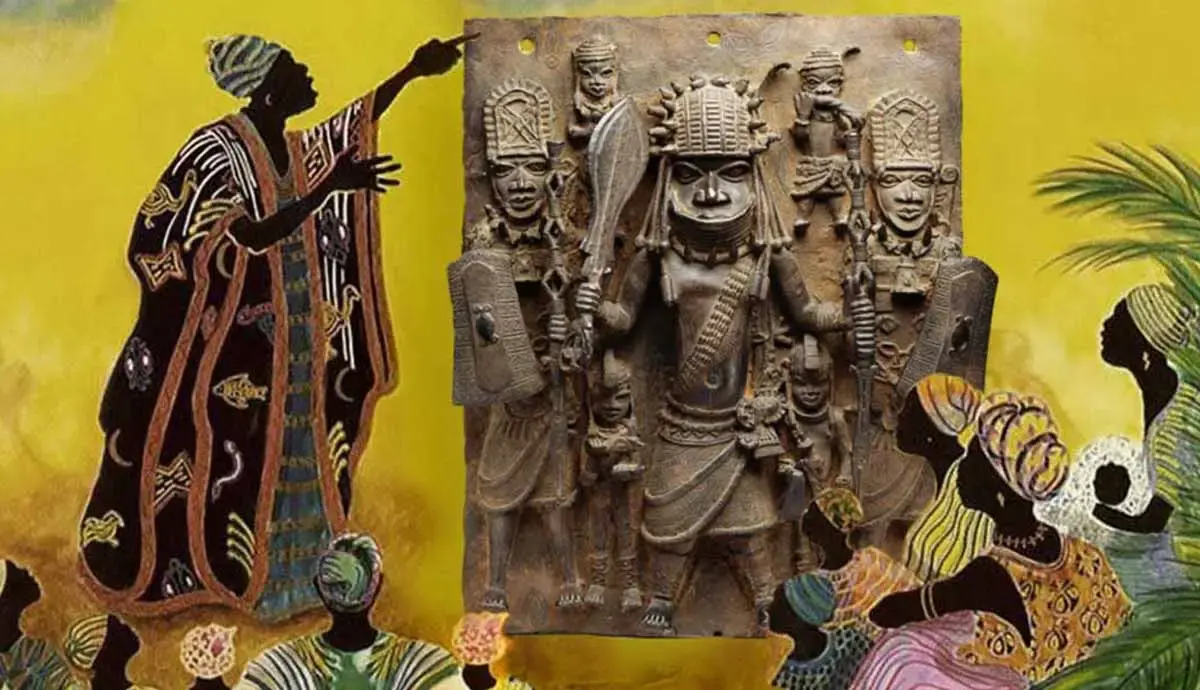
Stories of warrior ancestors, queen mothers, and spiritual leaders are passed down to reinforce courage, leadership, and sacrifice. These legends often form the historical foundations of chieftaincy systems and festivals.
Among the Akan, tales of ancient kings and queen mothers explain the origins of stools, clans, and sacred lineages.
Folklore in Festivals and Rituals
Festivals across Ghana are deeply rooted in mythology. Ceremonies such as Homowo, Akwasidae, Hogbetsotso, Damba, and Kundum reenact mythic events, honour ancestors, and reaffirm community identity.
Through drumming, dance, costume, and ritual performance, myths are brought to life, ensuring their survival in public memory.
Folklore as Moral Education
Ghanaian folklore functions as an ethical framework. Stories teach values such as:
-
Respect for elders
-
Honesty and humility
-
Communal responsibility
-
Consequences of greed and pride
Children traditionally learned societal norms through folktales long before formal education systems existed.
Influence on Modern Ghanaian Culture
Folklore and mythology continue to shape modern Ghanaian society. They influence:
-
Literature and poetry
-
Music and dance
-
Visual arts and sculpture
-
Contemporary storytelling and film
-
Proverbs and everyday speech
Modern writers and artists draw inspiration from traditional myths, blending them with contemporary themes.
Preservation of Folklore in the Modern Era
Despite urbanisation and globalisation, Ghanaian folklore remains resilient. Preservation efforts include:
-
Cultural education in schools
-
Storytelling festivals
-
Documentation by historians and anthropologists
-
Community elders passing down oral traditions
These efforts ensure that folklore remains relevant in a rapidly changing society.
FAQs
What is Ghanaian folklore?
It refers to traditional stories, myths, legends, and oral narratives passed down across generations.
Who is Anansi?
Anansi is a trickster figure from Akan folklore known for intelligence and wit.
Are Ghanaian myths still believed today?
While interpretations vary, many myths continue to influence cultural practices and moral values.
What role do spirits play in folklore?
Spirits explain natural events, guide moral behavior, and connect humans to the spiritual world.
How is folklore preserved in modern Ghana?
Through festivals, education, oral storytelling, and cultural documentation.
Source: Accra Street Journal
Last Updated on February 7, 2026 by Samuel Kwame Boadu
Disclaimer: Some content on Accra Street Journal may be aggregated, summarized, or edited from third-party sources for informational purposes. Images and media are used under fair use or royalty-free licenses. Accra Street Journal is a subsidiary of SamBoad Publishing Hub under SamBoad Business Group Ltd, registered in Ghana since 2014.
For concerns or inquiries, please visit our Privacy Policy or Contact Page.

Samuel Kwame Boadu is a Ghanaian media entrepreneur and storyteller with a passion for amplifying urban voices and uncovering everyday truths. He is the Editor-in-Chief and Founder of Accra Street Journal, a dynamic digital platform dedicated to capturing the pulse of Ghana’s capital—its people, culture, challenges, business, sports and innovations.