
5 min read
Urban mobility in Accra is undergoing a gradual but significant transformation, driven by ongoing investments in road networks and bridge infrastructure.
As population growth, urban expansion, and economic activity continue to intensify, the need for efficient transport systems has become increasingly urgent. In response, government-led and public-private infrastructure projects are reshaping how people, goods, and services move across the city.
Key Takeaways
- Urban mobility in Accra is undergoing a gradual but significant transformation, driven by ongoing investments in road networks and bridge infrastructure.
- As population growth, urban expansion, and economic activity continue to intensify, the need for efficient transport systems has become increasingly urgent.
- New roads and bridges are significantly reshaping movement in Accra, improving connectivity, reducing travel times, and supporting economic growth.
This ASJ report examines how new roads and bridges are redefining movement in Accra and what it means for businesses, commuters, and the city’s long-term development.
A City Under Pressure
Accra’s rapid urbanization has placed enormous strain on its transport systems.
Key challenges have included:
-
Heavy traffic congestion
-
Long commute times
-
Inefficient road connectivity
-
Limited alternative transport systems
For years, these issues have affected productivity, quality of life, and business efficiency.
The Role of Infrastructure Investment
In recent years, the Government of Ghana has increased investment in road and bridge infrastructure to address mobility challenges.
Major projects include:
-
Expansion of arterial roads
-
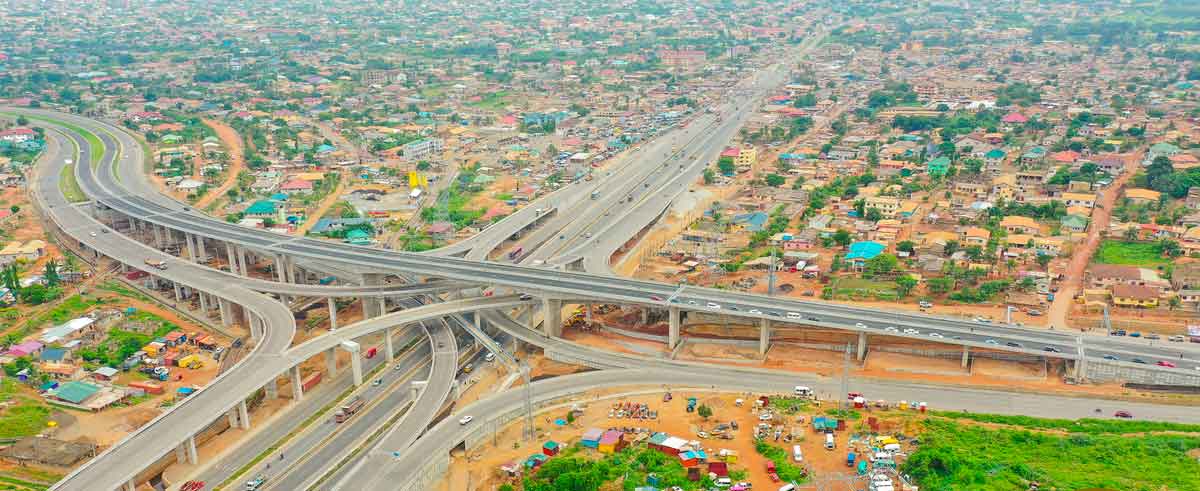
Construction of interchanges and overpasses
-
Rehabilitation of existing road networks
-
Development of new urban corridors
These investments aim to improve traffic flow and support economic growth.
Key Projects Reshaping Movement
Several high-impact projects are already influencing how people move across Accra.

Interchanges and Overpasses
New interchanges reduce congestion at major intersections by separating traffic flows.
Urban Road Expansions
Widening key roads increases vehicle capacity and reduces bottlenecks.

Bridge Developments
Bridges improve connectivity between previously disconnected or poorly linked areas.
Peripheral Road Networks
New routes on the outskirts of the city help divert traffic from central business districts.
Reduced Travel Time and Improved Efficiency
One of the most immediate impacts of new infrastructure is reduced travel time.
For commuters:
-
Shorter journeys
-
More predictable travel schedules
-
Less time spent in traffic
For businesses:
-
Faster movement of goods
-
Improved logistics efficiency
-
Lower transportation costs
These improvements contribute directly to economic productivity.
Economic Impact on Businesses
Improved road networks are having a measurable effect on business activity.
Increased Accessibility
Businesses become easier to reach, attracting more customers.
Expansion Opportunities
Companies can operate in new areas with better connectivity.
Growth in Real Estate Value
Areas near major roads and bridges often experience increased property demand.

Support for Informal Sector
Traders and small businesses benefit from increased foot and vehicle traffic.
Changing Patterns of Urban Development
Infrastructure development is also reshaping how the city expands.
Decentralization
Improved roads encourage movement away from congested central areas.
New Growth Corridors
Previously underdeveloped areas become attractive for housing and business.
Reduced Pressure on City Center
Better connectivity spreads economic activity more evenly across the city.
Impact on Public Transport and Mobility Options
New roads and bridges also influence public transportation.
-
Improved routes for buses and shared transport
-
Potential for future mass transit systems
-
Better integration of transport networks
While private vehicles still dominate, infrastructure upgrades create opportunities for more efficient public transport systems.
Challenges and Limitations
Despite progress, infrastructure development alone does not fully solve mobility challenges.
Induced Demand
New roads can attract more vehicles, eventually leading to congestion again.
Maintenance Issues
Sustaining road quality requires ongoing investment.
Urban Planning Gaps
Without coordinated planning, infrastructure benefits may be uneven.
Limited Alternative Transport Systems
Reliance on road transport remains high.
The Environmental Dimension
Road expansion has environmental implications.
Positive effects:
-
Reduced idling in traffic lowers emissions
Concerns:
-
Increased vehicle usage
-
Urban sprawl
-
Loss of green spaces
Balancing development with sustainability remains a key challenge.
The Role of Policy and Planning
Effective urban mobility depends not only on infrastructure but also on policy.
Key areas of focus include:
-
Traffic management systems
-
Public transport development
-
Land-use planning
-
Smart city technologies
Coordinated planning ensures that infrastructure investments deliver long-term benefits.
What the Future Holds
Looking ahead, continued investment in roads and bridges is expected to play a central role in Accra’s development.
Potential trends include:
-
Integration of smart traffic systems
-
Expansion of transport corridors
-
Increased private sector participation
-
Greater focus on multimodal transport
These developments could further transform how the city functions.
Conclusion From ASJ
New roads and bridges are significantly reshaping movement in Accra, improving connectivity, reducing travel times, and supporting economic growth.
However, infrastructure alone is not a complete solution. Sustainable urban mobility will require a combination of investment, planning, and innovation.
As Accra continues to grow, the effectiveness of its transport systems will remain a defining factor in its economic and social development.
FAQs
How are new roads affecting traffic in Accra?
They are reducing congestion in some areas and improving travel times.
Do new bridges improve connectivity?
Yes, they link previously disconnected areas and enhance movement.
Are businesses benefiting from new infrastructure?
Yes, improved access and logistics are boosting business activity.
Will traffic problems be solved completely?
Not entirely—additional planning and transport solutions are needed.
What is the long-term impact of these projects?
They support economic growth, urban expansion, and improved mobility.
Source: Accra Street Journal
Last Updated on March 19, 2026 by Samuel Kwame Boadu
Disclaimer: Some content on Accra Street Journal may be aggregated, summarized, or edited from third-party sources for informational purposes. Images and media are used under fair use or royalty-free licenses. Accra Street Journal is a subsidiary of SamBoad Publishing Hub under SamBoad Business Group Ltd, registered in Ghana since 2014.
For concerns or inquiries, please visit our Privacy Policy or Contact Page.

Samuel Kwame Boadu is a Ghanaian media entrepreneur and storyteller with a passion for amplifying urban voices and uncovering everyday truths. He is the Editor-in-Chief and Founder of Accra Street Journal, a dynamic digital platform dedicated to capturing the pulse of Ghana’s capital—its people, culture, challenges, business, sports and innovations.
Use the following reference when citing or referencing this article.
Your feedback helps us improve our journalism.
Report an Error
Help us maintain accuracy. Let our editorial team know if you spot an issue in this article.
Report a problem with this article