
11 min read
Introduction: A Major Step for West African Mining
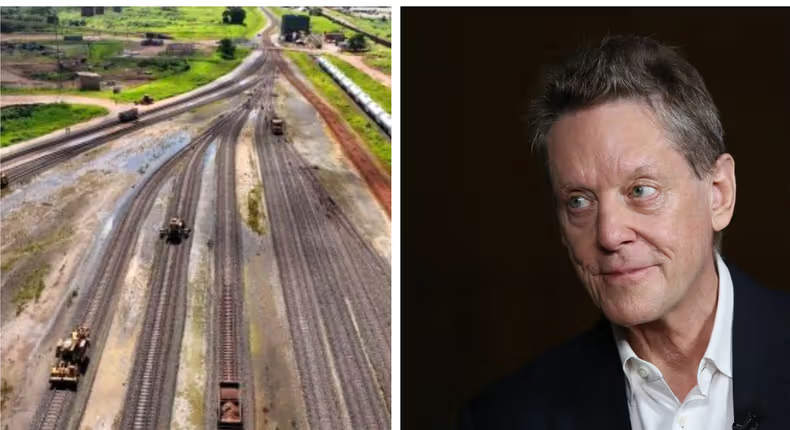
A US-backed iron ore developer backed by billionaire Robert Friedland has cleared a major regulatory hurdle in West Africa, positioning one of the region’s largest untapped iron ore projects closer to production. Ivanhoe Atlantic Inc.’s Kon Kweni project received formal approval of its Environmental and Social Impact Assessment (ESIA) from the Liberian government, a critical step toward developing transport and logistics infrastructure that will link Guinea’s iron ore to export markets .
The approval comes amid broader geopolitical tensions over critical minerals, with the project positioning itself as a Western-aligned competitor to China’s massive Simandou iron ore development in Guinea. Ivanhoe Atlantic has faced scrutiny from US authorities over alleged Chinese ties, which the company strongly denies, maintaining its commitment to US-aligned supply chains and national security .
Key Takeaways
- The approval comes amid broader geopolitical tensions over critical minerals, with the project positioning itself as a Western-aligned competitor to China’s massive Simandou iron ore development in Guinea.
- The Government of Liberia has formally accepted Ivanhoe Atlantic’s Environmental and Social Impact Assessment (ESIA) for Phase One transport and logistics infrastructure supporting the Kon Kweni project .
- The Liberty Corridor is a $1.8 billion concession deal between Ivanhoe Atlantic and the Liberian government to develop transport and logistics infrastructure linking Guinea’s iron ore to the Port of Buchanan .
This ASJ article examines the significance of the environmental approval, the project’s strategic positioning against China-backed rivals, the infrastructure developments involved, and the leadership transition that comes at a pivotal moment.
The Kon Kweni Project: A World-Class Deposit
Location and Scale
The Kon Kweni iron ore project is located in southeast Guinea, near the Liberian border. It is described as a world-class deposit with more than 750 million tonnes of Direct Ship Ore (DSO) —high-grade iron ore that can be shipped with minimal processing .
| Project Detail | Information |
|---|---|
| Location | Southeast Guinea, near Liberian border |
| Resource | 750+ million tonnes of Direct Ship Ore |
| Ownership | Ivanhoe Atlantic (85%), Government of Guinea (15%) |
| Phase One Target | 2–5 million tonnes annually |
| Scalable Capacity | Up to 30 million tonnes annually |
| Infrastructure | Rail upgrades, Buchanan port, logistics corridor |
The Liberty Corridor Deal
In July 2025, the US Embassy in Liberia facilitated a $1.8 billion concession deal between Ivanhoe Atlantic and the Liberian government to develop the “Liberty Corridor” , linking Guinea’s iron ore deposits to the Port of Buchanan . The deal represents one of the largest US-backed infrastructure investments in the region in recent years.
The project involves:
-
Multi-user rail upgrades to transport ore from Guinea to Liberia
-
Improvements to Buchanan port for export handling
-
Environmental and social safeguards as part of the ESIA process
Environmental Approval: A Critical Milestone
ESIA Approval
The Government of Liberia has formally accepted Ivanhoe Atlantic’s Environmental and Social Impact Assessment (ESIA) for Phase One transport and logistics infrastructure supporting the Kon Kweni project . The ESIA, prepared by Liberian consultant Earthtime Group and vetted by the country’s Environmental Protection Agency, covers:
-
Multi-user rail upgrades
-
Buchanan port infrastructure
-
Logistics infrastructure linking Guinea to export routes
| ESIA Component | Details |
|---|---|
| Prepared by | Earthtime Group (Liberian consultant) |
| Vetted by | Liberia Environmental Protection Agency |
| Scope | Rail upgrades, port improvements, logistics infrastructure |
| Phase | Phase One transport and logistics |
Commitment to Environmental Stewardship
Retired US Ambassador J. Peter Pham, Executive Chairman and Interim CEO of Ivanhoe Atlantic, emphasized the company’s commitment to responsible development:
“This approvals milestone in Liberia is a testament to the dedication and thoroughness demonstrated by our Ivanhoe Atlantic team and our specialist partners. We remain committed to environmental stewardship, community wellbeing and developing infrastructure that creates long term value for Liberia” .
The Geopolitical Context: Competing with China’s Simandou
A Western-Aligned Supply Chain
The Kon Kweni project enters a space dominated by China-backed investments, particularly the Simandou iron ore project in Guinea—one of the world’s largest iron ore developments, where Chinese firms control key infrastructure . While Simandou is geared towards supplying China, Ivanhoe Atlantic is positioning its project as part of a Western-aligned supply chain, using Liberia-based routes to target markets outside China .
| Project | Backing | Target Markets | Status |
|---|---|---|---|
| Simandou (Guinea) | Chinese state-owned enterprises | Primarily China | Advanced development |
| Kon Kweni (Guinea/Liberia) | US-backed (Robert Friedland) | Markets outside China | ESIA approved; infrastructure phase |
US Scrutiny and Rebuttal
The project has drawn scrutiny from authorities in the United States over perceived links to the Chinese Communist Party, reflecting wider geopolitical tensions around critical minerals . Ivanhoe Atlantic has rejected the claims, stating it is separate from Ivanhoe Mines and describing suggestions of Chinese influence as “grossly incorrect and misleading” .
Former CEO Bronwyn Barnes previously articulated the company’s strategic positioning:

“None will go to China, and as an American company committed to U.S. national security, we will not export through China’s Trans-Guinean Railway” .
The Role of Critical Minerals
The project sits at the intersection of broader US strategic interests in securing critical mineral supply chains. As global competition for resources intensifies, the ability to develop Western-aligned alternatives to Chinese-dominated projects has become a matter of economic and national security .
Infrastructure Development: Rail, Port, and Logistics
Rail Upgrades
The project involves upgrading existing rail infrastructure to transport iron ore from Guinea to Liberia’s Port of Buchanan. These upgrades are designed as multi-user, meaning they could potentially serve other mining operations and contribute to broader regional economic development .

Buchanan Port Improvements
The Port of Buchanan will serve as the export gateway for Kon Kweni ore. Infrastructure improvements at the port are essential to handling the projected export volumes, which are expected to scale from 2–5 million tonnes annually in Phase One to up to 30 million tonnes as the project expands .
Logistics Corridor
The “Liberty Corridor” encompasses the entire supply chain—from mine to port. Its development is expected to create jobs, stimulate local economies, and position Liberia as a key player in West African mining logistics .
The Path Forward: Approval Timeline and Next Steps
A Multi-Year Journey
The latest approval builds on months of progress following the July 2025 concession agreement. In December 2025, Liberia’s legislature ratified a Concession and Access Agreement granting Ivanhoe Atlantic access to the country’s rail and port network after negotiations that lasted nearly five years, according to a Bloomberg report .
| Milestone | Date |
|---|---|
| Concession Agreement | July 2025 |
| ESIA Scoping Report Approval | Late 2025 |
| Concession & Access Agreement Ratified | December 2025 |
| ESIA Final Approval | March 2026 |
| Expected Production Start | To be announced |
At the time of the December ratification, the company had secured approval of its ESIA scoping report and Terms of Reference from Liberia’s Environmental Protection Agency and was finalising a parallel ESIA process in Guinea .
Parallel ESIA Process in Guinea
The project also requires environmental approval in Guinea, where the mine itself is located. The company is finalising a parallel ESIA process for the Guinean side of the project, which will be necessary before full-scale mining operations can commence .
Leadership Transition: CEO Resignation
Bronwyn Barnes Steps Down
The development comes weeks after Bronwyn Barnes, President and CEO of Ivanhoe Atlantic, resigned after four years at the helm . While the company has not disclosed the reasons for her departure, the move marks a leadership transition at a critical stage of the project.
Ambassador Pham Takes Interim Role
Retired US Ambassador J. Peter Pham, who has served as Executive Chairman, has stepped in as Interim CEO . Pham’s diplomatic background and experience in African affairs position him to navigate the complex geopolitical and regulatory landscape as the project moves toward production.
The leadership transition will be closely watched by investors and policymakers as the company seeks to maintain momentum and address ongoing scrutiny from US authorities .
Frequently Asked Questions (FAQs)
1. What is the Kon Kweni iron ore project?
Kon Kweni is a world-class iron ore deposit in southeast Guinea, near the Liberian border, with more than 750 million tonnes of Direct Ship Ore. Ivanhoe Atlantic holds an 85 per cent stake, with the Government of Guinea owning the remaining 15 per cent .
2. What approval did the project recently receive?
The Government of Liberia formally accepted the Environmental and Social Impact Assessment (ESIA) for Phase One transport and logistics infrastructure supporting the Kon Kweni project .

3. What is the Liberty Corridor?
The Liberty Corridor is a $1.8 billion concession deal between Ivanhoe Atlantic and the Liberian government to develop transport and logistics infrastructure linking Guinea’s iron ore to the Port of Buchanan .
4. How does this project compete with Simandou?
While China-backed Simandou is geared toward supplying China, Kon Kweni is positioning itself as part of a Western-aligned supply chain targeting markets outside China .
5. Has the project faced US scrutiny?
Yes. US authorities have scrutinised the project over alleged Chinese ties, which Ivanhoe Atlantic has strongly denied, describing suggestions of Chinese influence as “grossly incorrect and misleading” .
6. What infrastructure will the project develop?
The project involves multi-user rail upgrades, improvements to Buchanan port, and logistics infrastructure linking Guinea to export routes .
7. How much iron ore will the project produce?
Phase One is expected to support exports of 2–5 million tonnes annually, with capacity to scale to 30 million tonnes .
8. Who is leading the company after the CEO’s departure?
Former CEO Bronwyn Barnes resigned after four years. Retired US Ambassador J. Peter Pham, Executive Chairman, has stepped in as Interim CEO .
9. What is the status of the Guinean ESIA?
The company is finalising a parallel ESIA process in Guinea, which will be necessary before full-scale mining operations can commence .
10. Why is this project strategically important?
The project represents a Western-aligned alternative to Chinese-dominated iron ore developments in West Africa, with implications for critical mineral supply chains and US national security interests .
Conclusion: A Western-Aligned Iron Ore Alternative Takes Shape
The approval of Ivanhoe Atlantic’s Environmental and Social Impact Assessment for the Kon Kweni project marks a significant milestone in the development of one of West Africa’s largest untapped iron ore deposits. With more than 750 million tonnes of high-grade ore, the project has the potential to become a major supplier to markets outside China—positioning itself as a Western-aligned alternative to the China-backed Simandou development .
The $1.8 billion Liberty Corridor deal, facilitated by the US Embassy in Liberia, underscores the strategic importance of the project. It represents not just a commercial venture, but a piece of a broader effort to secure critical mineral supply chains and provide Western markets with an alternative to Chinese-dominated sources.
Yet challenges remain. The project has faced scrutiny from US authorities over alleged Chinese ties, claims the company strongly rejects. A leadership transition at a critical stage adds an element of uncertainty. And the parallel ESIA process in Guinea must still be completed before full-scale mining can begin.
Still, the momentum is clear. With environmental approval secured in Liberia, rail and port infrastructure moving forward, and a clear strategic vision, Ivanhoe Atlantic’s Kon Kweni project is poised to become a significant player in West Africa’s iron ore sector—and a test case for whether Western-backed critical mineral projects can compete with Chinese state-backed rivals.
Frequently Asked Questions (FAQs)
1. What is the Kon Kweni iron ore project?
Kon Kweni is a world-class iron ore deposit in southeast Guinea, near the Liberian border, with more than 750 million tonnes of Direct Ship Ore. Ivanhoe Atlantic holds an 85 per cent stake, with the Government of Guinea owning the remaining 15 per cent .
2. What approval did the project recently receive?
The Government of Liberia formally accepted the Environmental and Social Impact Assessment (ESIA) for Phase One transport and logistics infrastructure supporting the Kon Kweni project .
3. What is the Liberty Corridor?
The Liberty Corridor is a $1.8 billion concession deal between Ivanhoe Atlantic and the Liberian government to develop transport and logistics infrastructure linking Guinea’s iron ore to the Port of Buchanan .
4. How does this project compete with Simandou?
While China-backed Simandou is geared toward supplying China, Kon Kweni is positioning itself as part of a Western-aligned supply chain targeting markets outside China .
5. Has the project faced US scrutiny?
Yes. US authorities have scrutinised the project over alleged Chinese ties, which Ivanhoe Atlantic has strongly denied, describing suggestions of Chinese influence as “grossly incorrect and misleading” .
6. What infrastructure will the project develop?
The project involves multi-user rail upgrades, improvements to Buchanan port, and logistics infrastructure linking Guinea to export routes .
7. How much iron ore will the project produce?
Phase One is expected to support exports of 2–5 million tonnes annually, with capacity to scale to 30 million tonnes .
8. Who is leading the company after the CEO’s departure?
Former CEO Bronwyn Barnes resigned after four years. Retired US Ambassador J. Peter Pham, Executive Chairman, has stepped in as Interim CEO .
9. What is the status of the Guinean ESIA?
The company is finalising a parallel ESIA process in Guinea, which will be necessary before full-scale mining operations can commence .
10. Why is this project strategically important?
The project represents a Western-aligned alternative to Chinese-dominated iron ore developments in West Africa, with implications for critical mineral supply chains and US national security interests
Source: Accra Street Journal
Last Updated on March 28, 2026 by Samuel Kwame Boadu
Disclaimer: Some content on Accra Street Journal may be aggregated, summarized, or edited from third-party sources for informational purposes. Images and media are used under fair use or royalty-free licenses. Accra Street Journal is a subsidiary of SamBoad Publishing Hub under SamBoad Business Group Ltd, registered in Ghana since 2014.
For concerns or inquiries, please visit our Privacy Policy or Contact Page.

Samuel Kwame Boadu is a Ghanaian media entrepreneur and storyteller with a passion for amplifying urban voices and uncovering everyday truths. He is the Editor-in-Chief and Founder of Accra Street Journal, a dynamic digital platform dedicated to capturing the pulse of Ghana’s capital—its people, culture, challenges, business, sports and innovations.
Use the following reference when citing or referencing this article.
Your feedback helps us improve our journalism.
Report an Error
Help us maintain accuracy. Let our editorial team know if you spot an issue in this article.
Report a problem with this article