







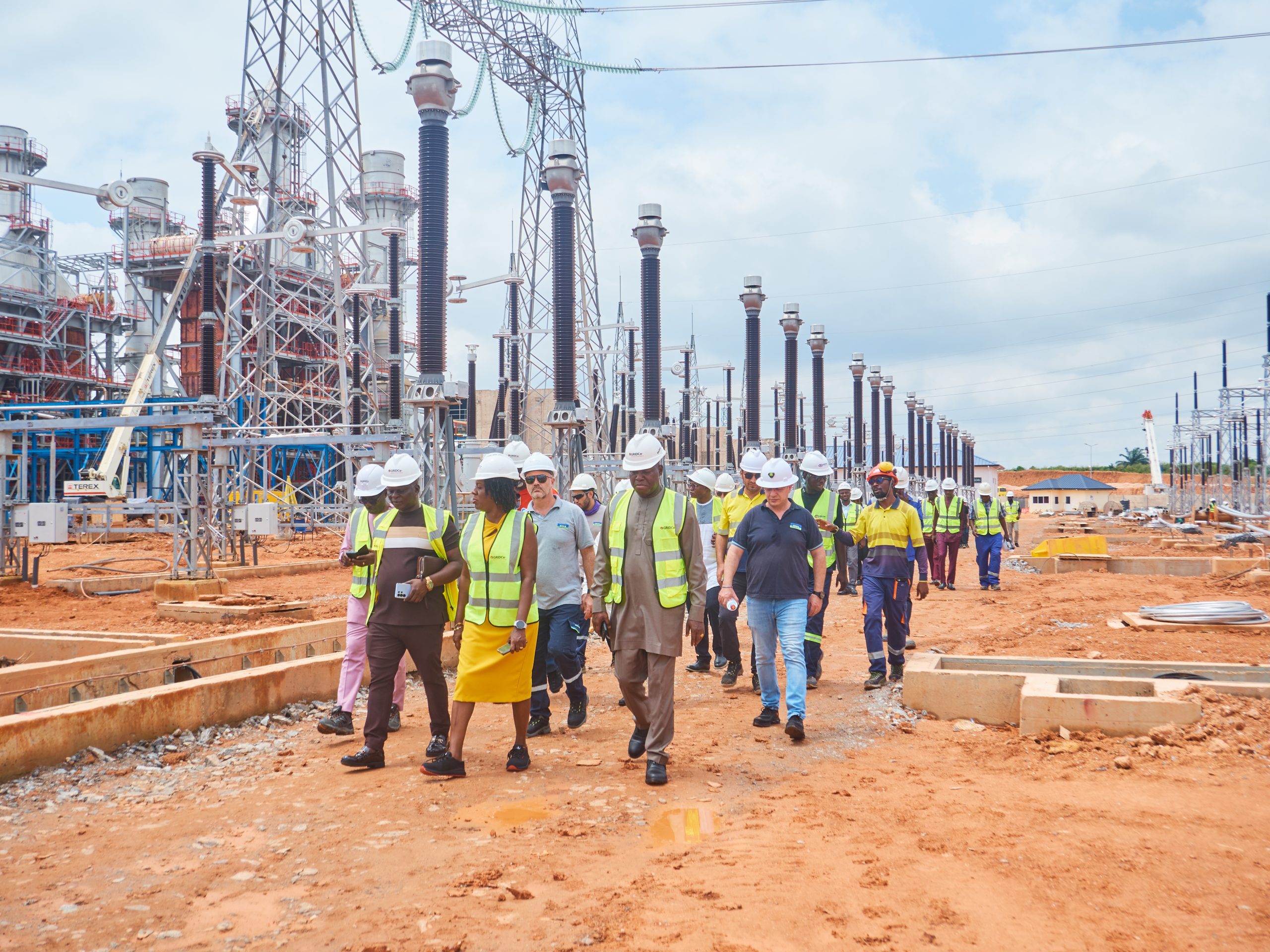
With over 638 kilometres of new transmission lines commissioned in 2024, a €8.7 million European Union-funded upgrade in the Ashanti Region, a new 2040 Master Plan targeting 10% renewables, and a fresh leadership team appointed in May 2026 following a devastating fire at the Akosombo switchyard, Ghana’s state-owned transmission utility is the silent—and often overlooked—fulcrum of the nation’s energy security. Now, as the Ghana Wholesale Electricity Market (GWEM) prepares for launch, and as embedded generation threatens the revenue model of the grid, new CEO Ing. Frank Asirifi Otchere must balance the physics of power flow with the politics of sector reform.
Executive Introduction
In the hierarchy of Ghana‘s electricity sector, the Volta River Authority (VRA) and Bui Power Authority generate the power. The Electricity Company of Ghana (ECG) and NEDCo distribute it to homes and businesses. But connecting generation to distribution—transmitting high-voltage power across vast distances, across regions, and even across borders—is the sole responsibility of the Ghana Grid Company Limited (GRIDCo).

Established in 2006 as the independent transmission utility under the Energy Commission Act, GRIDCo owns and operates the national high-voltage backbone. It manages the 330kV and 161kV transmission lines, the substations that step voltage up and down, and the Supervisory Control and Data Acquisition (SCADA) systems that allow a handful of engineers in a control room to monitor the entire national grid in real-time .
📢 GET A DETAILED ARTICLES + JOBS
Join ASJ's WhatsApp Channel and never miss a post or opportunity.

The scale of the operation is substantial. In 2024 alone, GRIDCo commissioned over 638 kilometres of new transmission lines and expanded the capacity of several bulk supply points . Major infrastructure projects include the €8.7 million Anwomaso–Kumasi transmission line upgrade (co-funded by the EU and AFD) and the ongoing Ghana–Ivory Coast Interconnection Line . The company has also finalized its Generation and Transmission Master Plans for 2025–2040, a strategic roadmap to meet rising demand and integrate up to 10% renewable energy by 2030 .
Yet, for all its technical importance, GRIDCo is a utility under pressure. Senior staff have publicly warned that embedded generation—private solar and diesel plants that bypass the national grid—is “significantly reducing GRIDCo‘s revenue“ at a time when the company is already grappling with “mounting debts, foreign exchange losses, and deteriorating infrastructure“ . Staff have also raised concerns about governance, transparency, and the lack of tax waivers on imported transmission equipment .

The year 2026 has brought dramatic change. In May 2026, following a fire at the Akosombo switchyard control room that disrupted transmission, GRIDCo appointed Ing. Frank Asirifi Otchere as its new Chief Executive Officer . The leadership reshuffle also includes Ing. Samuel Nkansah (Deputy CEO, Finance) and Ing. Samed Abdul Ibrahim (Acting Deputy CEO, Engineering) . The new board, chaired by Kuukua Maurice Ankrah, Esq. , was inaugurated in August 2025 .
For policymakers, energy sector analysts, and investors, GRIDCo represents a case study in infrastructure resilience and systemic vulnerability. It is the backbone of the power sector—but if the backbone is weak, the entire system collapses. This profile examines GRIDCo‘s transmission network, its major infrastructure projects, the 2024–2026 master plan, the embedded generation threat, the recent leadership transition, and the critical question: With a new CEO and a new board, can GRIDCo modernise the grid fast enough to meet Ghana‘s growing demand—and defend its revenue base against the rise of distributed generation?
Company Overview: The Independent Transmission Utility
The Mandate
The Ghana Grid Company Limited (GRIDCo) was established in 2006 under the Energy Commission Act (Act 541). Its primary mandate is to own, manage, and operate the national high-voltage electricity transmission network .
GRIDCo is responsible for:
-
Operating the National Interconnected Transmission System (NITS)
-
Dispatching generation from power plants (hydro, thermal, solar) to meet demand
-
Maintaining voltage stability and frequency control
-
Facilitating cross-border electricity trade with Togo, Benin, Burkina Faso, and Côte d‘Ivoire
-
Acting as the Market Operator for the Ghana Wholesale Electricity Market (GWEM)
Governance: The New Board (August 2025)
On August 19, 2025, Energy Minister John Abdulai Jinapor inaugurated a reconstituted board, tasking it with “spearheading efforts to modernise the grid, reduce transmission losses, and ensure reliable power delivery“ .
The GRIDCo Board (as inaugurated August 2025):
| Name | Position |
|---|---|
| Kuukua Maurice Ankrah, Esq. | Chairperson |
| Ing. Mark Awuah Baah | Acting Managing Director |
| Ing. Daniel Atchule | Member |
| Joshua Anaman Sackey | Member |
| Muhammed Bashiru Nii Narh Alema | Member |
| Solomon Kuyon | Member |
| Joseph Kwame Kumah | Member |
The board‘s composition includes engineering, legal, and financial expertise.
Leadership: The May 2026 Appointment
On May 8, 2026, GRIDCo announced a new leadership team following the fire incident at the Akosombo switchyard control room .
The New Executive Team:

| Name | Position | Effective Date |
|---|---|---|
| Ing. Frank Asirifi Otchere | Chief Executive Officer | May 8, 2026 |
| Ing. Samuel Nkansah | Deputy CEO (Finance and Resources) | May 8, 2026 |
| Ing. Samed Abdul Ibrahim | Acting Deputy CEO (Engineering and Operations) | May 8, 2026 |
The circular announcing the appointments was signed by Board Chairperson Kuukua Maurice Ankrah .
The leadership change came at a critical juncture. In the weeks before, GRIDCo engineers had been working “round the clock“ to restore full power after the Akosombo switchyard fire . The incident highlighted the vulnerability of the national grid to single-point failures.
Previous CEO: Ing. Mark Awuah Baah
Ing. Mark Awuah Baah served as Acting CEO prior to Otchere‘s appointment. He was also a member of the reconstituted board inaugurated in August 2025 . He represented GRIDCo at the PURC familiarisation visit and at the groundbreaking ceremony for the Anwomaso–Kumasi line .
Workforce and Operations
GRIDCo‘s workforce includes engineers, technicians, system operators, and administrative staff. In May 2026, staff participated in the May Day celebrations in Koforidua, with the contingent including “technical and non-technical staff, including National Service Personnel“ .
The company maintains a System Control Centre (SCC) that provides real-time monitoring and management of Ghana‘s electricity transmission network . The SCC is equipped with SCADA systems that allow operators to monitor voltage levels, line loading, and generator output across the country .
The Transmission Network: Scale and Reach
2024 Commissioning: 638 Kilometres of New Lines
In 2024 alone, GRIDCo commissioned over 638 kilometres of new transmission lines across the country . This represents a significant expansion of the national grid.
New lines improve:
-
Reliability: Redundant paths reduce the risk of blackouts
-
Capacity: Higher capacity lines can carry more power
-
Regional integration: New interconnectors enable cross-border trade
Major Projects
1. Anwomaso–Kumasi Transmission Line Upgrade (€8.7 million)
In July 2025, GRIDCo broke ground on the reconstruction of the 161kV Anwomaso–Kumasi (AW1K) Transmission Line .
| Detail | Information |
|---|---|
| Length | 18 kilometres |
| Current Capacity | 364 MVA (single circuit) |
| Upgraded Capacity | Approx. 1,000 MVA (double circuit) |
| Current Loading | Near thermal limit |
| Key Benefit | Reduced low voltage levels in Kumasi and Dunkwa |
| Funding | European Union (€10 million grant), AFD |
| Other Components | SCADA and telecommunication upgrades |
Why this matters:

The existing line operates near its thermal limit, often resulting in low voltage levels in Kumasi and surrounding areas . The upgrade will double transmission capacity, ease loading pressures, and significantly reduce system losses .
EU Ambassador Irchad Razaaly described the project as a “symbol of Europe‘s confidence in Ghana‘s green energy ambitions“ and noted that it would “prepare Ghana for a smarter, greener energy future“ .
2. Pokuase–Anwomaso 330 kV Transmission Line
This line is one of GRIDCo‘s ongoing projects, aimed at strengthening transmission between the Greater Accra and Ashanti regions .
3. Ghana–Ivory Coast Interconnection Line
This project will connect Ghana‘s grid to Côte d‘Ivoire‘s, enabling cross-border electricity trade and improving supply security for both countries.
4. Anwomaso Substation Expansion
The Anwomaso facility is being expanded as part of the broader grid reinforcement programme.
The Master Plan: 2025–2040
GRIDCo has finalized new Generation and Transmission Master Plans to guide the development of Ghana‘s electricity system from 2025 to 2040 .
Key targets:
| Target | Year |
|---|---|
| Renewable energy share | 10% by 2030 |
| Planning horizon | 2025–2040 |
| Key focus | Transmission network expansion to integrate renewables |
The master plan aligns with Ghana‘s commitments under the Paris Agreement and the global push for clean energy and carbon emission reductions . The plan outlines a long-term investment roadmap for the power sector, including major investment needs and network expansion .
The plan is essential for integrating the Bui Power Authority‘s planned 300–500MW solar-plus-storage projects and other private renewable IPPs.
SCADA and Automation
GRIDCo‘s transmission network is monitored and controlled through a Supervisory Control and Data Acquisition (SCADA) system . The SCC is staffed around the clock.
In August 2025, the Public Utilities Regulatory Commission (PURC) led a familiarisation visit to GRIDCo headquarters to deepen understanding of the SCADA systems and real-time operations . The delegation was received by then-Acting CEO Ing. Mark Baah .
PURC Executive Secretary Dr. Shafic Suleman stated that the Commission “remains committed to fostering a strong, collaborative relationship with GRIDCo“ .
The Financial and Operational Challenges
Despite its technical achievements, GRIDCo is facing significant headwinds.
The Embedded Generation Threat (May 2025 Warning)
In May 2025, the Senior Staff Association (SSA) of GRIDCo issued a stark warning: embedded power generation is “significantly reducing GRIDCo‘s revenue“ .
What is embedded generation?
Embedded generation refers to electricity generated by consumers (individuals or businesses) for their own use, bypassing the national grid. This includes rooftop solar panels, diesel generators, and private solar farms connected to distribution networks rather than the transmission grid.
Why it hurts GRIDCo:
-
GRIDCo earns revenue by transmitting power from generators to distributors.
-
When a business generates its own power, it does not purchase transmitted power.
-
GRIDCo‘s fixed costs (maintenance, staffing, debt service) remain, but revenue falls.
The SSA Chairman, Wisdom Kojo Adenyo, stated:
“We must work collaboratively to respond to the impact of embedded generation and other systemic challenges undermining GRIDCo‘s financial health.“
The Akosombo Switchyard Fire (May 2026)
In the weeks before the May 2026 leadership change, a fire broke out at the Akosombo switchyard control room .
The incident disrupted parts of the national electricity transmission network . GRIDCo engineers worked “round the clock“ to restore full power .
President John Dramani Mahama, speaking at the May Day celebrations in Koforidua on May 1, 2026, noted that a “GRIDCo–VRA team of Engineers successfully restored all six turbines at the Akosombo Hydroelectric Dam to full operation“ .
The fire exposed a vulnerability: the concentration of critical infrastructure (switching, control, monitoring) in a single location.
Staff Concerns: Governance, Transparency, and Tax Waivers
At the 7th Biennial Delegates Congress in Tamale (May 2025), the SSA outlined several priority areas for reform :
| Priority | Description |
|---|---|
| Tax waivers on imported equipment | Reduce the cost of transmission infrastructure |
| Full implementation of Cash Waterfall Mechanism | Ensure timely payments to generators and transmitters |
| Debt recovery from ECG | ECG is a major debtor to the entire value chain |
| Optimising energy trading | Maximise revenue from cross-border exports |
| Grid modernisation investment | Replace ageing infrastructure |
The SSA also raised concerns about governance, stating that fairness, transparency, and equity must guide decisions on recruitment, postings, promotions, and training .
The association warned that “staff disengagement could pose an additional threat to the company‘s performance“ .
The Cash Waterfall Mechanism
The Cash Waterfall Mechanism (CWM) is a payment prioritisation system designed to ensure that revenues collected by ECG are distributed fairly to generators (VRA, BPA, IPPs), the transmitter (GRIDCo), and distributors.
The SSA has called for its full implementation , indicating that the mechanism is not functioning as intended.
Foreign Exchange Losses and Debt
The SSA noted that GRIDCo is struggling with mounting debts, foreign exchange losses . GRIDCo‘s debt is not publicly quantified in the search results, but the reference suggests it is material.
Foreign exchange losses arise because:
-
GRIDCo imports equipment (transformers, switchgear, SCADA systems) priced in dollars or euros.
-
Revenue is in cedis.
-
Cedi depreciation increases the cost of servicing foreign-currency obligations.
The Ghana Wholesale Electricity Market (GWEM): GRIDCo as Market Operator
In March 2026, GRIDCo began a company-wide sensitisation programme on the Ghana Wholesale Electricity Market (GWEM) .
What is GWEM?
GWEM represents a shift towards a more organised and competitive electricity trading environment in Ghana . It provides a transparent platform through which electricity can be bought and sold between:
-
Wholesale Suppliers: Generation companies (VRA, BPA, IPPs)
-
Load Serving Entities: Bulk consumers or distribution utilities (ECG, NEDCo)
GRIDCo‘s Role as Market Operator
Under the GWEM framework, GRIDCo will play a central role in administering the Market :
| Function | Description |
|---|---|
| Certification of Market Participants | Verify that buyers and sellers meet eligibility criteria |
| Compliance monitoring | Ensure participants adhere to Market Rules |
| System operations and dispatch | Coordinate real-time generation and transmission |
| Settlement and billing | Calculate payments and facilitate transfers |
| Dispute resolution support | Provide technical input to resolve disagreements |
Market Layers
GWEM will operate across several market layers :
| Layer | Description |
|---|---|
| Day-Ahead Market | Participants submit schedules for electricity delivery in advance |
| Real-Time Market | Manages adjustments needed to maintain system balance |
| Ancillary Services | Reserves to support system stability |
| Capacity arrangements | Ensuring adequate generation is available |
The sensitisation programme is being led by Ing. Linda Baah, Manager for Market Operations .
Strategic Significance
GWEM is expected to:
-
Strengthen transparency and accountability in electricity transactions
-
Improve efficiency in power dispatch
-
Contribute to more predictable pricing
-
Encourage private sector participation
-
Support long-term sustainability within the power sector
For GRIDCo, operating the market is both a responsibility and a potential revenue source (through market fees). However, it also imposes new administrative burdens.
The 2024–2026 Milestones
| Date | Event | Significance |
|---|---|---|
| 2024 | 638+ km of new transmission lines commissioned | Major grid expansion |
| August 2024 (likely) | New 161kV Anwomaso–Kumasi line groundbreaking | €8.7 million EU/AFD project |
| August 2025 | New Board inaugurated (Kuukua Ankrah, Chair) | Governance refresh |
| August 2025 | PURC familiarisation visit | SCADA and SCC insights |
| May 2025 | SSA Congress in Tamale | Embedded generation warning |
| March 2026 | GWEM sensitisation begins | Market Operator role |
| May 2026 | Akosombo switchyard fire | Transmission disruption |
| May 8, 2026 | New CEO appointed (Frank Asirifi Otchere) | Leadership transition |
| May 2026 | May Day celebration (Koforidua) | President confirms restoration of Akosombo turbines |
| June 2026 | Master Plan 2025–2040 finalised | 10% renewables target |
GRIDCo vs. Other SOEs: A Comparative Context
GRIDCo‘s challenges are not unique among Ghana‘s energy state-owned enterprises.
| SOE | Primary Challenge | GRIDCo Parallel |
|---|---|---|
| ECG | Receivables crisis ($1.2B+ owed by customers) | ECG is a key debtor to GRIDCo |
| VRA | $626M debt to GNPC | GRIDCo owes suppliers; is owed by ECG |
| BPA | $1.2B receivables (ECG arrears) | Same off-taker risk |
| NEDCo | 64% landmass, 39% lifeline customers, privatisation controversy | Embedded generation risk |
GRIDCo sits in the middle of the value chain: it cannot generate its own revenue (unlike VRA/BPA) and cannot collect from end users (unlike ECG). It depends entirely on payments from generation companies (for transmission services) and from ECG (for bulk power delivery).
If ECG does not pay VRA, VRA cannot pay GRIDCo. If GRIDCo is not paid, it cannot maintain the transmission network. This is the cascading financial crisis of Ghana‘s power sector.
Challenges and Risks
No analysis of GRIDCo is complete without acknowledging the headwinds it faces.
Risk 1: Embedded Generation Eroding the Revenue Base
The SSA‘s warning about embedded generation is not hypothetical. As solar panel costs fall, more businesses and households will generate their own power. Each kilowatt-hour generated behind the meter is a kilowatt-hour that does not flow through GRIDCo‘s transmission lines—and does not generate transmission revenue.
Mitigation: GRIDCo could advocate for policies requiring embedded generators to pay grid access fees, or invest in its own distributed generation assets.
Risk 2: ECG‘s Financial Distress
GRIDCo is exposed to ECG‘s inability to pay. As the primary off-taker of bulk power, ECG‘s arrears cascade down the value chain. If ECG does not pay, GRIDCo cannot pay its own suppliers (including VRA, BPA, and international equipment vendors).
Mitigation: Full implementation of the Cash Waterfall Mechanism is essential. GRIDCo must have priority over other claimants on ECG‘s revenue.
Risk 3: Single-Point Infrastructure Vulnerabilities
The Akosombo switchyard fire exposed the risk of concentrating critical control infrastructure. A fire, natural disaster, or sabotage at a single substation could disrupt transmission across large areas.
Mitigation: Invest in redundant control centres, decentralised SCADA nodes, and backup power for critical systems.
Risk 4: Ageing Infrastructure
Some of GRIDCo‘s transmission lines and substations are decades old. Ageing equipment is less efficient, more prone to failure, and requires expensive maintenance.
Mitigation: The 2025–2040 Master Plan prioritises grid modernisation, but funding is required.
Risk 5: Foreign Exchange Losses
GRIDCo imports transmission equipment. The cedi‘s volatility increases the cost of these imports, compressing GRIDCo‘s operating margin.
Mitigation: The SSA has called for tax waivers on imported equipment to reduce costs .
Risk 6: Staff Disengagement
The SSA has warned that “staff disengagement could pose an additional threat to the company‘s performance“ . If technical staff lose morale, the grid‘s reliability could suffer.
Mitigation: Transparent governance, fair promotion processes, and competitive compensation.
Risk 7: GWEM Implementation Complexity
Operating the Wholesale Electricity Market requires new systems, new processes, and new staff skills. Implementation delays or errors could disrupt electricity trading and create disputes among market participants.
Mitigation: Phased rollout, stakeholder engagement, and investment in IT systems.
Risk 8: Political Interference
GRIDCo is a state-owned enterprise. Political pressure to prioritise certain customers or generation sources could conflict with the technical requirements of grid stability.
Mitigation: The Energy Minister has called for a “stronger national grid“ . Maintaining GRIDCo‘s operational independence is essential.
Future Outlook
As of June 2026, GRIDCo is executing a strategy of grid expansion, master plan implementation, and market operation readiness. The new leadership team—CEO Ing. Frank Asirifi Otchere, Deputy CEOs Nkansah and Ibrahim—has inherited a utility under financial pressure but with clear strategic direction.
The Immediate Agenda (2026-2028)
-
Complete Anwomaso–Kumasi Line: Finish the €8.7 million upgrade; reduce low voltage issues in Ashanti Region.
-
Operationalise GWEM: Finalise the market rules, certify participants, and launch Day-Ahead and Real-Time markets.
-
Implement the 2025–2040 Master Plan: Begin prioritised transmission expansions to integrate 10% renewables by 2030.
-
Address Embedded Generation: Develop a policy position on grid access fees for embedded generators.
-
Improve Cash Flow: Advocate for full implementation of the Cash Waterfall Mechanism; recover debts from ECG.
-
Investigate Akosombo Switchyard Fire: Complete root cause analysis; implement recommendations to prevent recurrence.
The Bull Case (Optimistic)
-
GWEM Launches Successfully: The wholesale market operates efficiently. GRIDCo‘s market fees provide a new revenue stream. Private investment in generation increases.
-
Embedded Generation Policy Clarified: The government establishes a clear framework for grid access fees. GRIDCo‘s revenue base stabilises.
-
ECG Reform Progresses: ECG‘s collection improves. The Cash Waterfall Mechanism is fully implemented. GRIDCo receives timely payments.
-
Master Plan Funded: International partners (EU, AFD, World Bank) provide grants and concessional loans for transmission expansion. GRIDCo executes the 2025–2040 plan on schedule.
-
Leadership Stability: CEO Otchere and his deputies provide continuity and strategic focus. Staff morale improves. The SSA‘s concerns are addressed.
The Bear Case (Pessimistic)
-
GWEM Implementation Delayed: Technical or regulatory hurdles delay the market launch. GRIDCo‘s role as Market Operator remains theoretical.
-
Embedded Generation Accelerates: Solar costs continue to fall. More large customers leave the grid. GRIDCo‘s revenue declines faster than costs can be cut.
-
ECG‘s Financial Position Worsens: ECG‘s arrears grow. The Cash Waterfall Mechanism remains unimplemented. GRIDCo faces liquidity crisis.
-
Infrastructure Deteriorates: Lack of funding for maintenance leads to more frequent failures. Another fire or outage damages public confidence.
-
Staff Unrest: The SSA‘s concerns are not addressed. Industrial action disrupts transmission operations.
The Verdict
Ghana Grid Company Limited is the silent backbone of Ghana‘s electricity sector. It does not generate the power that lights homes, nor does it read the meters that bill customers. But without GRIDCo, there is no grid.
The company‘s achievements are substantial. In 2024 alone, it commissioned over 638 kilometres of new transmission lines . It is executing a €8.7 million EU-funded upgrade in the Ashanti Region . It has finalised a 15-year Master Plan to guide investment and integrate renewables . And it is preparing to launch the Ghana Wholesale Electricity Market, a transformative reform that will bring transparency and competition to power trading .
Yet, the company is under severe financial pressure. Embedded generation is eroding its revenue base . ECG‘s arrears cascade through the value chain, leaving GRIDCo unpaid . The Akosombo switchyard fire exposed the vulnerability of critical infrastructure .
The May 2026 appointment of Ing. Frank Asirifi Otchere as CEO marks a new chapter. Otchere, supported by Deputy CEOs Nkansah (Finance) and Ibrahim (Engineering), inherits a utility with a clear mandate but limited resources . The board, chaired by Kuukua Maurice Ankrah, Esq., provides governance oversight .
The Senior Staff Association‘s warning about embedded generation should not be dismissed. It is a structural threat to GRIDCo‘s business model. If the government does not clarify the treatment of embedded generators—requiring them to pay grid access fees or contribute to transmission costs—GRIDCo will face a slow, steady decline in revenue .
The Master Plan is a strength. It provides a long-term vision. But a vision without funding is merely a wish list. GRIDCo needs sustained investment—from the government, from development partners (EU, AFD, World Bank), and potentially from private capital.
For the Ghanaian consumer, GRIDCo is invisible—until it fails. When the lights stay on, it is because GRIDCo‘s engineers have balanced load, managed voltage, and prevented cascading failures. When the lights go out, it is often because a transmission line has tripped or a substation has failed.
For the Ghanaian economy, GRIDCo is essential. Mining companies, manufacturers, and service providers depend on reliable transmission. Every minute of unplanned outage costs the economy millions.
GRIDCo is not trying to be the most profitable state-owned enterprise. It is trying to be the most reliable. With a new CEO, a new board, a 15-year master plan, and a wholesale market on the horizon, it has the pieces in place. But the financial headwinds are real. Whether the lights stay on depends on whether the government and development partners provide the support GRIDCo needs to modernise, expand, and defend its revenue base.
FAQ SECTION
1. What is GRIDCo?
GRIDCo (Ghana Grid Company Limited) is Ghana‘s state-owned transmission utility, established in 2006. It owns, manages, and operates the National Interconnected Transmission System (NITS), dispatching power from generators (hydro, thermal, solar) to distribution companies (ECG, NEDCo) .
2. Who is the CEO of GRIDCo?
On May 8, 2026, Ing. Frank Asirifi Otchere was appointed Chief Executive Officer. Ing. Samuel Nkansah was appointed Deputy CEO (Finance and Resources), and Ing. Samed Abdul Ibrahim was appointed Acting Deputy CEO (Engineering and Operations) .
3. Who is the Board Chairperson of GRIDCo?
The Board of Directors is chaired by Kuukua Maurice Ankrah, Esq. The board was inaugurated in August 2025 by Energy Minister John Abdulai Jinapor .
4. How much transmission line did GRIDCo commission in 2024?
In 2024 alone, GRIDCo commissioned over 638 kilometres of new transmission lines across the country .
5. What is the Anwomaso–Kumasi transmission line project?
The project is an €8.7 million upgrade of the 161kV Anwomaso–Kumasi line, co-funded by the European Union and the French Development Agency (AFD). It will replace an 18km single-circuit line with a double-circuit line, increasing capacity from 364 MVA to approximately 1,000 MVA .
6. What is the Ghana Wholesale Electricity Market (GWEM)?
GWEM is a new competitive electricity trading platform where generators (wholesale suppliers) can sell power to distribution utilities (load-serving entities). GRIDCo will act as the Market Operator, responsible for certification, compliance, dispatch, settlement, and dispute resolution .
7. What is embedded generation, and why is it a threat to GRIDCo?
Embedded generation refers to electricity generated by consumers (businesses or households) for their own use, bypassing the national grid. This reduces GRIDCo‘s revenue because the power does not flow through its transmission lines, even though GRIDCo‘s fixed costs remain .
8. What happened at the Akosombo switchyard in May 2026?
A fire broke out at the Akosombo switchyard control room, disrupting parts of Ghana‘s electricity transmission network. GRIDCo engineers, working with VRA, restored all six turbines at the Akosombo Dam to full operation .
9. What is GRIDCo‘s Master Plan?
GRIDCo has finalised new Generation and Transmission Master Plans for 2025–2040. The plan aims to meet rising electricity demand, integrate renewable energy (targeting 10% by 2030), and provide a long-term investment roadmap for the power sector .
10. What is the Cash Waterfall Mechanism?
The Cash Waterfall Mechanism is a payment prioritisation system designed to ensure that revenues collected by ECG are distributed fairly to generators (VRA, BPA, IPPs), the transmitter (GRIDCo), and distributors. The Senior Staff Association has called for its full implementation .
11. What are the main challenges facing GRIDCo?
GRIDCo faces several challenges: embedded generation eroding revenue, ECG‘s financial distress (arrears), ageing infrastructure, foreign exchange losses on imported equipment, governance concerns raised by staff, and the risk of single-point failures (as seen in the Akosombo fire) .
12. Where is GRIDCo headquartered?
GRIDCo is headquartered in Accra, with its System Control Centre (SCC) providing real-time monitoring and management of the national grid .
QUICK FACTS BOX
| Item | Details |
|---|---|
| Established | 2006 (Energy Commission Act, Act 541) |
| Headquarters | Accra, Ghana |
| Industry | Electricity Transmission |
| Primary Mandate | Own, manage, and operate the National Interconnected Transmission System (NITS) |
| Chief Executive Officer | Ing. Frank Asirifi Otchere (appointed May 8, 2026) |
| Deputy CEO (Finance) | Ing. Samuel Nkansah |
| Acting Deputy CEO (Engineering) | Ing. Samed Abdul Ibrahim |
| Board Chairperson | Kuukua Maurice Ankrah, Esq. |
| Board Members | Ing. Mark Baah, Ing. Daniel Atchule, Joshua Sackey, Bashiru Alema, Solomon Kuyon, Joseph Kumah |
| New Transmission Lines (2024) | 638+ kilometres |
| Major Project (2025–2026) | Anwomaso–Kumasi 161kV upgrade (€8.7 million, EU/AFD) |
| Master Plan Horizon | 2025–2040 |
| Renewable Target | 10% by 2030 |
| System Control Centre | SCADA-based real-time monitoring |
| Key Threat | Embedded generation reducing revenue |
| Staff Association | Senior Staff Association (SSA) |
| GWEM Role | Market Operator (certification, compliance, dispatch, settlement) |
| Regulator | Public Utilities Regulatory Commission (PURC) |
| Line Ministry | Ministry of Energy and Green Transition |
| Oversight Body | State Interests and Governance Authority (SIGA) |
| Website | gridcogh.com |
Source: Accra Street Journal
Last Updated on June 5, 2026 by Samuel Kwame Boadu
Disclaimer: Some content on Accra Street Journal may be aggregated, summarized, or edited from third-party sources for informational purposes. Images and media are used under fair use or royalty-free licenses. Accra Street Journal is a subsidiary of SamBoad Publishing Hub under SamBoad Business Group Ltd, registered in Ghana since 2014.
For concerns or inquiries, please visit our Privacy Policy or Contact Page.

Samuel Kwame Boadu is a Ghanaian media entrepreneur and storyteller with a passion for amplifying urban voices and uncovering everyday truths. He is the Editor-in-Chief and Founder of Accra Street Journal, a dynamic digital platform dedicated to capturing the pulse of Ghana’s capital—its people, culture, challenges, business, sports and innovations.