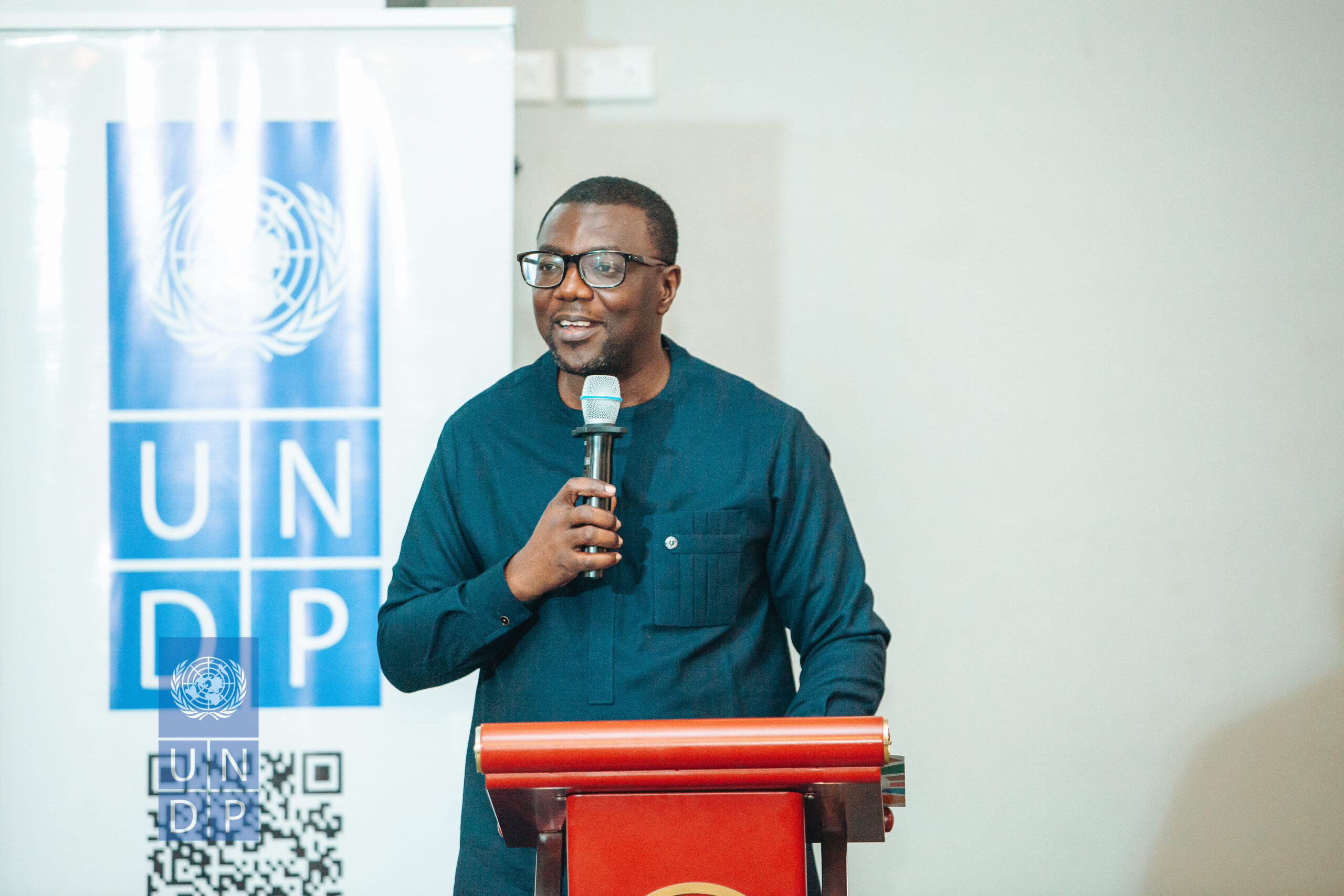
“A country’s credit rating shapes how global markets perceive it and directly affects borrowing costs.” – UNDP Ghana, September 2025
Executive Introduction
Sovereign credit ratings are not abstract assessments produced in New York and London offices far removed from Ghanaian reality. They are mechanisms that directly determine how much Ghana pays to borrow, whether foreign investors bring capital into the country, how stable the cedi remains, and ultimately, how much fiscal space exists for healthcare, education, and infrastructure.

The UNDP has described this dynamic with precision: “Ghana’s credit ratings shape how global markets perceive the country and directly affect borrowing costs. Stronger engagement with rating agencies will unlock resources for critical investments in human development, climate resilience, and inclusive growth” .
📢 GET A DETAILED ARTICLES + JOBS
Join ASJ's WhatsApp Channel and never miss a post or opportunity.

This ASJ report explains the five critical channels through which credit ratings affect Ghana’s economy: government borrowing costs, exchange rate stability, foreign investment, domestic credit markets, and market perception. Each channel represents a direct transmission mechanism from a rating agency’s decision to the daily economic reality of Ghanaian citizens and businesses.
Part 1: The Economic Transformation of Ghana – Why Ratings Matter More Than Ever
Ghana has transitioned from a low-income country to middle-income status, fundamentally changing its access to development finance. This transformation has made sovereign credit ratings significantly more consequential.

The Shift from Concessional Financing to Capital Markets
As countries move from low-income to middle-income status, they become ineligible for concessional financing and traditional aid. They must increasingly rely on international capital markets to fund development. The mechanism through which these markets assess creditworthiness is the sovereign credit rating .
UNDP Senior Economist Jacob Assa explained: “The way these markets assess your creditworthiness is through a credit rating.” He noted that “as development financing shifts and traditional sources decline, more countries are turning to international capital markets to fill the gap” .
For Ghana, this means that the rating assigned by agencies like Fitch, Moody’s, and S&P Global directly determines:
-
Whether the country can access international capital markets
-
The interest rates it will pay on new debt
-
The pool of investors eligible to purchase Ghanaian bonds
The 2025–2026 Recovery
Ghana’s ratings have improved significantly from the depths of the 2022 debt crisis:
| Agency | Rating | Outlook | Date |
|---|---|---|---|
| Fitch | B | Positive | May 2026 |
| Moody’s | Caa1 | Positive | April 2026 |
| S&P | B- | Stable | May 2025 |
The country has recorded a cumulative five-notch recovery from the crisis . The ECA/APRM Africa Credit Rating Outlook 2026 confirmed that “several African countries experienced sovereign credit rating upgrades in the second half of 2025, driven by stronger macroeconomic performance, fiscal consolidation, and progress in debt restructuring” . Ghana was specifically cited as one of the countries recording upgrades .
Part 2: Channel One – Government Borrowing Costs
The most direct and measurable effect of sovereign credit ratings is on the interest rates Ghana must pay when it borrows. A higher rating means lower risk perception, which translates into lower yields on bonds and lower interest on loans.
The Cost of Being Below Investment Grade
When a country falls below investment grade, borrowing costs rise substantially. Many institutional investors—including pension funds, insurance companies, and sovereign wealth funds—face restrictions limiting their investment to investment-grade issuers. Countries rated below this threshold are excluded from large pools of capital .
Daniel Cash, a researcher on sovereign credit ratings, notes: “Borrowing costs rise sharply once countries fall below investment grade. When debt service consumes large shares of budgets, less remains for schools, hospitals or climate adaptation” .
For Ghana, this means that remaining in speculative grade territory imposes a direct penalty on every cedi borrowed from international markets.

The 2025 Domestic Bond Revival
The relationship between ratings and borrowing costs is observable in Ghana’s domestic market as well. Standard Chartered’s Head of Africa Strategy noted in June 2025 that Ghana’s improving economic profile—including the Fitch upgrade to B-—was setting the stage for a local bond revival.
Samir Gadio, Head of Africa Strategy at Standard Chartered Plc, stated: “The conditions seem right to resume local currency bond issuance. Cedi gains should support further disinflation and monetary easing, which should facilitate renewed local-currency bond issuance” .
The positive momentum was reflected in Ghana’s dollar bonds trading in London, with 2035 notes rising to 76.66 cents on the dollar and 2029 notes climbing to 93.02 cents—marking the third consecutive day of increases following the Fitch upgrade .
The Counterargument: Caution from the Institute of Fiscal Studies
Not all analysts believe that improved ratings should trigger immediate borrowing. The Institute of Fiscal Studies (IFS) has urged the government to resist the temptation of leveraging recently improved credit ratings to return to the international bond market.
Leslie Dwight Mensah, a research fellow at IFS, warned: “Resuming such borrowing will cause the already high debt level to sharply worsen, causing debt service cost to sharply increase, rapidly” .
The IFS argued that “an early return to the market could prolong and worsen the country’s economic challenges” and that “Ghana’s fiscal prudence over the past half year was largely underpinned by weak expenditure execution” .
This caution highlights an important nuance: improved ratings create the capacity to borrow at lower cost, but whether that capacity should be exercised depends on fiscal discipline and the intended use of proceeds.
Part 3: Channel Two – Exchange Rate Stability
Academic research confirms that sovereign credit ratings have measurable, statistically significant impacts on foreign exchange markets. A study using a Time-Varying Parameter Vector Autoregression (TVP-VAR) framework examined the dynamic connectedness between public debt, exchange rate, credit rating, and economic growth in Ghana using monthly data from December 2012 to January 2024 .
Key Research Findings
| Finding | Implication for Ghana |
|---|---|
| Connectedness among Ghana’s macroeconomic variables is crisis-driven | Ratings matter most precisely when Ghana is most vulnerable |
| Exchange rate emerges as the dominant shock transmitter across both domains | Currency movements drive broader economic volatility |
| Credit rating emerged as a moderate shock transmitter in both short and long-term frequencies | Rating changes affect the exchange rate, which affects everything else |
| GDP per capita consistently acts as a net recipient | Economic growth responds to shocks rather than causing them |
Asymmetric Effects: Why Downgrades Hurt More Than Upgrades Help
The academic literature has established that markets respond more strongly to negative credit signals than positive ones. Research using entropy balancing—a treatment effect methodology that addresses self-selection and endogeneity biases—found robust evidence that “a positive (negative) sovereign credit rating event significantly increases (decreases) on average exchange rates, with a larger magnitude for negative events” .
Notably, “only negative large (i.e., above one notch) rating events trigger a significant response of exchange rates” . This finding explains why Ghana’s rapid downgrades in 2022—from B to CC in a matter of months—triggered such severe currency depreciation, while the 2025–2026 upgrades have produced more gradual appreciation.
The 2025–2026 Cedi Appreciation
Standard Chartered’s analysis confirmed the academic findings in practice: “Cedi gains should support further disinflation and monetary easing” . The currency appreciation that followed the rating upgrades was not coincidental—it was the direct result of improved market confidence transmitted through the rating mechanism.

By June 2025, the cedi had appreciated by 43% in the year, which “improved the inflation outlook and is expected to pave the way for the Bank of Ghana to potentially cut its benchmark interest rate” .
Part 4: Channel Three – Foreign Investment and Market Access
Sovereign credit ratings serve as a signalling mechanism for international investors who lack the resources to conduct independent country-by-country risk assessments.
The Governance-Like Power of Ratings
Daniel Cash argues that credit rating agencies wield “governance-like influence over access to finance, borrowing costs and fiscal space” . This influence shapes “which countries can access development finance, at what cost, and on what terms” .
Crucially, this governance-like power emerged not through deliberate public design but through a gradual, uncoordinated process. Cash explains: “Ratings began as a commercial information service for investors. Over several decades, from the 1970s to the 2000s, they became embedded in financial regulation” . The result is that “sovereign credit ratings influence which countries can access development finance, at what cost, and on what terms” .
The Africa Reform Challenge
The UNDP has acknowledged that Africa faces structural challenges in this system. “Many African countries, including Ghana, have transitioned to middle-income status, making them ineligible for concessional financing and aid,” Assa noted . This shift has pushed nations to rely heavily on international capital markets, where credit ratings serve as a key determinant of creditworthiness .
However, the response from African governments has been proactive. The UNDP has assembled “a consortium of 15 former experts from leading rating agencies to provide training and advisory services to governments” . The initiative is aimed at “helping African governments build stronger capacities for engagement with rating agencies to ensure fairer and more accurate assessments” .
Part 5: Channel Four – Domestic Credit Markets
Sovereign credit ratings have spillover effects on private sector borrowing. When Ghana’s sovereign rating was downgraded in 2022, the interest rates that Ghanaian banks paid on international syndicated loans increased, and these higher costs were passed on to local businesses.
The Interconnectedness Academic Finding
The TVP-VAR study revealed that “connectedness among Ghana’s macroeconomic variables is crisis-driven” . This means that during periods of economic stress, the links between sovereign ratings, exchange rates, public debt, and economic growth strengthen dramatically.
The study recommended: “prioritising short-term volatility management, coordinated fiscal-monetary frameworks, and enhanced debt communication strategies” . These findings provide “valuable insights for policymakers, central bankers, and investors in designing effective macroeconomic policies for small open economies” .
Corporate Borrowing Costs
Higher sovereign ratings typically translate, with a lag, into lower borrowing costs for Ghanaian banks and, eventually, lower interest rates for Ghanaian businesses. Conversely, when sovereign ratings deteriorate, corporate borrowing costs rise—even for companies with strong fundamentals that have nothing to do with government debt.
This transmission channel explains why private sector actors have a direct stake in Ghana’s credit rating outcomes, even if they never borrow from international markets themselves. The rating affects the entire financial ecosystem.
Part 6: Channel Five – Market Perception and the Narrative Challenge
The UNDP has emphasized that “it’s not enough to have a good economy. It’s important to tell a strong narrative about your economy, to give the right data, and to improve coordination between government ministries talking to the agencies” .
The Data Gap Problem
Assa noted that “as development financing shifts and traditional sources decline, more countries are turning to international capital markets to fill the gap. As part of efforts to rally support behind governments like Ghana, UNDP will work to strengthen national capacities helping them engage effectively with credit rating agencies, secure fairer assessments, and access affordable financing that drives sustainable development” .
The workshop in Ghana brought together 30 participants from key institutions, including the Ministry of Finance, Bank of Ghana, ECG, Ghana Statistical Service, GRA, GNPC, and the Minerals Income Investment Fund, to address these capacity gaps .
The African Credit Rating Agency Alternative
The limitations of the “Big Three” rating agencies in their approach to African sovereigns have not gone unchallenged. The African Union is preparing to launch the African Credit Rating Agency (AfCRA) . The move reflects growing momentum behind calls for a “more balanced, regionally grounded system of debt evaluation” .
Dr. Daniel Cash has pointed out that “the absence of a local presence and a nuanced understanding of African economies results in ratings that can misrepresent risk and unfairly penalize progress” . This “systemic gap puts African countries at a comparative disadvantage, especially when measured against similarly situated peers in Latin America or Asia” .
The UNDP Initiative
The UNDP Africa Credit Ratings Initiative, with support from the Government of Japan, concluded a two-day National Workshop on Sovereign Credit Ratings and Development in Ghana in September 2025. The training forms part of a broader effort helping African countries “strengthen institutional and technical capacity to engage effectively with international credit rating agencies” .
Participants gained practical insights into “rating methodologies, data inputs, peer comparisons, the ratings process, and appeal mechanisms” . They also examined “the links between sovereign ratings, state-owned enterprises, and investor perspectives” while drafting “Terms of Reference for a national Sovereign Credit Rating Committee” .
Part 7: The Future – Rating Outlook and Strategic Implications
The Positive Trajectory
The ECA/APRM Africa Credit Rating Outlook 2026 confirmed that “several African countries experienced sovereign credit rating upgrades in the second half of 2025, driven by stronger macroeconomic performance, fiscal consolidation, and progress in debt restructuring” . Ghana was specifically cited among countries that recorded upgrades .
The Reform Recommendations
The UNDP has identified key priorities for strengthening Ghana’s rating position:
-
Stronger engagement with rating agencies to unlock resources for critical investments
-
National capacity building in data presentation and proactive communication
-
Coordinated government response across ministries and agencies
-
Standardised procedures for engaging with rating agencies
-
A national Sovereign Credit Rating Committee to coordinate these efforts
The UNDP’s conclusion: “By improving Ghana’s sovereign credit ratings, the initiative supports inclusive growth, economic resilience, and affordable financing for sustainable development” .
Conclusion: Ratings as a Strategic Asset
Sovereign credit ratings are not abstract assessments. They are strategic assets that directly determine Ghana’s cost of capital, access to international markets, and fiscal space for development. The UNDP has framed the challenge precisely: “Ghana’s credit ratings shape how global markets perceive the country and directly affect borrowing costs” .
The channels are clear and consequential:
| Channel | Mechanism | Impact on Ghana |
|---|---|---|
| Government borrowing costs | Higher ratings → lower interest rates | Reduced debt service, more fiscal space |
| Exchange rate stability | Upgrades support currency appreciation | Lower imported inflation, monetary policy flexibility |
| Foreign investment | Stronger ratings attract capital | Increased reserves, growth financing |
| Domestic credit | Sovereign rating influences bank funding costs | Lower corporate borrowing rates |
| Market perception | Ratings signal credibility | Access to international capital markets |
The academic evidence confirms that “connectedness among Ghana’s macroeconomic variables is crisis-driven” . This means that ratings matter most when Ghana is most vulnerable. The 2022 crisis—when rapid downgrades accelerated capital outflows and worsened the currency crisis—illustrates the vicious cycle that poor ratings can trigger.
The 2025–2026 recovery—characterised by the cedi appreciating 43% in a year, inflation falling to single digits, and the domestic bond market reviving—illustrates the virtuous cycle that improved ratings can support .
For Ghana’s policymakers, the message is clear: ratings are not something to be passively received. They are something to be actively managed—through credible fiscal consolidation, transparent data reporting, and strategic engagement with the agencies. The UNDP is supporting this effort, but the primary responsibility lies with Ghana’s own institutions.
As UNDP’s Jacob Assa concluded: “By strengthening capacity in data presentation, proactive engagement, and constructive responses to agency feedback, Ghana can better position itself in the global financial market” .
The rating agencies provide the assessment. Ghana’s policies determine the outcome.
Quick Reference: How Ratings Affect Ghana
| Rating Action | Transmission Mechanism | Observable Effect |
|---|---|---|
| Upgrade | Lower perceived risk → lower yields | Reduced borrowing costs; currency appreciation; increased investor interest |
| Downgrade | Higher perceived risk → higher yields | Increased debt service costs; currency depreciation; capital outflows |
| Outlook change | Signals future rating direction | Medium-term market positioning; investment decisions |
Ghana’s Current Ratings (May 2026):
-
Fitch: B (Positive)
-
Moody’s: Caa1 (Positive)
-
S&P: B- (Stable)
Source: Accra Street Journal
Last Updated on June 10, 2026 by Samuel Kwame Boadu
Disclaimer: Some content on Accra Street Journal may be aggregated, summarized, or edited from third-party sources for informational purposes. Images and media are used under fair use or royalty-free licenses. Accra Street Journal is a subsidiary of SamBoad Publishing Hub under SamBoad Business Group Ltd, registered in Ghana since 2014.
For concerns or inquiries, please visit our Privacy Policy or Contact Page.

Samuel Kwame Boadu is a Ghanaian media entrepreneur and storyteller with a passion for amplifying urban voices and uncovering everyday truths. He is the Editor-in-Chief and Founder of Accra Street Journal, a dynamic digital platform dedicated to capturing the pulse of Ghana’s capital—its people, culture, challenges, business, sports and innovations.