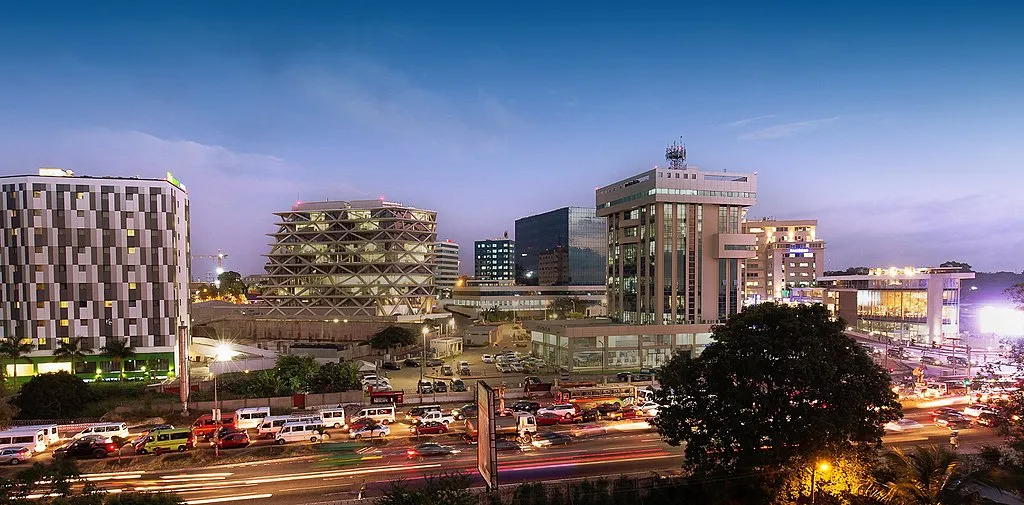
Accra’s urban landscape continues to evolve at a pace few cities on the continent can rival. Between rapid population growth, expanding infrastructure corridors, and deepening commercial interest, the areas offering real value tomorrow are not always the ones commanding the highest prices today. For residents, investors, and policymakers, identifying the neighbourhoods with the greatest future growth potential matters because it reveals where opportunities will cluster — economically, socially and in real estate.
This analysis draws on current urban trends, infrastructure plans, and housing market patterns to map out the most promising neighbourhoods for future growth in Accra. It also reflects on how these areas connect to longstanding market drivers identified by Accra Street Journal’s reporting on real estate patterns, infrastructure development, and urban dynamics.

1. East Legon Hills / Tetteh Quarshie – A New Growth Pinnacle
East Legon has long been a premium address. But East Legon Hills and the Tetteh Quarshie perimeter are now emerging as dynamic spaces with immense upside. The ongoing expansion of road infrastructure, proximity to business districts, and the neighbourhood’s blending of residential, commercial, and retail development make it foundational to Accra’s next growth phase.
📢 GET A DETAILED ARTICLES + JOBS
Join ASJ's WhatsApp Channel and never miss a post or opportunity.

Key reasons for its promise:
-
Close access to major expressways
-
Strong presence of amenities (schools, hospitals, dining)
-
New mixed-use developments that attract both residents and enterprises
-
High investor interest from local and diaspora buyers
This corridor embodies a trend where traditional prestige zones evolve into business and lifestyle hubs — a shift likely to strengthen in coming years.

2. Pokuase / Ofankor – The Western Expansion Frontier
On Accra’s western side, Pokuase and Ofankor have become magnets for both homes and commerce, driven by improved expressway access and ongoing suburban growth. Once considered peripheral, these areas are now central to Accra’s spatial expansion.
Growth factors include:
-
The completion of the Pokuase Interchange and feeder routes
-
Affordable land relative to central Accra
-
Rising housing demand from middle-income earners
-
Expansion of market services, retail centres, and planned estates
Accra Street Journal’s coverage has noted that improvements in traffic flow and connectivity make Pokuase and Ofankor increasingly attractive for longer-term residential settlement and commercial development.
3. Kasoa Eastern Corridor – Spillover from Urban Congestion
While technically part of the Greater Accra Metropolitan Area’s fringe, the Kasoa Eastern Corridor remains one of the most talked-about growth zones — and for good reason. Rising prices and congestion within Accra’s core have pushed demand outward, making Kasoa not just an overflow location but a vibrant sub-hub in its own right.
Promising drivers include:
-
Proximity to the Capital City
-
Growing industrial and logistics activity
-
Competitive housing prices for families and investors
-
Improve transport connections, including bus transit and arterial routes
Kasoa’s evolution reflects a broader theme: suburban corridors with good road access can become major population and economic centres within a decade.
4. Spintex / Teshie – Established but Expanding
Spintex Road and Teshie combine older residential density with new commercial and mixed-use development projects. Their growth trajectory has remained steady, anchored by both local demand and business interest.
Key attractions here:
-
A mix of formal and informal commercial clusters
-
Increasing digital commerce hubs
-
Catering to a wide demographic — from students to professionals
-
A less congested pace of life with strong urban connectivity
Spintex and Teshie benefit from mature infrastructure and growing investment in residential estates, shopping centres, and logistics.

5. Airport Circle / Lashibi – Strategic Growth Pivot
The area around Airport Circle and nearby suburbs like Lashibi is poised for continued growth due to strategic location and infrastructure investments. Its proximity to the airport, major highways, and business districts makes it particularly appealing for:
-
Corporate offices
-
Short-stay residences and hospitality
-
Commercial service development
Airport Circle serves as a key urban pivot — linking central Accra to both northern and eastern corridors — and this strategic placement fuels sustained upward movement in property value and economic activity.
6. Ashaley Botwe / Ablormi – The Emerging Eastern Spine
Further northeast, areas like Ashaley Botwe and Ablormi reflect Accra’s organic expansion into new residential and commercial space. Driven by relative affordability and expanding infrastructure, growth here is likely to be sustained.
Considerations:
-
Improved road networks linking to Cantonments and East Legon
-
Ballooning demand for larger residential plots
-
New schools and community services targeting families
-
Proximity to the Tema motorway
These neighbourhoods are attracting both developers and households seeking space and access without the high premiums of central Accra.
7. Tema Community 25 and Surroundings – Suburban Reinvention
Tema’s former perception as primarily industrial is gradually shifting. Areas like Tema Community 25 increasingly attract residential and commercial interest, backed by:
-
Accessibility to Tema’s port and industrial base
-
Lower entry prices for land and property
-
Committed infrastructure improvement plans
-
Rising middle-class settlement trends
Though distinct from central Accra, Tema’s neighbourhoods are part of the broader metropolitan growth footprint and deserve inclusion in any discussion on future growth zones.
Why These Neighbourhoods Are Poised for Growth
Across these areas, several structural factors explain their growth potential:
1. Infrastructure Connectivity
Road networks, interchanges, and transit plans directly shape desirability. Locations with easier access to key arteries — such as the Tetteh Quarshie Interchange or the Pokuase Link — consistently attract population and investment.
2. Affordable Entry Today, Value Tomorrow
Many of the neighbourhoods identified offer relative affordability now but have strong potential for appreciation as infrastructure and services improve.
3. Mixed-Use Development Patterns
Growth is strongest where residential, commercial, and lifestyle functions coalesce. Estates with integrated amenities naturally attract more sustained demand.

4. Shifting Commuting Patterns
As traffic intensifies, residents prioritise areas that reduce commute stress or offer improved accessibility. This reality redistributes growth across suburban corridors.
5. Population Diversification
Young families, professionals, and diaspora returnees are seeking housing alternatives outside central Accra. Their preferences — space, affordability, and community — drive growth beyond traditional nodes.
Challenges Ahead
While these neighbourhoods show promise, challenges remain. Developers and policymakers must address:
-
Infrastructure maintenance and expansion
-
Environmental sustainability
-
Service provision (water, power, healthcare)
-
Housing affordability and inclusion
-
Integrated urban planning
Growth without planning can produce congestion, informal sprawl, and infrastructure strain — phenomena already present in parts of Accra’s western and eastern peripheries.
FAQs
Which areas are most promising for property investment near Accra?
East Legon Hills, Pokuase/Ofankor, and the Airport Circle corridor are among the top growth zones.
Are these areas affordable compared to central Accra?
Yes — they generally offer lower entry prices now, with high potential for value appreciation.
Will infrastructure developments shape these neighbourhoods’ future?
Strongly — transport, utilities, and community services are key to sustained growth.
Is suburban expansion affecting central Accra property values?
Yes — as suburbs grow, pressure on central prices remains consistent.
Can these areas attract commercial development too?
Many already do, especially along major corridors and around mixed-use estates.
Source: Accra Street Journal
Last Updated on January 27, 2026 by Samuel Kwame Boadu
Disclaimer: Some content on Accra Street Journal may be aggregated, summarized, or edited from third-party sources for informational purposes. Images and media are used under fair use or royalty-free licenses. Accra Street Journal is a subsidiary of SamBoad Publishing Hub under SamBoad Business Group Ltd, registered in Ghana since 2014.
For concerns or inquiries, please visit our Privacy Policy or Contact Page.

Samuel Kwame Boadu is a Ghanaian media entrepreneur and storyteller with a passion for amplifying urban voices and uncovering everyday truths. He is the Editor-in-Chief and Founder of Accra Street Journal, a dynamic digital platform dedicated to capturing the pulse of Ghana’s capital—its people, culture, challenges, business, sports and innovations.