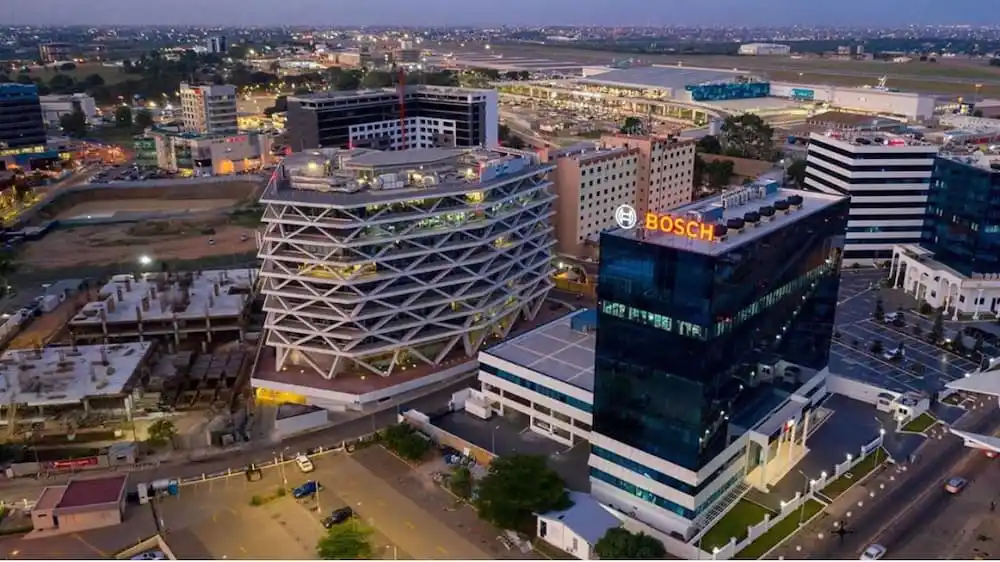
Across Ghana, building a home or commercial property is a major financial commitment. Yet nowhere is that commitment more expensive than in Accra. From land acquisition to final finishes, construction costs in the capital consistently exceed those in other regions. This price gap is not merely a function of prestige or demand—it reflects deep structural, economic, and regulatory realities unique to Accra’s urban environment.
Understanding why building in Accra costs more offers insight into broader housing affordability challenges and the pressures shaping Ghana’s most important city. This is an Accra Street Journal’s Perspective and Editorial

Accra’s Unique Position in Ghana’s Economy
Accra occupies a central position in Ghana’s political, economic, and administrative life. This concentration of power and opportunity drives intense competition for space, labour, and resources.
📢 GET A DETAILED ARTICLES + JOBS
Join ASJ's WhatsApp Channel and never miss a post or opportunity.

Developers, businesses, institutions, and households all compete within the same urban footprint. As demand intensifies, every component of construction—from land to labour—becomes more expensive.
Accra’s cost premium begins with its centrality.

Land Scarcity and Acquisition Costs
Land is the single most expensive input in Accra’s construction process. Unlike many regions where land remains relatively abundant, Accra faces acute scarcity.
Several factors contribute:
-
Limited undeveloped land within prime locations
-
Fragmented customary ownership
-
Multiple claims and litigation risks
-
High compensation expectations
Securing litigation-free land often requires extensive due diligence and negotiation, adding both time and cost. Developers price these risks into final building costs.
In other regions, land acquisition is typically faster, cheaper, and less contested.
Complex Land Tenure Systems
Accra’s land tenure complexity further inflates costs. Overlapping claims, stool lands, family ownership, and private interests create uncertainty.
Resolving these issues often involves legal fees, compensation payments, and prolonged negotiations. Even after acquisition, developers may face disputes that delay construction.
Time, in construction, is money. Delays increase financing costs and contractor fees, all of which raise overall project expenses.
High Cost of Construction Materials
Building materials cost more in Accra than in most parts of Ghana. Several dynamics drive this disparity:
-
Imported materials dominate urban construction
-
High demand leads to price competition
-
Limited economies of scale for small builders
Materials such as cement, steel, tiles, fittings, and finishing items are in constant demand. Suppliers price accordingly.

While materials are transported nationwide, Accra’s consumption intensity keeps prices elevated.
Labour Costs and Skilled Workforce Competition
Accra attracts the country’s most skilled construction labour—engineers, architects, electricians, plumbers, and masons. However, this concentration creates intense competition for talent.
Skilled labour commands higher wages due to:
-
Cost of living pressures
-
Strong demand from multiple projects
-
Opportunity for premium contracts
Unskilled labour costs are also higher due to urban living expenses. In contrast, other regions benefit from lower wage expectations and less competitive labour markets.
Labour scarcity amplifies cost escalation.
High Demand for Speed and Quality
Construction in Accra is rarely leisurely. Time pressure is a defining feature of urban development.
-
Financing timelines
-
Lease commitments
As a result, builders demand faster turnaround times, which require larger teams, overtime work, and higher contractor premiums.
Speed costs money—and Accra demands speed.
Infrastructure Constraints and Site Preparation
Ironically, despite being the capital, Accra’s infrastructure constraints raise construction costs.
Challenges include:

-
Poor drainage in some areas
-
Flood-prone land requiring engineering solutions
-
Inadequate road access to sites
-
Limited utility connections
Site preparation becomes expensive as developers invest in drainage, access roads, and utility extensions. These costs are absorbed into overall construction budgets.
In many regions, natural terrain requires less intervention.
Regulatory and Approval Costs
Building in Accra involves navigating complex regulatory frameworks. Planning approvals, zoning compliance, environmental assessments, and inspections all carry costs.
While regulations exist nationwide, enforcement intensity is highest in Accra. Delays in approvals increase holding costs, while compliance requirements add to project budgets.
Regulatory certainty has value—but it also has a price.
Financing Costs and Interest Rates
Construction financing in Accra often relies on short-term, high-interest funding. Given land costs and project scale, developers borrow significant amounts.
Interest payments accumulate quickly, especially when projects face delays. Financing costs are then passed on through higher sale prices or rents.
In regions with lower land values and smaller project sizes, financing exposure is reduced.
High Standards of Design and Finishing
Accra’s market expectations drive higher standards. Buyers and tenants demand modern designs, premium finishes, and reliable amenities.
This includes:
-
Imported fixtures
-
Energy-efficient systems
-
Security installations
-
High-end fittings
Meeting these expectations increases material and labour costs. In other regions, functional designs often suffice, keeping expenses lower.
Urban demand shapes construction ambition.
Competition for Contractors and Consultants
Accra hosts the highest concentration of active construction projects in Ghana. Contractors and consultants have multiple options, allowing them to select higher-paying engagements.
Competition pushes fees upward, especially for reputable firms. Smaller builders struggle to access quality services without paying premium rates.
Professional scarcity translates directly into higher costs.
Urban Logistics and Operational Challenges
Operating construction sites in Accra presents logistical difficulties. Traffic congestion delays material delivery, increases fuel costs, and reduces productivity.
Storage space is limited, leading to phased deliveries and higher handling costs. Security expenses also rise in densely populated areas.
Urban complexity adds hidden costs to every project.
Environmental and Climate Considerations
Accra’s coastal and low-lying geography introduces environmental challenges. Flood mitigation, soil stabilisation, and erosion control add engineering costs.
Climate resilience is increasingly necessary, especially in flood-prone zones. These adaptations raise upfront costs but are essential for long-term viability.
Environmental realities shape construction economics.
Market Expectations and Price Signalling
Accra’s real estate market operates on price signalling. High selling prices justify high construction costs, creating a self-reinforcing cycle.
Developers build expensively because the market can absorb it. This dynamic is less pronounced in regions where purchasing power is lower.
Market psychology sustains cost differentials.
Comparison with Other Regions
Outside Accra, building costs are lower due to:
-
Cheaper land
-
Lower labour costs
-
Reduced regulatory intensity
-
Less demand pressure
However, these regions may lack infrastructure, services, and market liquidity. Cost savings often come with trade-offs.
Accra’s premium reflects both opportunity and constraint.
Long-Term Implications
High construction costs in Accra affect housing affordability, business expansion, and urban inclusion. As costs rise, fewer households can access formal housing.
This dynamic pushes development outward, reshaping metropolitan growth patterns.
Accra Street Journal notes that unless structural costs are addressed, affordability challenges will persist.
Final Reflection From ASJ
Building in Accra costs more than anywhere else in Ghana because the city concentrates demand, risk, ambition, and opportunity within limited space. Every input—land, labour, materials, finance, and time—commands a premium.
These costs are not accidental. They reflect Accra’s role as Ghana’s economic heart and the pressures that accompany that status.
Understanding these realities is essential for policymakers, developers, and households navigating the city’s housing future. Until supply constraints ease and structural inefficiencies improve, Accra’s construction cost premium is likely to remain a defining feature of its urban landscape.
FAQs
Why is land more expensive in Accra?
Scarcity, complex ownership, and high demand drive prices upward.
Do materials really cost more in Accra?
Yes, due to demand intensity and reliance on imported materials.
Is labour more expensive in Accra?
Skilled and unskilled labour costs are higher due to competition and living expenses.
Can building outside Accra reduce costs significantly?
Yes, but infrastructure and market access may be limited.
Will construction costs in Accra reduce over time?
Only with major improvements in land administration, supply, and infrastructure.
Source: Accra Street Journal
Last Updated on March 14, 2026 by Samuel Kwame Boadu
Disclaimer: Some content on Accra Street Journal may be aggregated, summarized, or edited from third-party sources for informational purposes. Images and media are used under fair use or royalty-free licenses. Accra Street Journal is a subsidiary of SamBoad Publishing Hub under SamBoad Business Group Ltd, registered in Ghana since 2014.
For concerns or inquiries, please visit our Privacy Policy or Contact Page.

Samuel Kwame Boadu is a Ghanaian media entrepreneur and storyteller with a passion for amplifying urban voices and uncovering everyday truths. He is the Editor-in-Chief and Founder of Accra Street Journal, a dynamic digital platform dedicated to capturing the pulse of Ghana’s capital—its people, culture, challenges, business, sports and innovations.