The Ghana Extractive Industries Transparency Initiative is calling on the government of Ghana to extend the country’s newly introduced sliding-scale mineral royalty regime to the small-scale mining sector, arguing that a flexible and reduced royalty structure could help formalise thousands of miners and expand government revenue.
In a recent statement reviewed by the Accra Street Journal (ASJ), GHEITI said the current policy conversation surrounding the new royalty regime has largely focused on large-scale mining companies, despite the fact that small-scale mining plays a crucial role in Ghana’s gold production and rural employment.

According to the organisation, adapting the same pricing-linked royalty structure for small-scale miners could significantly strengthen compliance and improve governance in the sector.
📢 GET A DETAILED ARTICLES + JOBS
Join ASJ's WhatsApp Channel and never miss a post or opportunity.

A Call for Policy Expansion
Under Ghana’s new sliding-scale mineral royalty regime, royalty payments are linked directly to gold price movements.
When gold prices rise, mining companies pay higher royalties to the state. Conversely, when prices fall, the royalty burden is reduced, allowing mining companies to maintain operations during weaker commodity cycles.

GHEITI argues that applying a similar system to small-scale miners—albeit at reduced rates tailored to their operational realities—could create a more supportive business environment for indigenous mining enterprises.
The organisation believes the model would help strike a balance between government revenue generation and the sustainability of local mining businesses.
Formalising a Large Informal Sector
One of the biggest challenges facing Ghana’s mining industry is the large number of small-scale miners operating outside the formal regulatory system.
Many operators remain informal partly because the cost of licensing, taxation and regulatory compliance is perceived to be too high relative to the scale of their operations.
By introducing a flexible royalty structure, GHEITI believes government could encourage many of these operators to enter the formal economy.
This could have several positive outcomes:
-
Expanding the national royalty and tax base
-
Improving oversight and environmental accountability
-
Supporting indigenous mining enterprises
-
Strengthening transparency within the extractive sector
According to analysts cited by Accra Street Journal, bringing more miners into the formal system could significantly increase the government’s ability to monitor production and enforce environmental regulations.
Small-Scale Mining’s Economic Importance
Small-scale mining has become a critical component of Ghana’s mineral economy.
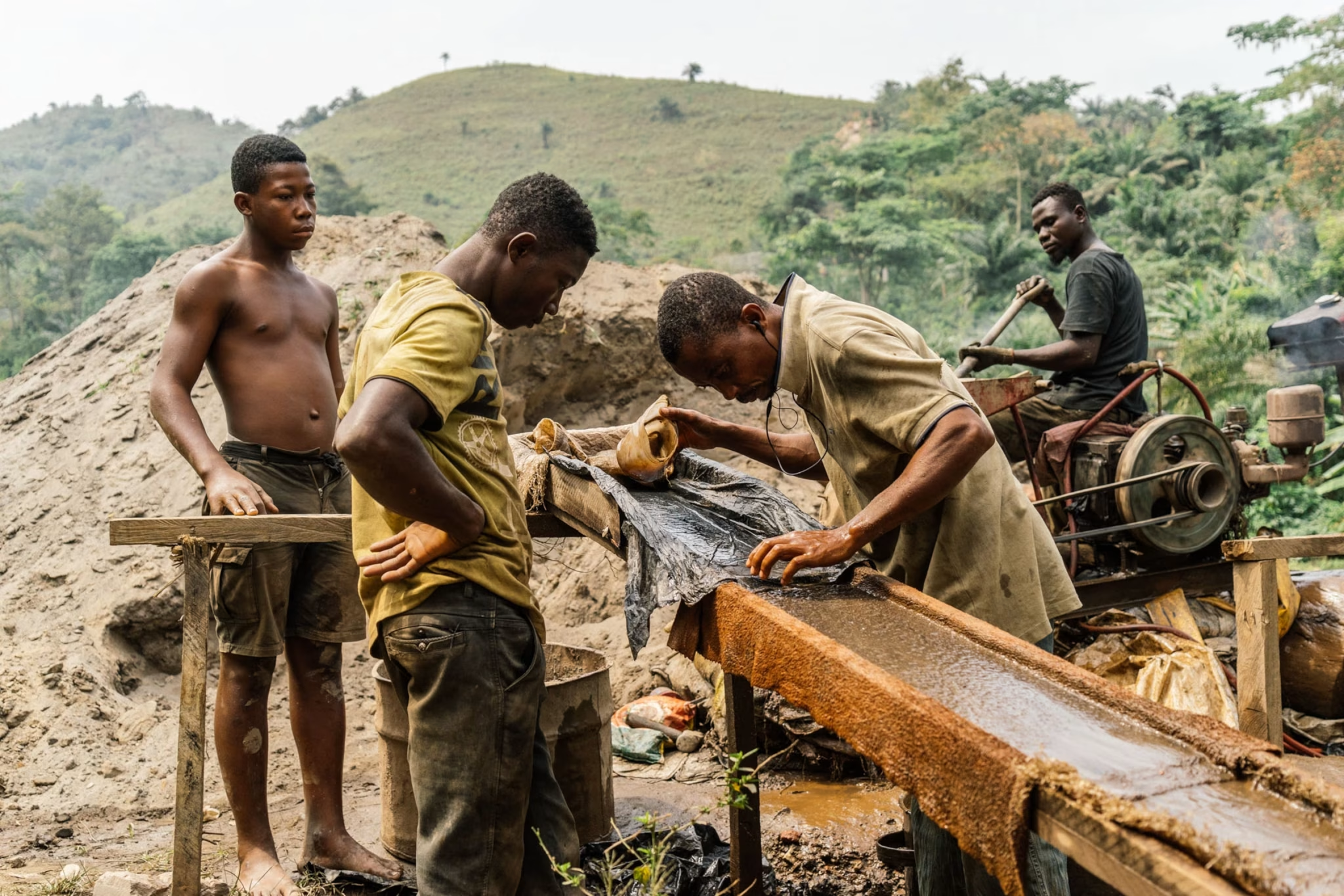
In recent years, artisanal and small-scale mining activities have accounted for a substantial share of Ghana’s gold output, while also providing livelihoods for hundreds of thousands of people across rural communities.

However, the sector has long faced criticism due to environmental concerns, illegal mining operations and weak regulatory enforcement.
Policymakers have therefore been searching for ways to transform the industry into a more organised, transparent and sustainable economic activity.
Supporting Indigenous Mining Enterprises
GHEITI emphasised that introducing a reduced sliding-scale royalty system could also support indigenous Ghanaian mining enterprises, which often operate with limited capital and face greater financial constraints than multinational mining companies.
A tailored royalty regime could reduce pressure on these businesses while still ensuring they contribute to national revenue.
The organisation therefore urged the Ministry of Lands and Natural Resources to consider extending the policy framework as part of broader reforms in the mining sector.
Strengthening Transparency in Extractives
The proposal aligns closely with the broader objectives of the Extractive Industries Transparency Initiative, a global framework designed to improve governance and accountability in natural resource sectors.
By encouraging more miners to operate within the formal system, Ghana could enhance transparency, traceability and regulatory oversight in its gold industry.
For the Accra Street Journal, the debate around extending the sliding-scale royalty regime reflects a growing recognition that sustainable mining policy must address both large multinational operators and the vast network of small-scale producers that form the backbone of Ghana’s gold economy.
A Potential Policy Turning Point
If implemented, the proposed reform could represent a significant shift in how Ghana regulates its small-scale mining industry.
Rather than relying solely on enforcement measures, the government would be using economic incentives to encourage compliance and formalisation.
For policymakers, the challenge will be designing a system that protects state revenue while remaining practical for thousands of small-scale operators.

But if successful, such a framework could transform Ghana’s mining landscape—bringing more miners into the formal economy while strengthening the country’s position as one of Africa’s leading gold producers.
Source: Accra Street Journal
Last Updated on March 14, 2026 by Samuel Kwame Boadu
Disclaimer: Some content on Accra Street Journal may be aggregated, summarized, or edited from third-party sources for informational purposes. Images and media are used under fair use or royalty-free licenses. Accra Street Journal is a subsidiary of SamBoad Publishing Hub under SamBoad Business Group Ltd, registered in Ghana since 2014.
For concerns or inquiries, please visit our Privacy Policy or Contact Page.

Samuel Kwame Boadu is a Ghanaian media entrepreneur and storyteller with a passion for amplifying urban voices and uncovering everyday truths. He is the Editor-in-Chief and Founder of Accra Street Journal, a dynamic digital platform dedicated to capturing the pulse of Ghana’s capital—its people, culture, challenges, business, sports and innovations.