EXECUTIVE INTRODUCTION
To understand the modern Ghanaian economy, one must look not inland to the gold mines, but south to the sea. The history of Accra’s ports—and Ghana’s broader maritime industry—is fundamentally the history of the nation’s integration into the global economy. It is a sweeping narrative of transition: from the pre-colonial canoe traders navigating the perilous surf, through the colonial machinery of extraction built on deep-water quays, to the modern, containerized hubs racing to become the logistical nerve centre of West Africa.
This is not merely a chronicle of ships and cranes. It is the story of Ghana’s economic sovereignty. The ports of Tema and Takoradi are the primary conduits through which the nation breathes commercially, handling over 90% of its international trade. For investors, mapping the trajectory of Ghana Ports and Harbours Authority (GPHA) and its concession partners reveals the precise pressure points of inflation, supply chain resilience, and the fiercely competitive regional battle against Lome, Abidjan, and Lagos. This ASJ profile serves as a definitive, evergreen analysis of the maritime institution that underpins Ghana’s commercial existence, crafted to explain not just the what, but the critical why behind the country’s economic gateways.

THE HISTORICAL CONTEXT: SURF BOATS AND THE COLONIAL GAUNTLET
Before the breakwater, there was the surf. The pre-colonial and early colonial economy of the Gold Coast was defined by a uniquely dangerous maritime geography. Unlike the natural deep-water harbours of Freetown or Lagos, the Accra coastline is a violent, open roadstead where massive swells crash directly onto the shore. International trade was a physical gauntlet. Goods—from European gin and textiles to outgoing palm oil and gold—were not hoisted by cranes but carried on the heads and shoulders of a specialized labour force of surf boat men, the Krobo and Ga canoeists who navigated the breakers to transfer cargo between the beach and ships anchored miles offshore.
📢 GET A DETAILED ARTICLES + JOBS
Join ASJ's WhatsApp Channel and never miss a post or opportunity.

This logistical bottleneck was not just a physical inconvenience; it was an economic control valve. The colonial administration in the 19th and early 20th centuries faced a critical constraint: the inability to efficiently extract the mineral and agricultural wealth of the interior. The surf ports of Accra, Winneba, and Cape Coast were leaky, seasonal, and deadly. It wasn’t until Governor Sir Gordon Guggisberg’s ambitious infrastructural vision in the 1920s that the machinery of deep-water trade truly arrived. The construction of Takoradi Harbour in 1928 was the singular most transformative economic event in the then-Gold Coast. It was a feat of civil engineering designed explicitly for the export of manganese and cocoa, bypassing the surf entirely and locking the colony into the industrial supply chains of the British Empire. Accra’s commercial centre remained bureaucratically alive, but its maritime soul was suddenly exposed as operationally obsolete until the post-independence era.
THE BIRTH OF TEMA: THE KROBO EMPOWERMENT AND NKRUMAH’S INDUSTRIAL DREAM
The story of Tema Harbour is the story of modern Ghana itself. It is a dual narrative of indigenous resilience and state-led industrial ambition. Long before independence, the Krobo people, legendary for their trade acumen, had been systematically marginalized from the direct coastal trade by the Ga and Fante middlemen. They saw a deep-water port on the eastern coast as their pathway to economic liberation. The history of Tema cannot be written without acknowledging the early, persistent agitation by the Krobo community, who lobbied the colonial government for a port near the Volta estuary to break their dependency.

However, the project found its messianic champion in Kwame Nkrumah. For him, Tema was not just a port; it was the nucleus of the ‘Black Star‘ industrial complex. Closely integrated with the Akosombo Dam’s hydroelectric power and the VALCO aluminum smelter, the construction of Tema Harbour, begun in the 1950s and opened in 1962, was a masterclass in Keynesian state planning on African soil. It involved reclaiming land from the sea, building a massive artificial breakwater, and constructing an entirely new, planned city to house the workforce. Tema became the symbol of the modern Ghanaian state—a deliberate, man-made miracle that broke the colonial geography of extraction at Takoradi to create a hub for import-substitution industrialization. It was a port built not just for trade, but for production, textiles, steel, and oil refining.
COMPANY OVERVIEW: GHANA PORTS AND HARBOURS AUTHORITY (GPHA)
GPHA is the landlord and strategic master planner of Ghana’s two deep-water maritime gateways: the Port of Tema and the Port of Takoradi. Founded under its modern structure as a statutory corporation, GPHA’s core mandate is to plan, develop, manage, and maintain the country’s commercial ports. However, its role has evolved significantly since the 2000s from a service operator to a Landlord Port Authority. This means GPHA owns the seabed, the breakwaters, and the nautical infrastructure, while private sector concessionaires—most notably the Meridian Port Services (MPS) joint venture and the Ghana Inland Port and Barge Terminal (GIP) services—handle the stevedoring and terminal operations. This delicate partnership defines the current era of Ghanaian maritime business.
Core Operations and Geographic Presence:
-
Port of Tema: The largest port, handling roughly 70% of national cargo volume. It is the gateway for containerized trade, connecting Accra’s commercial engine to global manufacturing hubs in Asia and Europe.
-
Port of Takoradi: Strategically positioned as the hub for the extractive industries. Its commercial logic is tied to the export of manganese, bauxite, and cocoa, and crucially, it serves as the logistics base for Ghana’s offshore oil and gas sector.
-
Inland Ports & Expansion: GPHA is pursuing an aggressive logistics decongestion strategy with the Boankra Inland Port project, an integrated container terminal connected to the Kumasi commercial hinterland, aimed at relieving pressure on Tema’s physical footprint.
BUSINESS MODEL: LANDLORD PORT ECONOMICS
GPHA’s business model is grounded in real estate and marine economics. It is fundamentally a B2B utility and logistics platform.
Revenue Streams:
-
Concession Fees: The primary income is not from the direct handling of boxes, but from the long-term royalty and concession fees paid by terminal operators like MPS for the exclusive right to operate within the port zone.
-
Marine Services: GPHA retains direct operational control and revenue generation for pilotage (steering ships in and out), towage, and mooring. This is a non-discretionary, high-skill service that every vessel calling at the port must pay for.
-
Port Dues and Tonnage Fees: These are statutory charges levied on vessels and cargo based on weight and volume, constituting a significant, steady revenue stream tied purely to trade volumes.
-
Rentals: As the landlord, GPHA derives income from leasing port lands to logistics companies, oil and gas service firms, and shipping lines for warehousing and distribution centres.
Customer Segments:
The customer base is a pyramid. At the top are the global shipping alliances (Maersk, MSC, CMA CGM). In the middle are the clearing agents, freight forwarders, and major importers (from auto dealers to cement manufacturers). At the base, critically, is the informal trading community that props up Ghana’s import-dependent retail economy. GPHA’s strategic challenge is servicing this complex, sometimes conflicting, customer base where a policy change in demurrage (storage fees) can ripple into inflation on Makola market shelves.
MARKET POSITION & COMPETITION: THE CORRIDOR WAR
Ghana’s ports do not just compete with each other; they are locked in an intense regional corridor war. The primary adversary is the Port of Lome in neighbouring Togo. Lome has aggressively marketed itself as a transshipment hub, leveraging deeper drafts and a more flexible regulatory environment that has historically allowed it to capture the lucrative Niger, Burkina Faso, and Mali transit trade that should logically flow through Tema.
Competitive Advantages:
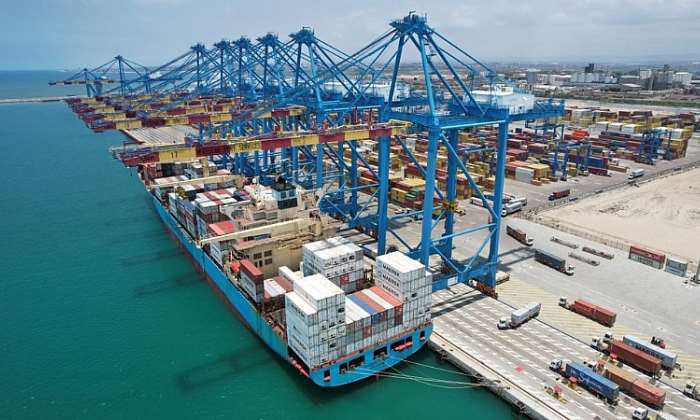
Ghana’s pitch is one of sophistication and security. The $1.5 billion MPS Terminal 3 in Tema is one of the most technologically advanced container terminals in Africa. With deeper berths and state-of-the-art gantry cranes, Tema can now receive the new generation of mega-vessels, a critical competitive necessity. The competitive advantage is no longer just location but the speed of cargo clearance. The implementation of the Paperless Port system via the Integrated Customs Management System (ICUMS) was a heavy-handed but strategic reform intended to remove human discretion, reduce corruption, and speed up dwell time, making Tema a more predictable logistical node than the congested Apapa port in Lagos.
Key Competitors:

-
Port of Lome: The benchmark competitor for transit traffic.
-
Port of Abidjan: A strong, deep-water challenger with a robust agricultural export base (cocoa, cashews).
-
Lagos Port Complex: The regional giant that suffers from chronic gridlock, creating an opportunity for the so-called “Gold Card” ports like Tema and Takoradi to offer stress-free alternatives.
DIGITAL STRATEGY & INFRASTRUCTURE: THE PAPERLESS REVOLUTION
The maritime industry’s digital strategy is a case study in government-enforced technological disruption. The pre-2017 clearing process was an analog marathon notorious for corruption, requiring importers to physically shuttle between up to 16 different agencies. The introduction of the port’s digital backbone—ICUMS—consolidated customs, port, and inspection agencies into a single digital window. It was a messy, system-crash-prone transition, but it fundamentally altered the power structure of the port by reducing the physical interaction between agents and officials.
Beyond customs, GPHA’s innovation strategy is centred on the ‘Port Community System,’ aiming to create a neutral, open digital platform for seamless data exchange across the entire logistics chain. The MPS Terminal 3 operation is a global standard semi-automated yard, leveraging optical character recognition (OCR) and GPS tracking to manage container stacks. The digital battle now is moving beyond the port gates. The next frontier is truck management systems and the appointment-based entry of vehicles to eliminate the anarchic daily traffic jams that turn Tema’s roads into a gridlocked parking lot.
CHALLENGES & RISKS: THE MACROECONOMIC AND PHYSICAL SQUEEZE
The Ghanaian maritime sector is a prisoner of macroeconomics and geography.
Currency and Inflationary Pressure:
Port tariffs are denominated in US dollars but the economic reality for the importer is in cedis. The perennial depreciation of the cedi against the dollar acts as a recurring tax on trade, compressing import volumes during crisis periods and directly dampening GPHA’s activity-based revenue streams. When the cedi slides, commercial activity at the port tightens, leading to a cascade of cash-flow crises among the 5,000-strong freight forwarding community.
The Physical Bottleneck:
Tema is a city built around a port that has outgrown its physical boundaries. The port’s location, once an asset, is now a liability, landlocked by urban sprawl. There is no room for lateral expansion. This physical chokehold means operational efficiency relies entirely on velocity—emptying the yard quickly. This is the strategic logic behind the Boankra Inland Port: to use a rail link to turn the Tema terminal into a rapid throughput facility rather than a long-term storage centre. Until rail connectivity is fully realized, the truck congestion will remain a structural risk.
Geopolitical and Infrastructure Competition:
The heavy-handed concession agreement with MPS, which included a highly controversial clause effectively limiting expansion at Takoradi for container traffic, has been a source of regulatory tension and accusations of creating a private monopoly. Navigating this concessionaire relationship, while pushing for expansion elsewhere without triggering legal disputes from existing partners, is a high-wire regulatory act for GPHA.
ECONOMIC & INDUSTRY IMPACT: THE SUPPLY CHAIN’S HEARTBEAT
The ports are not just transport hubs; they are the primary indices of national consumption. A delay in clearing a shipment of rice or chicken directly triggers a supply-shortage price spike in local markets. The maritime sector is also an immense, though often opaque, labour market. The ecosystem supports an estimated half a million jobs indirectly, from the female “market queens” who finance container consignments to the truck drivers, clearing clerks, crane operators, and ship chandlers. The GPHA’s push for the Boankra Inland Port represents the most significant structural rebalancing of Ghana’s economic geography since Nkrumah, aiming to decouple the industrial and commercial hub of the south from the raw commodity production base of the middle belt and north.
FUTURE OUTLOOK: THE GREATER ACCRA LOGISTICS PLATFORM
Ghana’s maritime future is an integrated logistics platform play. The long-term positioning is not just as a port for Ghana, but as the premium logistics corridor for the Sahelian hinterland (Burkina Faso, Niger, Mali). The strategic logic is clear: provide a total route-to-market solution that is faster and safer than Abidjan and less chaotic than Lagos.
The growth runway is tied to three factors:
-
Oil and Gas Services: Takoradi’s future is deep-water. The expansion of the Atlantic Terminal Services (ATS) to service Jubilee and TEN field production vessels positions Takoradi as the definitive Gulf of Guinea oil services hub.
-
The Rail Factor: The entire decongestion and expansion thesis rests on the ability to move containers from Tema to Boankra via rail within 24 hours. Without the dedicated, modern rail link, the inland port remains a white elephant.
-
Green Shipping: The emerging global regulatory environment around decarbonization will demand that Ghanaian ports offer cold-ironing (shore power) and green fuel bunkering. The ports that adapt first will win the European investment flows that demand sustainability compliance.
ASJ CONCLUSION
The history of Accra’s ports is a mirror reflecting Ghana’s economic ambitions and structural flaws. It is a story that moves from the muscular courage of the Ga and Krobo surf-boatmen, through the steel of colonial Takoradi, to the monumental scale of Nkrumah’s Tema. Today, the Ghana Ports and Harbours Authority finds itself as an asset-heavy landlord in a digital age, managing a marriage of convenience with global terminal giants while fighting a relentless regional war for transit cargo. The ports are efficient but suffocated, digital but physically congested, and strategically critical yet dangerously reliant on a fragile cedi. The next decade will determine whether Tema and Takoradi can transform from congested city-ports into the integrated, rail-served logistics powerhouses necessary to serve the continental free trade area. For the informed Ghanaian reader and the global investor alike, this is not just a transport story—it is the foundational infrastructure narrative of the Ghanaian economy.
QUICK FACTS BOX: GHANA PORTS AND HARBOURS AUTHORITY (GPHA)
-
Founded: Takoradi Port (1928), Tema Port (1962)
-
Headquarters: Harbour Area, Tema, Ghana
-
Industry: Maritime Transport, Logistics, Port Infrastructure
-
Services: Marine Pilotage, Terminal Concessions, Cargo Handling, Warehousing, Inland Port Services
-
Parent Company: Government of Ghana (Statutory Corporation under the Ministry of Transport)
-
Director-General: Michael Achagwe Luguje
-
Market Position: The primary maritime landlord and regulator for 90% of Ghana’s trade; manages the country’s two deep-water commercial ports.
-
Website: www.ghanaports.gov.gh
-
Key Operations: Tema Port (Container and General Cargo), Takoradi Port (Extractives, Oil & Gas Hub), Boankra Inland Port (Logistics Expansion).
FAQ SECTION
1. Why was Accra built on a coast without a natural harbour?
Accra’s early commercial importance didn’t rely on a harbour but on proximity to inland trade routes and the Ga and Krobo commercial networks. The dangerous surf was simply a logistical reality that imported labour (surf boat men) and cargo management traditions overcame for centuries before deep-water engineering.

2. When was the Tema Harbour built and by whom?
Construction started in the 1950s under the government of Kwame Nkrumah, closely linked to the Volta River hydroelectric project. It was formally opened in 1962. The engineering involved creating a massive artificial breakwater system, as no natural harbour existed.
3. Why is Takoradi Port still historically relevant?
Takoradi, built in 1928, was the Gold Coast’s first artificial deep-water port. It was the primary colonial export hub for minerals and cocoa from the Western and Ashanti regions, ending the dependency on the dangerous surf ports along the rest of the coast.
4. Who owns the Port of Tema?
The underlying land and nautical infrastructure are owned by the Government of Ghana and managed by the Ghana Ports and Harbours Authority (GPHA). Container terminal operations are managed by Meridian Port Services (MPS), a joint venture between GPHA, APM Terminals, and Bolloré Transport & Logistics, under a long-term concession.
5. How did the “Paperless Port” system change operations in Accra?
The Integrated Customs Management System (ICUMS), part of the Paperless Port initiative, digitized the customs declaration process. It aimed to collapse multiple government agencies’ clearance steps into one online portal, reducing physical contact, corruption, and drastically cutting down dwell times for containers, though initial implementation faced heavy operational bottlenecks.
6. Is Lome Port more competitive than Tema Port?
In specific segments, yes. The Port of Lomé has historically attracted a significant portion of the Sahelian transit trade (to Burkina Faso, Niger, Mali) by offering more flexible regulations and deeper draft conditions earlier than Tema. Tema’s competitive response has been the massive MPS Terminal 3 investment to handle mega-ships.
7. What was the role of surf boats in Accra’s maritime history?
Before the 20th century, ships couldn’t dock at Accra’s shore. All goods and passengers had to be ferried from the beach to the anchored vessels through powerful surf waves using locally built, expertly navigated canoes. This was a specialized, dangerous, and critical economic profession dominated by the Ga and Krobo fishermen.
8. What is the Boankra Inland Port project?
It is an integrated logistics terminal being developed near Kumasi, in the Ashanti Region, connected via a planned modern railway line to Tema Port. Its core objective is to decongest Tema by moving container storage and customs processing closer to the main consumption and distribution hubs of the northern and central trading networks.
9. How does the GPHA make money if it doesn’t load all the cargo itself?
GPHA operates a Landlord Port model. Its primary revenues come from marine services (pilotage and towage), port dues on vessels, and, most critically, the royalties and concession fees paid by private terminal operators like MPS who have the licence to handle the cargo stevedoring.
10. Why is the cedi’s value so important to the ports?
Port tariffs are calculated in US dollars. When the Ghana cedi depreciates, the real cost of discharging a container doubles in local currency terms for the importer. This suppresses trade volumes and lowers economic activity across the entire port logistics ecosystem.
Source: Accra Street Journal
Last Updated on July 23, 2026 by Samuel Kwame Boadu
Disclaimer: Some content on Accra Street Journal may be aggregated, summarized, or edited from third-party sources for informational purposes. Images and media are used under fair use or royalty-free licenses. Accra Street Journal is a subsidiary of SamBoad Publishing Hub under SamBoad Business Group Ltd, registered in Ghana since 2014.
For concerns or inquiries, please visit our Privacy Policy or Contact Page.

Samuel Kwame Boadu is a Ghanaian media entrepreneur and storyteller with a passion for amplifying urban voices and uncovering everyday truths. He is the Editor-in-Chief and Founder of Accra Street Journal, a dynamic digital platform dedicated to capturing the pulse of Ghana’s capital—its people, culture, challenges, business, sports and innovations.