EXECUTIVE INTRODUCTION
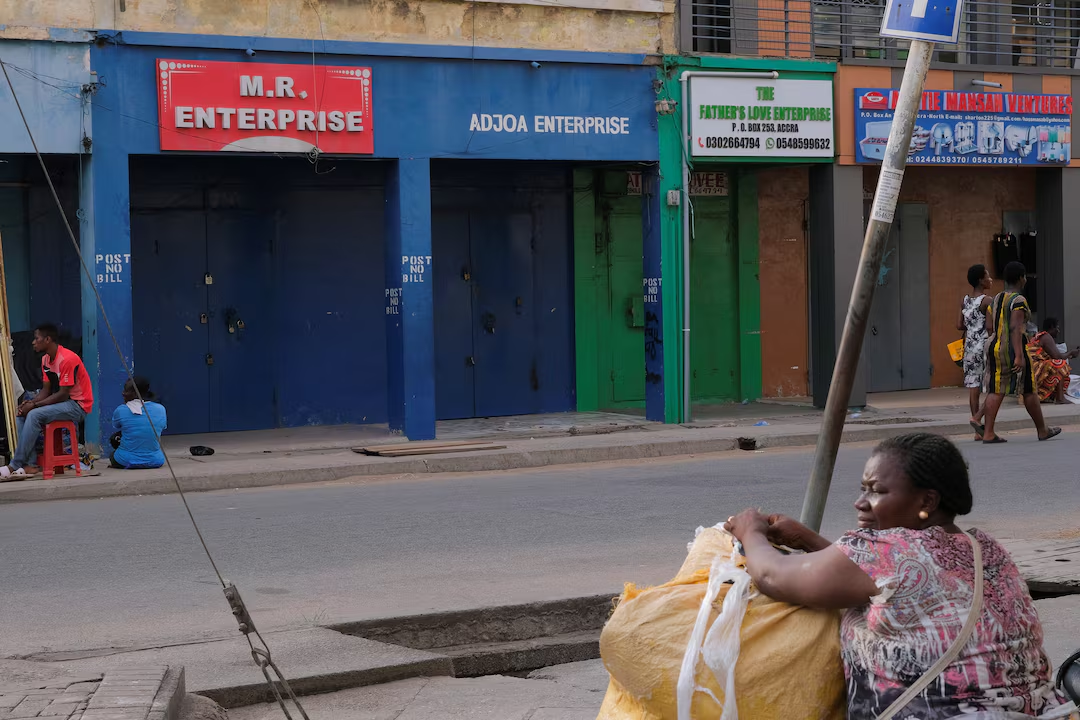
Walk down any densely populated residential street in Accra—in Dansoman, Madina, Nungua, or Lapaz—and a seemingly mundane but economically lethal phenomenon is unfolding. On a single stretch of road, you may find half a dozen nearly identical tabletop provision shops, each selling the same sachet of Milo, the same loaf of bread, the same sachet of Indomie noodles, and the same liquefied petroleum gas cylinder exchange. They are locked in a silent, grinding, and entirely self-destructive economic war. The weapon is the price cut. The battlefield is the daily household budget of their immediate neighbours. The war is one they cannot win.
This Accra Street Journal analysis is an unflinching examination of the economics of the micro-retail price war in Ghana’s capital. It is a story of structural oversupply, the absence of genuine product differentiation, the predatory competitive dynamics of large-format retail, and the brutal squeeze imposed by a high-inflation, currency-depreciating macroeconomic environment. The neighbourhood provision shop is a vital institution in Accra’s social and economic fabric—a source of credit, an informal distribution node, and a livelihood for thousands of families. But the price war, often celebrated by consumers as a victory for the market, is a slow-motion slaughter that is destroying the thin margins, the working capital, and the long-term viability of the very shops that keep the city fed. This is not a lament for inefficiency. It is a diagnosis of a structural market failure that impoverishes the micro-entrepreneur and, in the long run, reduces consumer choice to a monopoly of the well-capitalised few.

THE ECONOMICS OF THE IDENTICAL: A MARKET WITHOUT DIFFERENTIATION
The fundamental, inescapable condition that fuels the price war is the near-total absence of product differentiation at the bottom of Accra’s retail pyramid. The small provision shop, typically a repurposed shipping container, a wooden kiosk, or a front room in a family compound, sells an almost perfectly standardised basket of fast-moving consumer goods (FMCGs). This basket is determined not by the independent entrepreneurial vision of the shop owner, but by the supply chains of a handful of dominant distributors and manufacturers. The goods are identical, down to the barcode. The shop environment offers no meaningful experiential differentiation; the customer does not linger in an air-conditioned aisle but transacts quickly through a security-grille or across a wooden counter.
📢 GET A DETAILED ARTICLES + JOBS
Join ASJ's WhatsApp Channel and never miss a post or opportunity.

In classical economic theory, a market of undifferentiated products selling to highly price-sensitive consumers will tend towards a condition of perfect competition, where price is driven down to the marginal cost of the most efficient producer. However, the Accra neighbourhood micro-retail sector does not produce anything. It is a pure distribution channel, buying from the same wholesalers at roughly the same price. The “marginal cost” is therefore almost identical for every shop on the strip. When one shop cuts the price of a sachet of sugar from three cedis to two cedis fifty pesewas to attract the next customer, it is not exploiting a genuine efficiency advantage. It is simply volunteering to earn a smaller, and possibly non-existent, margin on that sale. The competitor, facing the immediate loss of their daily bread money, has no rational choice but to match the price. A race to the bottom ensues, one where no participant has a genuine cost advantage, and where the finish line is collective insolvency. This is not competitive efficiency. It is a circular economic logic of mutually assured destruction.
THE SUPPLIER AS THE PRICE-SETTER: THE EROSION OF RETAIL AUTONOMY
The small shop owner’s ability to price independently, and therefore to escape the price war through a premium-value strategy, is further strangled by the economic power of the upstream supply chain. Many fast-moving consumer goods in Ghana, particularly the core starchy and dairy commodities, are subject to periodic government price interventions, or are distributed under tight, vertically controlled manufacturer pricing regimes. The shop owner is often not a sovereign price-setter but a price-taker, squeezed between a manufacturer’s suggested retail price (often printed on the package), a wholesaler’s take-it-or-leave-it margin, and the aggressive pricing of the competitor across the street.

In a typical developed market, a small retailer can differentiate by offering a curated selection of high-quality, artisanal, or niche products, allowing them to charge a premium and opt out of the commodity price war. This strategy is largely foreclosed to the Accra tabletop shop. The demand is for the specific, familiar, branded industrial products that dominate the Ghanaian household basket. A shop that attempts to stock a premium, unfamiliar, or alternative brand risks being left with dead inventory and the costly, unforgivable sin of not having the precise item the customer came to buy. The small shop is trapped in a narrow corridor of standardised commodity reselling, with almost no agency over the product, the supply price, or the brand, and therefore with no tool to compete other than the suicidal one of the price cut.
THE SUPERMARKET SHADOW: SCALE, CREDIT, AND PREDATORY PRICING
The small shop’s price war is not just an internal fight among equally weak players. A much larger and more lethal competitor has entered the field: the modern, well-capitalised supermarket chain. The expansion of Nigerian and Lebanese-backed supermarket brands into Accra’s residential neighbourhoods—often opening smaller “express” or “neighbourhood mart” formats—has fundamentally altered the competitive landscape. These chains operate on a completely different economic logic. They purchase directly from manufacturers, or even import their own container loads, achieving per-unit procurement costs that are fundamentally unattainable for the small shop buying from a local wholesaler or a cash-and-carry van.
Furthermore, they can deploy the classic predatory weapon of the large-format retailer: the loss-leader. The supermarket chain can afford to sell a core household staple—a bottle of cooking oil, a bag of rice, a carton of milk—at or below its own purchase cost for weeks at a time. The loss on that single item is absorbed by the profitability of the hundreds of other items in the store, or by the deep capital reserves of the parent company. The small shop, whose revenue is concentrated in a handful of such staple items, cannot absorb this targeted loss. The supermarket is effectively using its capital to subsidise a price war it knows the small shop cannot survive. When the small shop closes, the supermarket recovers the local market and can normalise its pricing. This is a predatory dynamic that is well-understood in mature economies and often regulated, but which operates with almost no public or regulatory scrutiny in Accra, dressed in the benign language of “efficiency” and “consumer benefit.
THE WORKING CAPITAL SQUEEZE: THE MARGIN THAT CANNOT REPLENISH THE STOCK
The most immediately lethal consequence of the price war for the small shop is the silent erosion of working capital. The micro-retailer operates on a razor-thin cash conversion cycle. The cash in the drawer at the end of the day is not profit; it is the working capital required to buy the next day’s stock from the wholesaler. When the shop owner cuts the price to match a competitor, they are not just taking a cut from a personal profit fund. They are directly reducing the amount of money available to replenish the inventory.
The arithmetic is brutal and unforgiving. If the shop sells a crate of eggs with a normal margin of five cedis, that five cedis contributes to the next day’s purchase. If a price war forces the margin on that same crate down to one cedi, the shop must sell five times the volume of eggs simply to generate the same replenishment capital. The volume does not materialise, because the customer base—the local neighbourhood—is fixed. The shop simply goes to the wholesaler the next day with less money, buys less stock, has fewer items on the shelf, serves fewer customers, and earns an even smaller margin. This is the death spiral of the price war. The shop slowly bleeds its own stock into cash that is insufficient to buy back the stock it has sold. The shelves become emptier, the variety shrinks, and the customers, chasing a full basket, eventually migrate to the supermarket that started the war. The business dies not with a dramatic bankruptcy, but with a final, quiet inability to open the next morning’s goods.
THE CREDIT CUSTOMER AND THE ILLIQUIDITY TRAP
A uniquely Accra dimension of this retail economic trap is the deep cultural institution of the customer credit line, colloquially the “list.” The small neighbourhood shop is often a de facto micro-credit institution. Regular customers, known and trusted in the community, purchase goods on credit, with the debt recorded in a worn exercise book and settled at the end of the week or the end of the month. This credit function is a source of immense customer loyalty, but it is also a massive, hidden strain on liquidity that makes the shop acutely vulnerable during a price war.
When the shop is already selling at a suppressed margin to match the street price, every cedi of goods sold on credit is a cedi that has left the shelf but not yet returned to the cash drawer. The shop is essentially providing an interest-free loan to its customers while simultaneously fighting a discount war that is destroying its margin. The moment of settlement, when it comes, may be further complicated by the customer negotiating a discount based on the lower prices they have seen elsewhere. The shop is caught in a triple squeeze: selling at a thin price, funding the customer’s consumption on credit, and facing the risk of default or delayed payment that completely halts the replenishment cycle. During a price war, a shop with a heavy credit book is profoundly more fragile than one that transacts strictly in cash. The credit list, a tool of community solidarity, becomes a millstone when margins evaporate.
THE DISTRIBUTOR AS THE ULTIMATE WINNER: WHO REALLY PROFITS FROM THE PRICE WAR?
A critical analytical question is necessary: who actually benefits from the price war among small retailers? The answer, in the long run, is neither the consumer nor the shopkeeper. The primary beneficiaries are the large-scale importers and the dominant local manufacturers who sit at the top of the FMCG supply chain. The price war among retailers is a distribution-level battle that drives volume for the brand owner. The manufacturer sells the same volume, or greater volume, to the competing shops. The shops absorb the cost of the discounting by sacrificing their own retail margin. The manufacturer’s margin is unaffected.
The consumer, in the short term, enjoys a lower price for a sachet of sugar. But in the medium to long term, as the price war destroys the independent retail competition and drives customers into the arms of the supermarket chains or the few surviving, consolidated large distributors, the consumer faces a far less competitive market. The supermarket or the monopoly local distributor, having cleared the field, can quietly raise its prices. The consumer is not a permanent victor in this war. They are a temporary beneficiary of a predatory cycle, the endgame of which is a more concentrated, less contestable, and ultimately more expensive retail environment for the very household staples that define daily life in Accra.

CONCLUSION: THE QUIET CATASTROPHE AND THE NEED FOR A RETAIL STRATEGY
The price war on Accra’s street corners is not a sign of a vibrant, competitive market. It is a symptom of a structurally dysfunctional micro-retail sector that has been abandoned to its own self-destruction. The small provision shop, a vital source of livelihood, a critical node of community credit, and a resilient, flexible, last-mile distribution mechanism, is being systematically destroyed by a combination of undifferentiated commodity supply, the overwhelming purchasing power of large-format competitors, and a macroeconomic context that relentlessly squeezes its working capital.
There is no simple regulatory fix. A price floor would be impossible to enforce and would likely harm the very consumers it seeks to protect. The solution space is more strategic and long-term. It includes potential policy interventions to regulate predatory below-cost pricing by dominant market players, a practice that is illegal in many jurisdictions but ignored in Ghana. It requires a concerted effort by trade associations and micro-finance institutions to educate shop owners on the suicidal economics of the price war and to provide the financial tools—the basic bookkeeping, the cash-flow forecasting—to understand the true cost of the discount. Most fundamentally, it requires a shift in the entrepreneurial mindset from the commodity reseller, who competes only on price, to the value-added local service provider, who competes on the curated range, the unshakeable credit relationship, the local knowledge, and the convenience of the doorstep. The shop that sells exactly the same thing as the shop next door is already dead; it just hasn’t done the arithmetic. The future of Accra’s neighbourhood retail belongs to those who can escape the commodity trap, offer something the supermarket cannot replicate, and build a business on the loyalty of a served community, not the suicidal calculus of the single-pesewa discount.
QUICK FACTS BOX: PRICE WARS AND SMALL SHOPS IN ACCRA
-
Market Structure: Extreme fragmentation and oversupply of undifferentiated, identical FMCG micro-retailers on single commercial strips.
-
Core Dynamic: A perfect competition trap where price is the only available competitive lever, leading to a race to the bottom with no efficiency-driven cost advantage.
-
Upstream Pressure: Shops are price-takers, not price-setters, squeezed between manufacturer SRPs, wholesaler pricing, and limited product differentiation options.
-
Large-Format Threat: Well-capitalised supermarket chains deploying loss-leader and predatory pricing strategies against which small shops cannot sustainably compete.
-
Working Capital Death Spiral: Price cuts directly erode the cash needed for next-day inventory replenishment, leading to declining stock levels, fewer customers, and eventual business failure.
-
Credit System Vulnerability: The “list” credit tradition creates a massive liquidity trap, as goods sold on credit at suppressed margins starve the business of the cash needed to operate.
-
Primary Beneficiaries: Large-scale importers and manufacturers who maintain their margins while the retailers absorb the cost of the price war.
-
Long-Term Consumer Impact: The destruction of independent retail competition leads to a more concentrated, less contestable market, with the long-term risk of higher prices.
FAQ SECTION
1. Why do so many small shops in Accra sell exactly the same products?
They operate as the final link in a distribution chain for a few dominant Fast-Moving Consumer Goods (FMCG) manufacturers. The products are mass-market, branded staples with no differentiation, and the small shop lacks the capital or supply chain access to offer a genuinely unique range.
2. Is the consumer not the winner when small shops compete on price?
In the very short term, yes. But the long-term effect is the destruction of independent retail competition, leading to a market dominated by a few large chains and wholesalers who can then raise prices with less competitive pressure.
3. How can a large supermarket afford to sell goods cheaper than a small shop?
Supermarkets have massive procurement scale, buying directly from manufacturers or importing in bulk, which gives them a fundamental per-unit cost advantage. They can also sell certain staple items as “loss-leaders” at below their own cost, subsidised by profits from other goods, to drive small competitors out of business.
4. What is a “loss-leader” and how is it used as a competitive weapon?
It is a product deliberately sold at or below cost to attract customers. A well-capitalised supermarket can absorb a loss on key staples like oil or rice for weeks or months, a predatory tactic the small shop, which relies on the margin from those very staples, cannot survive.
5. How does giving credit to customers make a shop more vulnerable during a price war?
Goods sold on credit leave the shelf but the cash doesn’t immediately return to the business. Combined with a suppressed price margin, this creates a severe liquidity trap: the shop is lending money it doesn’t have, from sales that are already unprofitable, and can’t afford to buy new stock.
6. Why doesn’t the small shop just sell different, higher-quality products to escape the war?
The local customer base demands the specific, familiar, branded items. Stocking an unfamiliar premium brand risks dead inventory. The small shop is trapped by the consumer’s demand for the standardised commodity basket.
7. What is the “working capital death spiral” in micro-retail?
It’s the process where price cuts reduce the cash margin on each sale. This reduces the total cash available to buy the next day’s stock, leading to emptier shelves, fewer customers, and even less cash, until the business can no longer afford to restock.
8. Who ultimately benefits from the price war among the small shops?
The primary long-term beneficiaries are the large-scale importers and manufacturers whose brands are being sold, and their volumes may even increase. Their margins are untouched while the retailers destroy each other’s profitability.
9. Can the government do anything to stop this destructive competition?
Direct price controls are difficult and often counter-productive. However, the state could, in theory, more actively enforce competition laws against predatory below-cost pricing by dominant players, a practice that is restricted in many mature economies.

10. What is the survival strategy for a small shop in this environment?
The shop must escape the trap of the undifferentiated commodity reseller. This means competing on factors other than price: unshakeable reliability, a carefully curated credit relationship, deep integration into the community, and stocking a small but critical range of items the large competitor overlooks. The pure price war is a war of attrition that the small shop cannot win.
Source: Accra Street Journal
Last Updated on July 27, 2026 by Samuel Kwame Boadu
Disclaimer: Some content on Accra Street Journal may be aggregated, summarized, or edited from third-party sources for informational purposes. Images and media are used under fair use or royalty-free licenses. Accra Street Journal is a subsidiary of SamBoad Publishing Hub under SamBoad Business Group Ltd, registered in Ghana since 2014.
For concerns or inquiries, please visit our Privacy Policy or Contact Page.

Samuel Kwame Boadu is a Ghanaian media entrepreneur and storyteller with a passion for amplifying urban voices and uncovering everyday truths. He is the Editor-in-Chief and Founder of Accra Street Journal, a dynamic digital platform dedicated to capturing the pulse of Ghana’s capital—its people, culture, challenges, business, sports and innovations.