A 2026 Intelligence Brief from Accra Street Journal
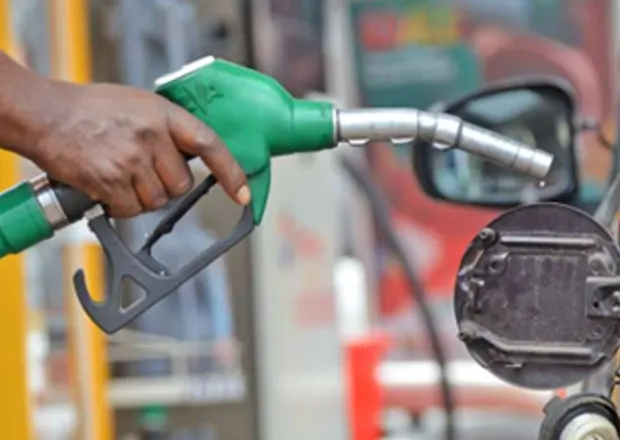
The days when foreign brands like Shell and Total dominated Ghana’s filling stations are over. A fierce battle for market share is now being waged almost exclusively by two Ghanaian-owned giants: the state-backed giant GOIL PLC and the aggressive private challenger Star Oil Ghana Ltd.

This ASJ report provides a data-driven analysis of Ghana’s downstream petroleum sector, examining market share dynamics, the controversial price floor policy, emerging competitors like Zen Petroleum, and the structural challenges that continue to shape the industry. The evidence suggests that while GOIL has officially reclaimed the top spot, the market has never been more competitive—or more politically charged.
📢 GET A DETAILED ARTICLES + JOBS
Join ASJ's WhatsApp Channel and never miss a post or opportunity.

Part 1: The Market Leaders — An Indigenous Duel
The National Petroleum Authority (NPA) data for the first quarter of 2026 reveals a market in flux, with two indigenous companies now firmly in control .
GOIL PLC — The Comeback King
GOIL officially reclaimed its position as Ghana’s leading Oil Marketing Company (OMC) in the first quarter of 2026 . The state-owned giant moved approximately 256.8 million litres of petroleum products between January and March, representing an 11.93% market share .

GOIL’s comeback is significant. The company had ceded ground to Star Oil through much of 2024 and the first half of 2025, but a strategic push in early 2026 returned it to the top of the leaderboard . With over 400 retail stations, GOIL boasts the largest network in the country.
Star Oil Ghana — The Volume King
While GOIL leads in total volume and LPG sales, Star Oil Ghana has asserted itself as the undisputed king of petrol and diesel . The company sold the highest volumes of both products in Q1 2026, moving 147.7 million litres of petrol and 94.9 million litres of diesel .
Star Oil commands an estimated 14% market share and has been on an explosive growth trajectory, rising from 13th position in 2020 to the top of the charts by 2025 . It now operates a network of 254 filling stations nationwide and contributes an estimated GH¢2.63 billion annually in taxes and levies .
Together, these two Ghanaian-owned companies moved close to half a billion litres of fuel in a single quarter .
The Top Five Rankings (Q1 2026)
| Rank | Company | Total Sales Volume (Litres) | Market Share | Key Feature |
|---|---|---|---|---|
| 1 | GOIL PLC | ~256.8 million | 11.93% | Largest retail network (400+ stations) |
| 2 | Star Oil Ghana | ~155.7 million (Jan-Feb) | 11.74% | Highest petrol & diesel sales |
| 3 | Vivo Energy (Shell) | ~145.5 million | ~7% | Strong brand loyalty |
| 4 | Zen Petroleum | ~103 million | ~5-6% | Dominant in mining sector |
| 5 | TotalEnergies Ghana | ~93 million | ~4% | Major lubricants player |
Sources: NPA data,
Part 2: The Foreign Legacy — Shell and Total
International brands, once the undisputed rulers of Ghana’s fuel market, have been relegated to supporting roles.
Vivo Energy (Shell)
Now ranked third, Vivo Energy Ghana, the local licensee of the Shell brand, moved approximately 145.5 million litres in Q1 2026 . While the Shell brand still carries significant weight with consumers, Vivo has struggled to keep pace with the aggressive pricing and expansion strategies of GOIL and Star Oil.
TotalEnergies
TotalEnergies rounds out the top five, selling approximately 93 million litres . However, the company remains a powerhouse in the specialized lubricants market, where it holds an estimated 33% market share . The mines segment represents 19% of TotalEnergies’ global lubricant sales, highlighting a lucrative niche where it remains competitive .
Part 3: The Rising Challenger — Zen Petroleum
Beyond the battle for the top spot, Zen Petroleum has emerged as a critical “fourth force” in the market, distinguished not just by its volume but by its strategic financial maneuver and niche dominance.

The Mining Sector Dominance
Zen supplies approximately 49% of the fuel consumed by major mining companies in Ghana <span class=””>. This commercial and industrial focus gives it a stable revenue base less exposed to the volatile retail margins faced by OMCs.
The IPO Landmark
In a major vote of confidence for the Ghanaian capital market, Zen Petroleum successfully raised GH¢640 million ($58.6 million) through an Initial Public Offering (IPO) in March 2026 . The offer was fully subscribed, indicating strong institutional appetite for downstream energy assets. This listing makes Zen one of the few indigenous OMCs with access to public capital markets, giving it a financial edge in funding expansion.
Key Financials (Zen Petroleum):
-
2023 Revenue: GHS 5.11 billion
-
2025 Revenue: GHS 6.34 billion
-
Gross Profit Growth: 88% (2023–2025)
-
2030 Revenue Forecast: GHS 10.98 billion (PwC)
Part 4: The Price War — Why the Market is So Volatile
The fierce competition is significantly shaped by the Petroleum Price Floor policy, introduced by the National Petroleum Authority (NPA) in April 2024, and the explosive debate surrounding it.
The Policy
The price floor sets a minimum retail price for petroleum products, preventing OMCs from selling below an approved level to curb “unhealthy competition” and protect government tax revenue .
The Flashpoint
Star Oil has been the most vocal critic of this policy. The company argues that the price floor prevents it from passing cost savings on to consumers, effectively forcing consumers to pay higher prices to protect less efficient competitors . Frustrated with the policy and what it calls “unfair representation” within the Chamber of Oil Marketing Companies (COMAC), Star Oil indefinitely suspended its membership in COMAC in January 2026 .
The Regulator’s Response
Godwin Edudzi Tameklo, CEO of the NPA, has signed an MoU with the 24 Hour Economy Authority to pilot round-the-clock operations in the downstream sector . The initiative is expected to ensure continuous availability of petroleum products, improve supply chain efficiency, and boost government revenue.
The Unseen Factor: Beyond the branded stations, the market is crowded with over 200 licensed companies. However, approximately 30% of operators control more than 70% of fuel volumes, while about 15% of volumes are handled by non-compliant operators outside the formal licensing system .
Part 5: The Structural Outlook — Who Will Win Long-Term?
The coming years will likely be defined less by which company sells the most petrol and more by which adapts best to changing energy dynamics and regulatory pressures.
1. The Future of Price Regulation
The ASEC has called for an urgent overhaul of the price floor policy, warning that the current framework is “misaligned” with the realities of a competitive market . The NPA’s stance on the price floor will be the single biggest determinant of margins for the next 5 years.
2. The Shift to Non-Retail Revenue
The real money for the next decade may not be at the pump. Zen Petroleum is diversifying into logistics and storage. TotalEnergies is focusing on high-margin lubricants. GOIL and Vivo Energy are likely to pivot toward electric vehicle (EV) charging infrastructure, leveraging their extensive land banks to capture the transition to e-mobility.

3. The “24-Hour Economy” Impact
The government’s push for a 24-hour economy, operationalized through the NPA, will see selected depots and retail outlets operating continuously . This could drive further consolidation, as only the largest operators (GOIL, Star, Zen, Vivo) have the logistical capacity to maintain round-the-clock supply chains.
4. Niche Specialization
-
Zen Petroleum is the dominant force in mining and bulk industrial supply .
-
TotalEnergies leads in the specialized industrial lubricants segment .
-
GOIL dominates the LPG segment and retail network breadth .
Conclusion: The Great Indigenous Takeover
Ghana’s fuel retail market has undergone a complete transformation. The narrative is no longer about global giants squeezing local players; it is a story of intense, purely indigenous competition.
GOIL represents the establishment—the state-backed giant with the largest network, using its heritage and scale to reclaim the lead. Star Oil represents the aggressive, consumer-centric market disrupter, using volume and low prices to challenge the status quo. Zen Petroleum represents the efficient, diversified capitalist, using stock market money to fund specialized industrial logistics.
For the Ghanaian consumer, this fierce rivalry has kept prices in check despite global volatility. For investors, the sector has matured to the point where a major player like Zen can command a $58 million IPO . The pumps are no longer controlled by foreign mandates; they are controlled by a dynamic, cash-rich, and fiercely nationalistic private sector.
Quick Reference: Ghana’s Fuel Retail Market Structure
| Company | Market Position | Q1 2026 Rank | Strategic Strength |
|---|---|---|---|
| GOIL PLC | Largest Network (400+ stations) | #1 Total Volume | Government backing; LPG dominance |
| Star Oil Ghana | Highest Petrol/Diesel Sales | #2 Volume | Aggressive pricing; low-cost operations |
| Vivo Energy (Shell) | #3 Rank | #3 Volume | Shell brand equity |
| Zen Petroleum | Top 4; Mining Leader | #4 Volume | $58.6M IPO war chest; 49% mining share |
| TotalEnergies | #5 Rank | #5 Volume | 33% lubricants market share |
Source: Accra Street Journal
Last Updated on June 6, 2026 by Samuel Kwame Boadu
Disclaimer: Some content on Accra Street Journal may be aggregated, summarized, or edited from third-party sources for informational purposes. Images and media are used under fair use or royalty-free licenses. Accra Street Journal is a subsidiary of SamBoad Publishing Hub under SamBoad Business Group Ltd, registered in Ghana since 2014.
For concerns or inquiries, please visit our Privacy Policy or Contact Page.

Samuel Kwame Boadu is a Ghanaian media entrepreneur and storyteller with a passion for amplifying urban voices and uncovering everyday truths. He is the Editor-in-Chief and Founder of Accra Street Journal, a dynamic digital platform dedicated to capturing the pulse of Ghana’s capital—its people, culture, challenges, business, sports and innovations.