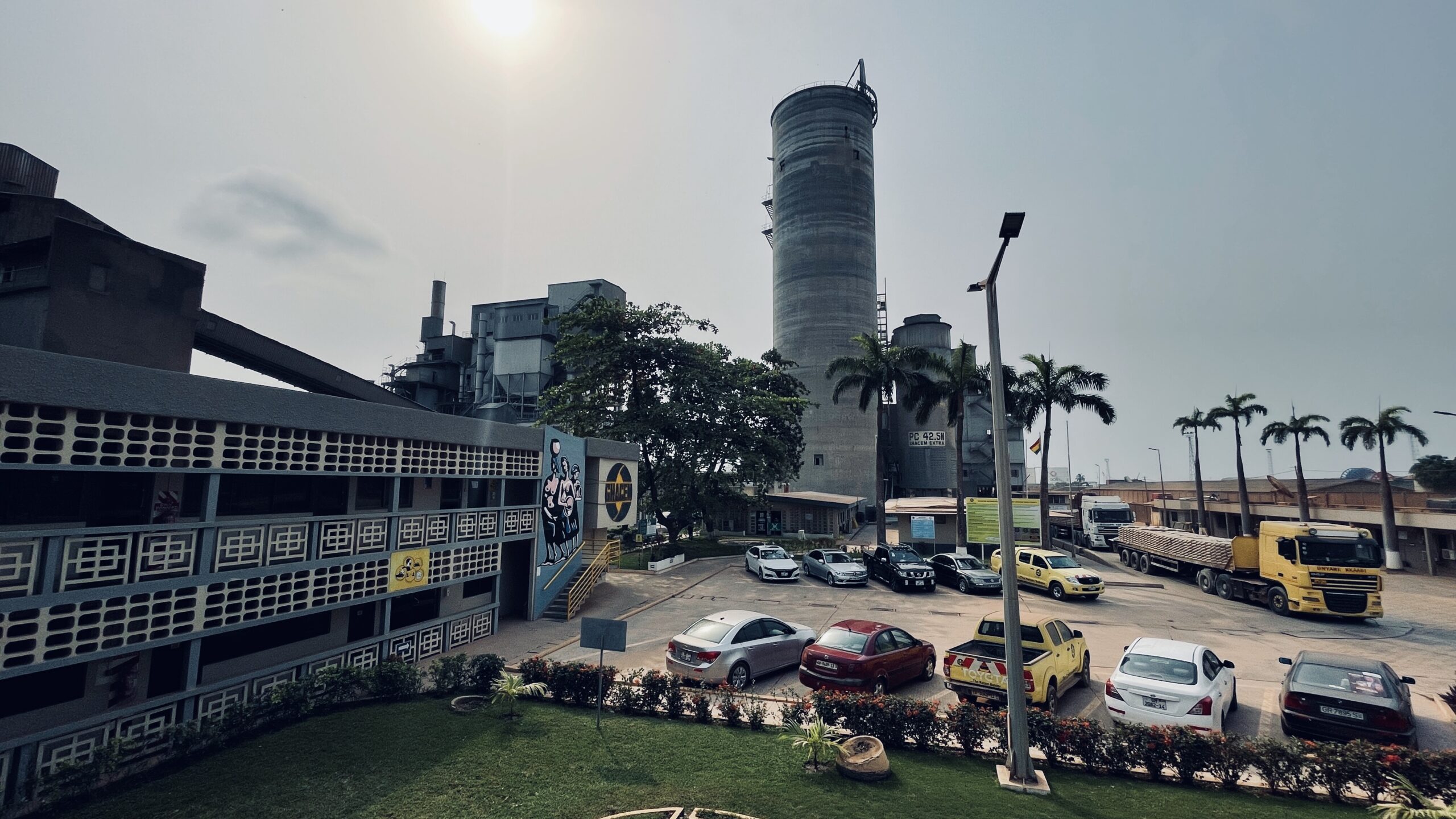
From a 1967 joint venture that produced its first bag of cement to a 2025 green revolution with ‘Eco Cool‘ and a US$100 million Kumasi mega-factory, Ghacem has produced over 30 million tonnes of cement, supplied major national infrastructure, and evolved into a cornerstone of Ghanaian industrialisation. Now, under Heidelberg Materials, the company is executing its most consequential strategic pivot—balancing its role as a price-sensitive commodity producer with the demands of a low-carbon future.
Executive Introduction
In the hierarchy of Ghanaian industry, there are companies that manufacture goods, and there are companies that build nations. Ghacem Ltd. belongs firmly to the latter category.

For 58 years, the name Ghacem has been synonymous with cement in Ghana. From the foundation of Tema Harbour to the pillars of the Jubilee House, from the dams that generate electricity to the homes that shelter millions, Ghacem cement has been the silent, essential ingredient in Ghana‘s physical transformation. The company has produced over 30 million tonnes of cement since its inception—a volume that, if laid end to end, would stretch across the continent and back.
📢 GET A DETAILED ARTICLES + JOBS
Join ASJ's WhatsApp Channel and never miss a post or opportunity.

Founded on August 30, 1967, as a joint venture between the Government of Ghana and Norcem AS of Norway, Ghacem was a post-independence industrialisation project with a clear mandate: build a domestic cement industry to reduce import dependence, create jobs, and provide the raw material for national development . In 2000, Norcem‘s stake was transferred to Scancem, and subsequently to HeidelbergCement Group, which today owns 93.1% of the company . The Government of Ghana retains a minority stake—a symbolic and strategic hold on a national asset.
Today, Ghacem is the undisputed market leader in Ghana‘s cement industry, holding approximately 54% market share . It operates two grinding plants in Tema and Takoradi, with a combined capacity of over 2.4 million tonnes per annum, and is in the final stages of developing a new US$100 million, 1.5-million-ton capacity plant in Kumasi . The company is also a subsidiary of Heidelberg Materials AG, a German multinational with a 150-year history and a global footprint across 50 countries.

For policymakers, construction executives, and industry analysts, Ghacem represents a case study in industrial longevity, strategic adaptation, and the tension between economic development and environmental sustainability. It is a company that has successfully navigated 58 years of political transitions, economic crises, and competitive threats. But its most significant challenge lies ahead: decarbonising a heavy-emitting industry while maintaining its position as the affordable supplier of choice.
This profile examines the company‘s 1967 founding, its 93.1% acquisition by Heidelberg Materials, its production capacity and market share (54%), its landmark products (Ghacem Super Strong, Ghacem Extra, and the new Eco Cool), its US$100 million Kumasi factory investment, its GH¢1 million environmental commitment, its Foundation‘s 23-year legacy in health and education, and the leadership of Managing Director Dr. Frank Huber.
Company Overview: The 1967 Founding and the Heidelberg Era
The Genesis: A Post-Independence Joint Venture (1967)
Ghacem was founded on August 30, 1967, just a decade after Ghana achieved independence from British colonial rule . The founding structure was a joint venture between the Government of Ghana and Norcem AS of Norway, a partnership designed to transfer technical expertise while retaining national control over a strategic industry.
The first bag of Ghacem cement was produced later that year, marking the beginning of local cement manufacturing in Ghana. Prior to Ghacem, the country was entirely dependent on imports for its cement supply—a vulnerability that the new nation could ill afford as it embarked on ambitious infrastructure projects.
Ownership Evolution: The HeidelbergCement Group Era
In 2000, Norcem‘s stake in Ghacem was transferred to Scancem, a Nordic cement group. Scancem was subsequently acquired by HeidelbergCement Group, one of the world‘s largest building materials companies, headquartered in Heidelberg, Germany.
Today, HeidelbergCement Group owns 93.1% of Ghacem, with the Government of Ghana retaining a minority stake . This structure gives Ghacem access to global research and development, best practices in environmental management, and the financial backing of a multinational giant, while maintaining a Ghanaian identity and local management.
Key Operational Metrics (2025-2026)
| Metric | Value |
|---|---|
| Founded | August 30, 1967 |
| Ownership | HeidelbergCement Group (93.1%), Government of Ghana (6.9%) |
| Headquarters | Accra, Ghana |
| Employees | 1,001–5,000 |
| Cumulative Production (since 1967) | Over 30 million tonnes |
| Market Share | Approximately 54% (as of 2013, consistent leader) |
| Production Capacity (Tema + Takoradi) | Over 2.4 million tonnes per annum |
| New Kumasi Plant Capacity | 1.5 million tonnes per annum |
| Kumasi Plant Investment | US$100 million |
| Key Certifications | ISO 14001 (Environmental), OHSAS 18001 (Health & Safety), ISO 9001 (Quality) |
| Parent Group Founded | 1874 (HeidelbergCement AG) |
| Managing Director | Dr. Frank Huber |
| Commercial Director | Kwasi Kyere |
| Marketing & PR Lead | Frank Antwi Agyapong |
| Foundation Chairman | Ehunabobrim Prah Agyensaim VI |
Ghacem‘s Role in Ghana‘s Development
Ghacem has positioned itself as the “Nation Builder” —a title it has earned through decades of supplying cement for Ghana‘s most iconic infrastructure projects . Major monuments, buildings, dams, and roads across the country have been constructed using Ghacem cement.
The company‘s two factories in Tema and Takoradi have produced over 30 million tonnes of cement since inception . From 2012 to 2015, Ghacem spent over €52 million on expansion investments in both plants, improving quality, reducing energy consumption, and minimising environmental impact .
The Product Portfolio: From Super Strong to Eco Cool
The Flagship Brands
Ghacem‘s product portfolio is designed to meet the needs of diverse construction applications.

1. Ghacem Super Strong
The flagship product, known for its high compressive strength and durability. It is used in major infrastructure projects, high-rise buildings, bridges, and roads. The brand has been trusted for decades by engineers and contractors across Ghana.
2. Ghacem Extra
A versatile cement product suitable for a wide range of construction applications, from foundations to plastering. It is widely used in residential and commercial construction.
3. Ghacem Eco Cool Cement (Launched July 2025)
On July 3, 2025, Ghacem officially launched its most significant product innovation in decades: Ghacem Eco Cool Cement . This product represents a major strategic pivot toward sustainability.
Key features of Eco Cool Cement:
| Feature | Description |
|---|---|
| Carbon Footprint | Significantly reduced CO₂ emissions compared to conventional cement |
| Technical Performance | Same strength and durability as conventional cement |
| Positioning | “One of the most sustainable cements available globally” |
| Sustainability Commitment | GH¢1 from every bag sold (up to one million bags) donated to ‘Tree for Life‘ reforestation project |
| Launch Date | July 3, 2025 |
| Supporting Initiative | GH¢1 million upfront donation to reforestation programme |
The Eco Cool Commitment
At the launch ceremony, held at the Ministry of Trade, Agribusiness and Industry in Tema, Minister Elizabeth Ofosu-Adjare commended Ghacem for “taking a bold step towards sustainable industrialization” . The product aligns with the government‘s 24-Hour Economy Policy and the ‘Build 24‘ initiative, which promotes the use of local construction materials .
Dr. Frank Huber, Managing Director, explained the significance: “We cannot tackle climate change without industry leadership and consumer responsibility” . The Eco Cool product is Ghacem‘s contribution to Ghana‘s commitment to achieving net-zero carbon emissions by 2050 .
Reforestation Partnership
On July 17, 2025, Ghacem donated GH¢1 million to the government‘s ‘Tree for Life‘ Reforestation Initiative . The structure of the donation was unique: Ghacem committed to donating GH¢1 for every Eco Cool bag sold, up to one million bags, but provided the funds upfront so that tree planting could begin immediately .
The US$100 Million Kumasi Factory: A Strategic Expansion
In January 2026, Ghacem announced a landmark investment: a US$100 million, 1.5-million-ton capacity cement production plant in Kumasi .

Key Details of the Kumasi Project
| Metric | Value |
|---|---|
| Investment Amount | US$100 million |
| Capacity | 1.5 million tonnes per annum |
| Location | Kumasi, Ashanti Region |
| Primary Market | Ashanti Region and surrounding areas |
| Export Ambition | Burkina Faso and other neighbouring countries |
| Employment Impact | Significant job creation during construction and operation |
Strategic Rationale
At the announcement, Managing Director Stefano Gallini (now succeeded by Dr. Frank Huber) explained the rationale: the Ghanaian construction sector‘s growth is the driving force behind the expansion. The company aims to continue taking care of the Ghanaian market, with the new plant serving the Ashanti Region and enabling future exports to Burkina Faso and other neighbouring countries .
Expansion of Existing Plants
In addition to the new Kumasi facility, the Tema and Takoradi factories will be expanded to improve efficiency and timely delivery of products . These investments, combined with the Kumasi plant, will significantly increase Ghacem‘s total production capacity and strengthen its position as the market leader.
Employee Demographics
Stefano Gallini noted that approximately 99.5% of Ghacem‘s employees are Ghanaian, highlighting the company‘s contribution to local employment and skills transfer .
Ghacem Cement Foundation: 23 Years of Corporate Social Investment
The Ghacem Cement Foundation is the company‘s dedicated corporate social responsibility vehicle. For over 23 years, it has invested in health and education infrastructure, particularly in deprived communities.
The 2025 Donation: 21,240 Bags of Cement
In April 2025, the Ghacem Cement Foundation donated 21,240 bags of cement to selected health and educational institutions in deprived communities in the Southern sector of Ghana .
Breakdown of the donation:
| Sector | Regions Covered | Bags of Cement |
|---|---|---|
| Southern Sector | Central, Western, Western North, Volta, Oti, Eastern, Greater Accra | 21,240 |
| Northern Sector | Northern, North East, Savannah, Upper East, Upper West, Brong East, Brong, Ahafo, Ashanti | 9,680 (to be donated) |
Beneficiaries: 181 health and educational institutions from the Southern sector gathered in Cape Coast to receive the cement for their various infrastructural projects .
The Foundation‘s Leadership
The Foundation is chaired by Ehunabobrim Prah Agyensaim VI, the Paramount Chief of Assin Kushea of the Owirenkyi Traditional Area. He expressed satisfaction with the impact the Foundation has made over the past 23 years, noting that past beneficiaries had used the cement for its intended purpose, leading to significant improvements in educational and healthcare infrastructure .
Prof. Audrey Gadzekpo, speaking on behalf of the Foundation Council, reinforced the importance of investing in human capital: “A nation cannot depend solely on its natural resources. Education and health are the twin pillars of sustainable development” .
Dr. Frank Huber reaffirmed that the company takes pride in this initiative, emphasising its role in enhancing education and healthcare as the pillars of a thriving society. “These two sectors are the foundation of every successful society, and that is what motivates us to sustain the GHACEM Cement Foundation” .
Environmental Sustainability: ISO Certifications and the Green Transition
ISO Certifications
Ghacem has held three international certifications since 2008, demonstrating its commitment to quality, safety, and environmental management :
| Certification | Standard | Focus |
|---|---|---|
| ISO 14001 | Environmental Management System | Managing environmental impact |
| OHSAS 18001 | Occupational Health and Safety | Worker safety and health |
| ISO 9001 | Quality Management System | Product quality consistency |
Carbon Emissions and Climate Commitments
As a subsidiary of Heidelberg Materials AG, Ghacem‘s climate commitments are aligned with the parent group‘s ambitious targets. Heidelberg Materials is a participant in the Science Based Targets initiative (SBTi) , CDP, and Climate Action 100+ .
While specific absolute emissions figures for Ghacem are not publicly disclosed, the company inherits reduction initiatives from its parent, which is actively working towards significant emissions reductions .
The launch of Eco Cool Cement is Ghacem‘s most visible contribution to decarbonisation. The product is designed to significantly reduce CO₂ emissions while maintaining the highest construction standards .
The ‘Tree for Life‘ Initiative
The GH¢1 million donation to the ‘Tree for Life‘ Reforestation Initiative, linked to Eco Cool sales, represents a novel approach to carbon offsetting. The partnership with the Ministry of Lands and Natural Resources is part of the company‘s broader sustainability strategy aimed at reducing carbon footprints and contributing meaningfully to Ghana‘s environmental future .
Market Position and Competition
The Cement Industry Landscape
Ghana‘s cement market is characterised by a few major players and a number of smaller competitors :
| Company | Ownership | Market Share (2013) | Key Strengths |
|---|---|---|---|
| Ghacem | HeidelbergCement (93.1%), Government of Ghana | 54% | Longest history, extensive distribution, ISO certifications, brand trust |
| Diamond Cement | WACEM | 33% | Strong presence in Volta Region |
| Savannah Diamond Cement | WACEM | 13% | Active in Northern Region |
| Dangote Cement | Nigerian multinational | Operating terminal at Tema Port | Aggressive pricing, regional scale |
[Citation:10]
Ghacem‘s Competitive Advantages
1. First-Mover Advantage and Brand Trust:
Ghacem has been in operation since 1967. For 58 years, it has supplied cement for Ghana‘s most important infrastructure projects. The brand name is synonymous with quality and reliability.
2. Extensive Production and Distribution Network:
With factories in Tema and Takoradi, and a new plant under construction in Kumasi, Ghacem has nationwide coverage. Its distributor network spans the country, with periodic meetings and annual awards for top distributors .
3. Heidelberg Materials Backing:
As a subsidiary of a global leader, Ghacem has access to world-class research and development, technical expertise, and environmental management systems.
4. Product Innovation (Eco Cool):
Ghacem is the first cement manufacturer in Ghana to launch an eco-friendly cement product with a significantly reduced carbon footprint. This gives it a first-mover advantage in the growing green building segment.
5. Community Trust (Ghacem Cement Foundation):
The Foundation‘s 23-year track record of investing in health and education builds goodwill and strengthens the brand‘s reputation in communities across Ghana.
6. ISO Certifications:
The triple certifications (ISO 14001, OHSAS 18001, ISO 9001) demonstrate to institutional clients—government agencies, contractors, and developers—that Ghacem meets international standards.
Challenges and Risks
No analysis of Ghacem is complete without acknowledging the headwinds it faces.
Risk 1: Clinker Import Dependency
Cement production requires clinker, the primary raw material. Ghana does not produce clinker domestically; it is imported. Fluctuations in global clinker prices and freight costs directly affect Ghacem‘s production costs .
Mitigation: Ghacem has invested in efficiency improvements and is exploring local sourcing options, but import dependency remains a structural vulnerability.
Risk 2: Currency Volatility
Ghacem‘s costs are partly denominated in foreign currencies (for imported clinker and equipment), while its revenue is in Ghana cedis. The cedi‘s volatility compresses margins when local currencies depreciate .
Mitigation: The company adjusts prices in response to cost movements and maintains efficiency improvements to protect margins.
Risk 3: Intense Competition
Dangote Cement has a terminal at Tema Port with a bagging capacity of 1.5 million tonnes per year and has plans to increase exports to Ghana . Diamond Cement and other competitors are well-established.
Mitigation: Ghacem‘s brand loyalty and distribution network are significant barriers to entry. The Kumasi plant will further strengthen its position.
Risk 4: Energy Costs
Cement production is energy-intensive. Ghana‘s electricity tariffs are high. Any increase in energy costs directly affects production costs.
Mitigation: Ghacem has invested in energy efficiency measures and reduced energy consumption at its plants .
Risk 5: Environmental Regulation
As a heavy emitter, Ghacem faces increasing regulatory pressure to reduce its carbon footprint. The introduction of carbon taxes or stricter emissions standards would increase costs.
Mitigation: The launch of Eco Cool cement and the reforestation partnership are proactive responses to environmental regulation.
Risk 6: Economic Slowdown
The construction sector is cyclical. A slowdown in infrastructure spending or a recession would reduce demand for cement .
Mitigation: Ghacem‘s customer base is diversified across residential, commercial, and government infrastructure projects.
Risk 7: Pricing Pressure
Cement is a commodity. Price competition is intense. Ghacem has historically adjusted prices based on input costs but cannot unilaterally raise prices without losing market share .
Mitigation: The company focuses on quality, reliability, and brand trust rather than competing solely on price.
Economic and Industry Impact
Contribution to GDP and the Construction Sector
The construction sector in Ghana grew by 9.6% in 2024, and cement remains a foundational input for key government projects, including special economic zones, factory shells for the garment sector, and irrigation dams under the ‘Feed the Industry‘ programme . Ghacem, as the market leader, is a direct beneficiary and enabler of this growth.
Employment and Local Content
Over 99% of Ghacem‘s employees are Ghanaian . The company employs between 1,001 and 5,000 people directly and supports thousands more indirectly through its distributor network, logistics providers, and supply chain.
Tax Contribution
Ghacem pays taxes to support the Ghanaian economy and reinvests some of its profits into various causes in Ghana . While specific tax figures are not publicly disclosed, the company‘s scale ensures it is a significant contributor to government revenue.
Infrastructure Development
Ghacem cement has been used in major iconic monuments and buildings across Ghana . The company‘s products are essential for the ‘Build 24‘ initiative, which promotes the use of local construction materials to conserve foreign exchange, drive affordable housing projects, and provide decent jobs .
AfCFTA and Regional Exports
The new Kumasi plant is positioned to export to Burkina Faso and other neighbouring countries . This aligns with Ghana‘s ambitions under the African Continental Free Trade Area (AfCFTA) and positions Ghacem as a regional exporter, not just a domestic supplier .
Future Outlook
As of June 2026, Ghacem is executing a dual strategy: defend market leadership through capacity expansion (Kumasi plant) and differentiate through sustainability (Eco Cool cement).
The Immediate Agenda (2026-2027)
-
Complete the Kumasi Plant: Finalise construction and commission the 1.5-million-ton capacity facility.
-
Scale Eco Cool Cement: Increase production and distribution of Eco Cool; achieve the target of one million bags sold to trigger the full GH¢1 million donation.
-
Expand Tema and Takoradi Plants: Implement efficiency upgrades to improve output and reduce costs.
-
Expand Export Markets: Begin exporting to Burkina Faso and other neighbouring countries.
-
Maintain Foundation Support: Continue the 23-year legacy of donating cement to health and education infrastructure.
-
Deepen Sustainability Commitments: Explore further carbon reduction measures.
The Bull Case (Optimistic)
-
Kumasi Plant Operational: The US$100 million facility is commissioned on schedule. Ghacem‘s total capacity increases by 1.5 million tonnes. Market share grows.
-
Eco Cool Cement Gains Traction: The green product is adopted by government agencies and major contractors seeking to meet sustainability targets. Ghacem captures the premium green building segment.
-
Exports to Burkina Faso Materialise: The Kumasi plant‘s proximity to the northern border enables cost-effective exports. Ghacem becomes a regional player.
-
Construction Sector Booms: The government‘s ‘Build 24‘ initiative and infrastructure spending drive cement demand. Ghacem‘s sales volume grows 10%+ annually.
-
Environmental Leadership Recognised: Ghacem‘s carbon reduction efforts earn international recognition and attract ESG-conscious investors.
The Bear Case (Pessimistic)
-
Kumasi Plant Delayed: Construction delays or cost overruns affect the project timeline. The US$100 million investment does not deliver expected returns.
-
Price War Intensifies: Dangote Cement or other competitors undercut Ghacem‘s prices. Market share erodes.
-
Currency Crisis Deepens: The cedi depreciates sharply. Imported clinker costs spike. Ghacem raises prices, losing volume to competitors.
-
Eco Cool Adoption Lags: Price-sensitive consumers prefer cheaper conventional cement. The green premium does not materialise.
-
Economic Slowdown: Construction activity declines. Cement demand falls. Ghacem‘s plants operate below capacity.
The Verdict
Ghacem Ltd. is not merely Ghana‘s largest cement manufacturer; it is a national institution. Founded in 1967, just a decade after independence, it has been a silent partner in every major construction project the country has undertaken for 58 years. From the foundation of Tema Harbour to the pillars of the Jubilee House, from the Akosombo Dam to the homes of millions, Ghacem cement has been the essential ingredient.
The company‘s achievements are substantial. It has produced over 30 million tonnes of cement since its inception . It holds approximately 54% market share . It operates two grinding plants in Tema and Takoradi and is investing US$100 million in a new 1.5-million-ton facility in Kumasi . It has launched Eco Cool cement, the first eco-friendly product in the Ghanaian market, with a GH¢1 per bag commitment to reforestation . Its Foundation has donated 21,240 bags of cement to health and education infrastructure in a single year .
The company is led by an experienced management team under Managing Director Dr. Frank Huber, supported by Commercial Director Kwasi Kyere and Marketing Lead Frank Antwi Agyapong . The Foundation is chaired by Ehunabobrim Prah Agyensaim VI, with guidance from Prof. Audrey Gadzekpo .
The risks are real: clinker import dependency, currency volatility, intense competition, energy costs, environmental regulation, and economic cyclicality. But Ghacem has navigated 58 years of Ghana‘s economic and political cycles. It survived the transition from state-owned enterprise to majority-owned by HeidelbergCement. It has weathered competitive threats from Dangote and others.
For the Ghanaian construction worker, Ghacem cement is the trusted material. For the Ghanaian government, Ghacem is a partner in national development—a company that supplies cement for special economic zones, factory shells, and irrigation dams, and that aligns with the 24-Hour Economy Policy‘s ‘Build 24‘ initiative . For the Ghanaian economy, Ghacem is a major employer, taxpayer, and soon, a regional exporter under AfCFTA .
For the environment, Ghacem is a work in progress. The launch of Eco Cool cement and the GH¢1 million reforestation donation are significant steps, but the cement industry remains a heavy emitter. Under Heidelberg Materials, Ghacem has access to global decarbonisation technologies, but the transition to net zero will require sustained investment.
Ghacem is not trying to be the cheapest cement in Ghana—it is not. It is trying to be the most trusted, the most reliable, and the most sustainable. With a 58-year track record, a 54% market share, a US$100 million investment in its future, and a new green product, it is well on its way.
FAQ SECTION
1. Is Ghacem a Ghanaian-owned company?
No. Ghacem is 93.1% owned by HeidelbergCement Group, a German multinational building materials company. The Government of Ghana retains a minority stake. However, the company is incorporated in Ghana, managed locally, and deeply integrated into the Ghanaian economy.
2. Who is the Managing Director of Ghacem?
The Managing Director is Dr. Frank Huber. He led the launch of the Eco Cool cement product in July 2025 and presented the GH¢1 million donation to the ‘Tree for Life‘ Reforestation Initiative.
3. When was Ghacem founded?
Ghacem was founded on August 30, 1967, as a joint venture between the Government of Ghana and Norcem AS of Norway .
4. What is Ghacem‘s market share?
Ghacem holds approximately 54% market share of the Ghanaian cement market, making it the undisputed market leader .
5. What is Eco Cool cement?
Eco Cool cement is Ghacem‘s new eco-friendly cement product, launched on July 3, 2025. It offers the same strength and durability as conventional cement but with a significantly reduced carbon footprint. GH¢1 from every bag sold (up to one million bags) is donated to the ‘Tree for Life‘ reforestation project .
6. What is the Ghacem Cement Foundation?
The Ghacem Cement Foundation is the company‘s corporate social responsibility vehicle. For over 23 years, it has donated cement to health and educational institutions, particularly in deprived communities. In April 2025, it donated 21,240 bags of cement to 181 institutions in the Southern sector .
7. How much did Ghacem donate to reforestation?
Ghacem donated GH¢1 million upfront to the ‘Tree for Life‘ Reforestation Initiative on July 17, 2025. The donation is linked to Eco Cool cement sales, with GH¢1 per bag sold contributed up to one million bags .
8. Where are Ghacem‘s factories located?
Ghacem operates two grinding plants in Tema and Takoradi. A new US$100 million, 1.5-million-ton capacity plant is under construction in Kumasi .
9. What certifications does Ghacem hold?
Ghacem holds three international certifications:
-
ISO 14001 (Environmental Management System)
-
OHSAS 18001 (Occupational Health and Safety)
-
ISO 9001 (Quality Management System)
10. How many employees does Ghacem have?
Ghacem employs between 1,001 and 5,000 people, with over 99% of employees being Ghanaian .
11. What products does Ghacem manufacture?
Ghacem manufactures Ghacem Super Strong (high-strength cement), Ghacem Extra (versatile cement), and the newly launched Ghacem Eco Cool (eco-friendly cement) .
12. How much cement has Ghacem produced since 1967?
Ghacem has produced over 30 million tonnes of cement since its inception in 1967 .
QUICK FACTS BOX
| Item | Details |
|---|---|
| Legal Name | Ghacem Ltd. (Ghana Cement Company Limited) |
| Founded | August 30, 1967 |
| Headquarters | Accra, Ghana |
| Industry | Building Materials / Cement Manufacturing |
| Ownership | HeidelbergCement Group (93.1%), Government of Ghana (6.9%) |
| Parent Group Founded | 1874 (HeidelbergCement AG) |
| Managing Director | Dr. Frank Huber |
| Commercial Director | Kwasi Kyere |
| Marketing & PR Lead | Frank Antwi Agyapong |
| Foundation Chairman | Ehunabobrim Prah Agyensaim VI |
| Employees | 1,001–5,000 |
| Cumulative Production (since 1967) | Over 30 million tonnes |
| Market Share | Approximately 54% |
| Production Capacity (Tema + Takoradi) | Over 2.4 million tonnes per annum |
| New Kumasi Plant Capacity | 1.5 million tonnes per annum |
| Kumasi Plant Investment | US$100 million |
| Key Products | Ghacem Super Strong, Ghacem Extra, Ghacem Eco Cool |
| Key Certifications | ISO 14001, OHSAS 18001, ISO 9001 |
| Key CSR Initiative | Ghacem Cement Foundation (23+ years) |
| 2025 Environmental Commitment | GH¢1 million to ‘Tree for Life‘ reforestation; GH¢1 per Eco Cool bag sold |
| Regulator | Ghana Standards Authority (GSA) |
| Website | ghacem.com |
Source: Accra Street Journal
Last Updated on June 8, 2026 by Samuel Kwame Boadu
Disclaimer: Some content on Accra Street Journal may be aggregated, summarized, or edited from third-party sources for informational purposes. Images and media are used under fair use or royalty-free licenses. Accra Street Journal is a subsidiary of SamBoad Publishing Hub under SamBoad Business Group Ltd, registered in Ghana since 2014.
For concerns or inquiries, please visit our Privacy Policy or Contact Page.

Samuel Kwame Boadu is a Ghanaian media entrepreneur and storyteller with a passion for amplifying urban voices and uncovering everyday truths. He is the Editor-in-Chief and Founder of Accra Street Journal, a dynamic digital platform dedicated to capturing the pulse of Ghana’s capital—its people, culture, challenges, business, sports and innovations.