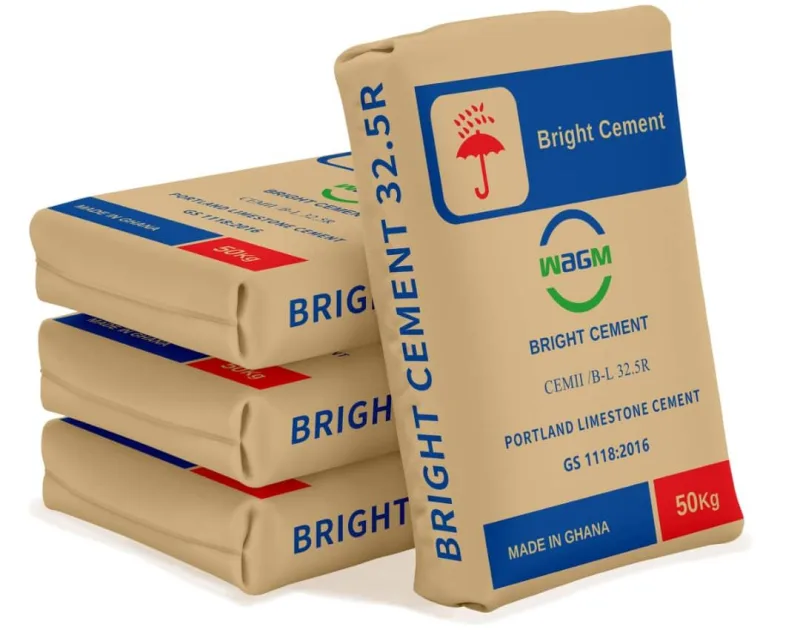
From a 2022 greenfield project born from the Ghanaian-owned construction conglomerate Greenhouse International Development Group to its current status as one of 13 compliant cement manufacturers, Bright Cement has entered one of Africa’s most concentrated industrial markets with a clear mission: produce the highest quality cement and make it affordable for the ordinary person. With an expected annual capacity of 900,000 tonnes, a location in the Afienya Free Zones Enclave, and a parent company with vertically integrated quarries and steel fabrication, the challenger brand is betting that patient capital and an ‘ordinary person‘ price point can disrupt the Ghacem-Dangote duopoly. The question is whether a new entrant can survive the brutal price wars and clinker supply challenges that have already claimed larger rivals.
Executive Introduction
In the concentrated hierarchy of Ghana‘s cement industry—where Ghacem has reigned for 58 years and Dangote Cement has arrived with the scale of a multinational—a new challenger emerged in 2022: Bright Cement Ghana Ltd. Unlike the Chinese-funded Sol Cement, which operates as a grinding plant, or the market leader Ghacem, which is majority-owned by Heidelberg Materials, Bright Cement is a wholly Ghanaian-owned project with an audacious vision: to produce the highest quality cement and make it affordable for the ordinary person to buy .

The company is a subsidiary of the Greenhouse International Development Group, a Ghanaian-owned conglomerate established in 2011 with a business scope that spans roads, bridge construction, real estate development, water and electrical works, steel prefabrication, fish farming, quarry operation, and industrial park development . This vertical integration is the key to Bright Cement‘s potential competitive advantage: by owning its own quarries (for limestone and chippings) and its own steel prefabrication plant, the company can reduce investment costs and control its supply chain in ways that pure grinding plants like Sol Cement cannot .
📢 GET A DETAILED ARTICLES + JOBS
Join ASJ's WhatsApp Channel and never miss a post or opportunity.

The cement factory was planned and designed by the top management of Greenhouse International Development Group in early 2021, with construction commencing at a site in Afienya, near the Free Zones Enclave . The facility has an expected annual production capacity of 900,000 tonnes and was anticipated to start operations in February 2022 . Today, Bright Cement is listed among the 13 compliant cement manufacturers submitting price declarations to the Cement Manufacturing Development Committee (CMDC) .
For contractors, retailers, and industry analysts, Bright Cement represents a case study in vertically integrated challenger strategy. It is not the largest manufacturer, nor the most established. But it has advantages that many competitors lack: a Ghanaian parent with construction expertise, quarries that supply raw materials, and a clear mission to serve the price-sensitive mass market.

This ASJ profile examines the company‘s 2022 founding, its parentage under the Greenhouse International Development Group, its expected 900,000-tonne capacity, its Afienya Free Zones Enclave location, its vision of ‘affordable quality,‘ its status as a compliant manufacturer under L.I. 2491, and the critical question: Can a new entrant with a 900,000-tonne capacity and a mission to serve the ‘ordinary person‘ survive in a market where Ghacem holds 54% share and price wars are brutal?
Company Overview: The Greenhouse International Development Group Subsidiary
The Genesis: A Greenfield Project from a Ghanaian Conglomerate (2021-2022)
Bright Cement Ghana Ltd. was established and incorporated in Ghana in 2022 under the umbrella of the Greenhouse International Development Group . The parent company was itself established in 2011 with a diversified business scope: roads, bridge construction, real estate development, water and electrical works, steel prefabrication, fish farming, quarry operation, and industrial park development .
The cement factory was planned and designed by the top management of the Group in early 2021 . Construction commenced at a site in Afienya, near the Free Zones Enclave, with an expected annual production capacity of 900,000 tonnes . The company anticipated starting operations in February 2022, though broader market visibility emerged later .
Ownership and Parentage
| Item | Details |
|---|---|
| Legal Name | Bright Cement Ghana Ltd. |
| Year Established | 2022 |
| Ownership | Subsidiary of Greenhouse International Development Group |
| Parent Founded | 2011 |
| Parent Business Scope | Roads, bridge construction, real estate, water & electrical works, steel prefabrication, fish farming, quarry operation, industrial park development |
| Cement Factory Location | Afienya (near Free Zones Enclave) |
| Expected Capacity | 900,000 tonnes per annum |
| Regulatory Status | Compliant manufacturer under L.I. 2491 (as of May 2025) |
Vertical Integration: The Greenhouse Advantage
The key differentiator for Bright Cement is its parent company‘s vertical integration. Greenhouse International Development Group operates:
1. Quarry Operations:
The Group’s quarry supplies chippings and other aggregates for construction. For cement manufacturing, this means access to limestone and other raw materials without relying on external suppliers.
2. Steel Prefabrication Factory:
The Group operates a steel prefabrication factory that supplied structural steel for the construction of the Bright Cement factory itself, enabling “the reduction of investment cost and more progress of our works” .
3. Industrial Park Development:
The Group‘s experience in developing industrial parks provides project management expertise for large-scale manufacturing facilities.
This vertical integration is a structural advantage. Unlike grinding plants that depend entirely on imported clinker (Sol Cement) and face supply chain vulnerabilities, Bright Cement has access to local raw materials and construction expertise within its own corporate family.
Vision and Mission
The company has articulated a clear vision and mission :

| Element | Statement |
|---|---|
| Vision | “To produce the highest quality of cement and make it very affordable for the ordinary person to buy” |
| Mission | “To build a long term client relationship based on trust, respect and to saturate the West African market with our products making it the most affordable cement in the sub-region” |
This positioning is distinct from the premium positioning of Ghacem (trusted heritage) and the aggressive pricing of Dangote (multinational scale). Bright Cement aims to be the ‘people‘s cement‘ —affordable, high-quality, and accessible to the ordinary Ghanaian.
The Afienya Factory: Location and Capacity
Strategic Location
The Bright Cement factory is located in Afienya, near the Free Zones Enclave . This location offers several advantages:
| Advantage | Explanation |
|---|---|
| Free Zones Benefits | Tax incentives, duty-free import of machinery and raw materials |
| Proximity to Tema Port | Efficient import of any clinker or equipment not available locally |
| Access to Parent Quarries | The Group‘s quarry operations supply chippings and potentially limestone |
| Proximity to Accra Market | Afienya is within the Greater Accra Region, Ghana‘s largest cement market |
Expected Capacity
The factory has an expected annual production capacity of 900,000 tonnes . For context:
| Company | Capacity | Market Share |
|---|---|---|
| Ghacem (Tema + Takoradi) | ~2.4 million tonnes | 54% |
| Bright Cement | 0.9 million tonnes | New entrant |
| Sol Cement | Undisclosed (grinding plant) | Not in top tier |
A 900,000-tonne capacity positions Bright Cement as a significant mid-tier player, though smaller than the combined capacity of Ghacem‘s two plants.
Construction Progress
The construction of the cement factory was ongoing as of the planning period, with structural steel supplied by the Group‘s steel prefabrication factory and chippings from the Group‘s quarry . By May 2025, the company was listed among the 13 compliant cement manufacturers submitting price declarations, indicating that production had commenced or was imminent .
The Ghanaian Cement Market: A Snapshot
Market Concentration
The Ghanaian cement market is highly concentrated, with Ghacem holding approximately 54% market share [citation:10]. Diamond Cement and Savannah Diamond Cement hold significant shares in the Volta and Northern Regions.
| Company | Ownership | Market Position |
|---|---|---|
| Ghacem | HeidelbergCement (93.1%) | Market leader (54% share), premium heritage |
| Diamond Cement | WACEM | Strong in Volta Region (33% share) |
| Dangote Cement | Nigerian multinational | Terminal at Tema Port, aggressive pricing |
| Bright Cement | Ghanaian-owned (Greenhouse Group) | New entrant, 0.9m tonne capacity |
Price Regulation (L.I. 2491)
Under Regulation 3(1) of L.I. 2491, cement manufacturers are required to submit ex-factory price declarations to the Cement Manufacturing Development Committee (CMDC). As of May 2025, Bright Cement was among the 13 compliant manufacturers .
May 2025 Ex-Factory Prices :
| Cement Grade | Price Range (GH¢) | Average Price (GH¢) |
|---|---|---|
| 32.5R | 93.89 – 105 | 97.7 |
| 42.5R | 105 – 127 | 109.4 |
Bright Cement‘s pricing within this range is not publicly specified, but its vision of affordability suggests it will target the lower end of the price spectrum.
Supply Chain Challenges
The cement industry in Ghana faces persistent challenges:
-
Clinker Import Dependency: Ghana does not produce clinker domestically; all cement manufacturers rely on imported clinker.
-
Supply Disruptions: Cement dealers have reported shortages of various brands, including Sol Cement, citing scarcity of clinker and rising port charges.
-
Currency Volatility: Imported clinker costs are denominated in US dollars; cedi depreciation increases production costs.
Bright Cement‘s vertical integration—including quarry operations that supply chippings—reduces but does not eliminate these dependencies. The company will still require imported clinker unless it develops local clinker production capacity.

Distribution Network: Retail Availability
Bright Cement is already available through building materials suppliers in Accra. Dansoaa Builders Merchant & Home Improvement Store, one of the largest building materials supply companies in Ghana, stocks Bright Cement alongside Ghacem, Sol, Cimaf, and Dangote .
The company‘s distribution reach covers Accra suburbs including :
-
Botsona Spintex Road, Kasoa, Oyarifa, Dawhenya, Dome, Madina, Sepeiman
-
Ablekumah, Osu, Nungua, Achimota, Aburi, New Kasoa, Dansoman, Nungua, Lashebi
-
Legon and East Legon, Afienya, Dodowa, Ashaiman, Accra Central, Dodowa, Doryumu
-
Asutwari, Shai Hills, Prampram, Sege
This distribution network suggests that Bright Cement has established relationships with major building materials retailers and is actively competing for shelf space alongside established brands.
Regulatory Compliance: L.I. 2491 and the CMDC
Bright Cement‘s inclusion on the May 2025 list of 13 compliant manufacturers is a significant milestone . The Cement Manufacturing Development Committee (CMDC), operating under the Ghana Standards Authority (GSA), stated that compliant firms would be publicly listed, while non-compliant companies would face sanctions as stipulated by law .
The Chairman of the CMDC, Professor Alex Dodoo, indicated that this price declaration mechanism is intended to ensure transparency and stability in cement pricing .
For Bright Cement, being on the compliant list demonstrates:
-
Regulatory Good Standing: The company has met its obligations under L.I. 2491.
-
Market Legitimacy: It is recognised as a legitimate manufacturer by the GSA.
-
Pricing Transparency: Its ex-factory prices are subject to regulatory oversight.
This stands in contrast to companies like Sol Cement, which faced a GH¢700 million tax evasion scandal and GRA shutdown . Bright Cement has avoided such controversies, entering the market with a clean regulatory record.
Challenges and Risks
No analysis of Bright Cement is complete without acknowledging the significant headwinds facing a new entrant in Ghana‘s cement industry.
Risk 1: Clinker Import Dependency
Like all cement manufacturers in Ghana, Bright Cement depends on imported clinker. Global supply disruptions, rising shipping costs, and currency depreciation directly affect production costs and profitability.
Mitigation: The parent company‘s quarry operations and construction experience may provide some supply chain advantages, but clinker remains an imported commodity.
Risk 2: Intense Competition
Ghacem holds 54% market share with decades of brand trust. Dangote Cement has aggressive pricing and multinational scale. Diamond Cement has strong regional presence. Bright Cement must compete for market share in a crowded field.
Mitigation: The company‘s ‘affordable quality‘ positioning targets the price-sensitive segment, potentially capturing customers who are unwilling to pay a premium for Ghacem.
Risk 3: Brand Building
As a new entrant, Bright Cement lacks the brand recognition of Ghacem (established 1967) or Dangote (pan-African presence). Building trust with contractors, retailers, and individual home builders takes time.
Mitigation: Distribution partnerships with major retailers like Dansoaa Builders Merchant provide visibility and accessibility.
Risk 4: Capacity Utilization
With an expected capacity of 900,000 tonnes, the factory must operate at high utilization rates to achieve economies of scale. Low demand or supply disruptions could leave the plant underutilized.
Mitigation: The parent company‘s own construction projects (roads, bridges, real estate) provide a captive market for Bright Cement.
Risk 5: Price Wars
Cement is a commodity. Price competition is intense. Established players may lower prices to squeeze new entrants, forcing Bright Cement to operate at lower margins than anticipated.
Mitigation: The parent company‘s vertical integration reduces input costs, potentially allowing Bright Cement to sustain lower prices longer than competitors.
Risk 6: Regulatory Compliance
Failure to comply with L.I. 2491 price declaration requirements could result in sanctions. The GRA also monitors tax compliance rigorously, as demonstrated by the Sol Cement case.
Mitigation: Bright Cement has demonstrated compliance by submitting price declarations for May 2025 .
Future Outlook
As of June 2026, Bright Cement is in its market entry and capacity ramp-up phase. The company has secured regulatory compliance, established distribution partnerships, and begun selling to the Ghanaian market.
The Immediate Agenda (2026-2027)
-
Achieve Full Production Capacity: Ramp up the 900,000-tonne facility to full capacity.
-
Expand Distribution Network: Increase the number of retail partners beyond existing relationships.
-
Build Brand Awareness: Market the ‘affordable quality‘ value proposition to contractors and individual home builders.
-
Secure Clinker Supply: Diversify clinker sources to mitigate supply disruptions.
-
Maintain Regulatory Compliance: Continue submitting price declarations under L.I. 2491.
The Bull Case (Optimistic)
-
‘Affordable Quality‘ Resonates: Bright Cement captures significant market share in the price-sensitive segment. The 900,000-tonne capacity is fully utilized within two years.
-
Parent Company Captive Demand: Greenhouse International‘s own construction projects (roads, bridges, real estate) consume a significant portion of Bright Cement‘s output, providing a stable revenue base.
-
Vertical Integration Delivers Cost Advantage: The parent‘s quarries and steel fabrication reduce input costs. Bright Cement undercuts competitors on price while maintaining quality.
-
Regulatory Compliance Sustained: Bright Cement remains on the CMDC‘s compliant list, avoiding the reputational damage suffered by Sol Cement.
-
Expansion to West Africa: The company‘s mission to ‘saturate the West African market‘ materializes, with exports to Togo, Benin, or Burkina Faso.
The Bear Case (Pessimistic)
-
Price War Intensifies: Ghacem or Dangote lower prices aggressively. Bright Cement struggles to compete on margin.
-
Clinker Shortage Worsens: Global supply disruptions affect Bright Cement‘s production. Customers switch to competitors with more reliable supply.
-
Brand Building Lags: Contractors and retailers continue to prefer established brands. Bright Cement‘s market share remains below 5%.
-
Capacity Underutilized: The factory operates at 50-60% capacity, leading to higher per-unit costs and reduced profitability.
-
Regulatory Setback: Any compliance failure triggers scrutiny, damaging the brand‘s reputation.
The Verdict
Bright Cement Ghana Ltd. is the most promising new entrant in Ghana‘s cement industry in a decade. Unlike Sol Cement, which entered the market as a grinding plant and later faced a devastating tax evasion scandal, Bright Cement has positioned itself as a vertically integrated, Ghanaian-owned manufacturer with a clean regulatory record. Unlike Ghacem, which is majority-owned by a German multinational, Bright Cement is a subsidiary of a Ghanaian conglomerate with deep roots in construction and infrastructure development .
The company‘s advantages are significant. Its parent company, Greenhouse International Development Group, owns quarries that supply chippings and a steel prefabrication factory that reduces construction costs . Its location in the Afienya Free Zones Enclave provides tax incentives. Its 900,000-tonne capacity makes it a meaningful mid-tier player. And its mission—‘to produce the highest quality of cement and make it very affordable for the ordinary person to buy‘ —targets the largest segment of the Ghanaian cement market.
The risks are real. Clinker import dependency, intense competition from Ghacem and Dangote, brand-building costs, and the need to achieve high capacity utilization are all significant challenges. But Bright Cement has entered the market with a clear strategy, a clean regulatory record, and the backing of a diversified Ghanaian conglomerate.
For the Ghanaian contractor seeking an affordable, high-quality alternative to Ghacem, Bright Cement offers a new choice. For the Ghanaian economy, Bright Cement represents local ownership, job creation, and reduced import dependence. For the cement industry, Bright Cement is a challenger—and challengers have a way of forcing established players to improve.
Bright Cement is not trying to be the largest cement manufacturer in Ghana—Ghacem holds that crown. It is trying to be the most affordable, the most accessible, and the most trusted by the ordinary Ghanaian. With a 900,000-tonne capacity, a vertically integrated parent, and a clear mission, it has the foundation to achieve that goal.
FAQ SECTION
1. Is Bright Cement a Ghanaian-owned company?
Yes. Bright Cement Ghana Ltd. is a wholly-owned subsidiary of the Greenhouse International Development Group, a Ghanaian-owned conglomerate established in 2011 .
2. When was Bright Cement established?
Bright Cement was incorporated in Ghana in 2022. The cement factory was planned and designed in early 2021, with construction progressing toward a planned start date in February 2022 .
3. Where is the Bright Cement factory located?
The Bright Cement factory is located in Afienya, near the Free Zones Enclave in the Greater Accra Region .
4. What is Bright Cement‘s production capacity?
The factory has an expected annual production capacity of 900,000 tonnes .
5. What is Bright Cement‘s vision?
The company‘s vision is “to produce the highest quality of cement and make it very affordable for the ordinary person to buy” .
6. Is Bright Cement compliant with Ghana‘s cement price regulations?
Yes. As of May 2025, Bright Cement was listed among the 13 compliant cement manufacturers submitting ex-factory price declarations under Regulation 3(1) of L.I. 2491 .
7. Who is the parent company of Bright Cement?
The parent company is the Greenhouse International Development Group, a Ghanaian-owned conglomerate with operations in roads, bridge construction, real estate, steel prefabrication, quarry operations, and industrial park development .
8. Does Bright Cement have vertical integration advantages?
Yes. The parent company operates quarries that supply chippings and a steel prefabrication factory that supplied structural steel for the Bright Cement factory construction. This vertical integration helps reduce investment costs .
9. Where can I buy Bright Cement in Ghana?
Bright Cement is available through building materials suppliers such as Dansoaa Builders Merchant & Home Improvement Store, with distribution covering Accra suburbs including Spintex Road, Kasoa, Oyarifa, Dawhenya, Dome, Madina, Legon, East Legon, Ashaiman, and many others .
10. How does Bright Cement compare to Ghacem?
Ghacem has been in operation since 1967, holds approximately 54% market share, and is majority-owned by HeidelbergCement Group. Bright Cement is a new entrant (2022) with a 900,000-tonne capacity, a mission of affordability, and Ghanaian ownership .
11. What are the key products of Bright Cement?
Bright Cement produces Ordinary Portland Cement in grades including 32.5R and 42.5R, sold in 25KG and 50KG bags .
12. Is Bright Cement available for export to West African markets?
The company‘s mission includes the goal to “saturate the West African market” with its products, though current operations are focused on Ghana .
QUICK FACTS BOX
| Item | Details |
|---|---|
| Legal Name | Bright Cement Ghana Ltd. |
| Year Established | 2022 |
| Ownership | Subsidiary of Greenhouse International Development Group |
| Parent Founded | 2011 |
| Factory Location | Afienya, Free Zones Enclave, Greater Accra Region |
| Expected Capacity | 900,000 tonnes per annum |
| Primary Products | Ordinary Portland Cement (32.5R, 42.5R) |
| Vision | “Highest quality cement, affordable for the ordinary person” |
| Mission | “Saturate the West African market… most affordable cement in the sub-region” |
| Regulatory Status | Compliant under L.I. 2491 (May 2025) |
| Distribution | Available at Dansoaa Builders Merchant and other retailers across Greater Accra |
| Key Competitors | Ghacem, Dangote Cement, Diamond Cement, Sol Cement |
| Key Advantage | Vertical integration with parent company‘s quarry and steel fabrication |
| Regulator | Ghana Standards Authority (GSA), Cement Manufacturing Development Committee (CMDC) |
| Website | https://brightcement.com/ |
Source: Accra Street Journal
Last Updated on June 8, 2026 by Samuel Kwame Boadu
Disclaimer: Some content on Accra Street Journal may be aggregated, summarized, or edited from third-party sources for informational purposes. Images and media are used under fair use or royalty-free licenses. Accra Street Journal is a subsidiary of SamBoad Publishing Hub under SamBoad Business Group Ltd, registered in Ghana since 2014.
For concerns or inquiries, please visit our Privacy Policy or Contact Page.

Samuel Kwame Boadu is a Ghanaian media entrepreneur and storyteller with a passion for amplifying urban voices and uncovering everyday truths. He is the Editor-in-Chief and Founder of Accra Street Journal, a dynamic digital platform dedicated to capturing the pulse of Ghana’s capital—its people, culture, challenges, business, sports and innovations.