






Introduction: Discovering Mampong, the Hill Town of Ashanti
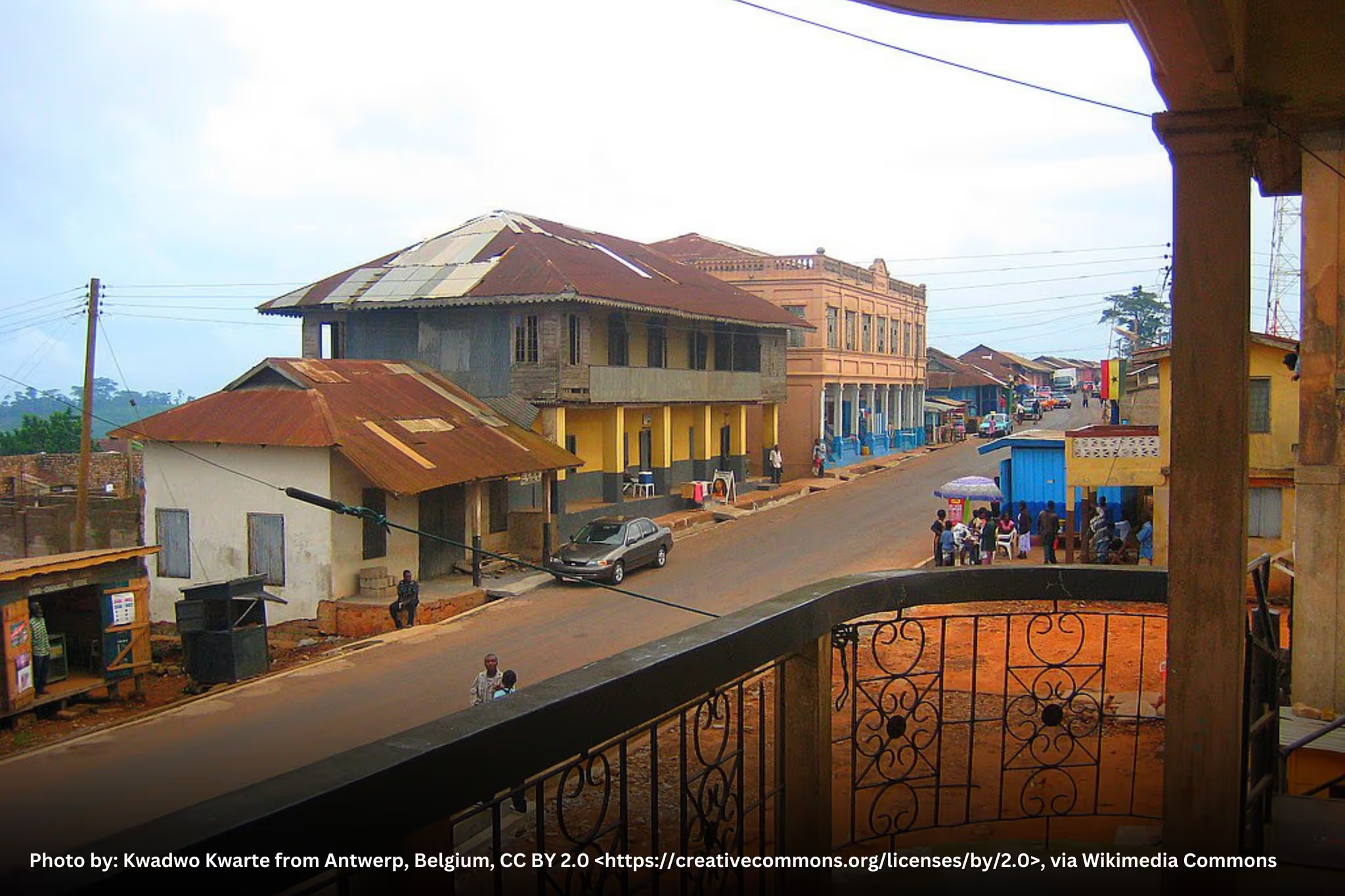
Perched in the rolling hills of Ghana’s Ashanti Region, about 70 kilometers north of Kumasi, Mampong offers travelers a refreshing escape from the chaos of the capital . Here, the air cools at dusk, red dust paths wind through cocoa farms, and the pulse of daily life moves at a pace that invites you to slow down . Unlike the crowded tourist hubs of southern Ghana, Mampong feels lived-in and authentic—a place where travelers are more likely to encounter locals than other backpackers .
The town’s name comes from the Twi language, meaning “I have eaten,” a name believed to have originated from a successful hunt where the founders declared their satisfaction and abundance . This spirit of resourcefulness and community still defines Mampong today. Whether you’re drawn by the historic Mampong Royal Palace, the vibrant central market, or the surrounding cocoa farms, this ASJ guide covers everything you need to know about getting there, where to stay, and what to experience .

How Far Is Mampong from Accra?
| Mode | Distance | Travel Time |
|---|---|---|
| Bus + Taxi | ~278 km | 5.5–7 hours |
| Private Car | 278 km | 4–5 hours |
| Flight + Taxi | ~250 km (flight) + road | 2.5–3 hours |
Mampong is located approximately 70 kilometers north of Kumasi in the Ashanti Region . The total road distance from Accra is about 278 kilometers, with most of the journey passing through the Eastern and Ashanti Regions via Nsawam, Suhum, Nkawkaw, and Konongo before reaching Kumasi, then continuing north to Mampong .
📢 GET A DETAILED ARTICLES + JOBS
Join ASJ's WhatsApp Channel and never miss a post or opportunity.

Important Note: There is no direct bus from Accra to Mampong. All road routes require a transfer, typically in Kumasi, followed by a taxi or tro-tro to Mampong .
Getting from Accra to Mampong: Transport Options
Option 1: Bus + Taxi (Most Common & Affordable)
This is the most practical way to reach Mampong on a budget. You will take a bus from Accra to Kumasi, then take a taxi or shared vehicle from Kumasi to Mampong.
Step 1: Accra to Kumasi by Bus
| Detail | Information |
|---|---|
| Operators | Intercity STC Coaches, VIP Jeoun Transport |
| Fare | GHS 60–120 (approx. $10–20 USD) depending on service class |
| Travel Time | 4 hours 46 minutes to 5 hours |
| Departure Point | Circle Terminus, Accra |
| Frequency | Twice daily |
| Booking | Online at stcticketing.gov.gh or at the terminal |
Step 2: Kumasi to Mampong by Taxi or Tro-tro
| Detail | Information |
|---|---|
| Distance | ~70 km |
| Travel Time | 1.5–2 hours |
| Taxi Fare | GHS 150–250 (private taxi); can be shared |
| Tro-tro Fare | GHS 15–30 |
| Departure Point | Kumasi central lorry station |
Mampong is about 70 kilometers north of Kumasi. Shared taxis and tro-tros depart regularly from Kumasi’s main stations . If traveling with luggage or in a group, a private taxi offers more comfort and flexibility.
Total Estimated Cost (One Way): GHS 75–370 (approx. $12–60 USD) depending on service class and taxi choice.
Option 2: Private Car (Most Flexible)
| Detail | Information |
|---|---|
| Distance | 278 km |
| Travel Time | 4–5 hours |
| Fuel Cost (one way) | GHS 350–500 |
| Route | Accra → Nsawam → Suhum → Nkawkaw → Konongo → Kumasi → Mampong |
Driving offers flexibility to stop at attractions along the way. The route passes through several towns where you can break the journey: Dome (8 minutes), Nsawam (34 minutes), Suhum (1 hour), Kibi (1.5 hours), Nkawkaw (2.5 hours), and Konongo (3 hours 42 minutes) . The road is generally paved but can have rough patches, especially during the rainy season.
Estimated Cost: GHS 350–500 for fuel (one way).
Option 3: Flight + Taxi (Fastest but Most Expensive)
| Step | Detail | Cost | Time |
|---|---|---|---|
| 1. Flight to Kumasi | Accra (ACC) → Kumasi (KMS) | GHS 600–1,500 | 40–50 minutes |
| 2. Taxi to Mampong | Kumasi Airport → Mampong | GHS 150–250 | 1.5–2 hours |
| Total | GHS 750–1,750 | 2.5–3 hours |
Flight Frequency: Multiple daily flights with Africa World Airlines and Passion Air .
Flying is significantly faster but costs substantially more than bus travel. This option is best for travelers with limited time or those combining a visit with other northern destinations.
Option 4: Direct Tro-tro (Budget but Less Comfortable)
For the most budget-conscious traveler, direct tro-tros from Accra to Mampong may be available from stations like Kasoa, though this is less common and not as reliable as the Kumasi transfer route . Travelers are advised to confirm availability at Accra’s main lorry stations.
Best Time to Visit Mampong
| Season | Months | Conditions | Best For |
|---|---|---|---|
| Dry Season (Peak) | November – March | 30–33°C (86–91°F), low humidity, clear skies | Comfortable travel, hiking, outdoor exploration |
| Harmattan Period | December – February | Cooler mornings/evenings (20–23°C), dust haze | Unique atmospheric experience, cooler temperatures |
| Rainy Season | April – October | Heavy afternoon showers, lush vegetation | Photography, fewer visitors, vibrant landscapes |
Best Months: November through March offer the most comfortable conditions for exploring the town and surrounding hills. The Harmattan winds from December to February bring cooler mornings and evenings—a welcome change from the usual tropical heat .
What to See and Do in Mampong
Mampong Royal Palace
The Mampong Royal Palace (Mamponghene’s Palace) is the traditional seat of the Mamponghene and a living center of Ashanti culture . Here, you can see traditional architecture, ceremonial stools, and regalia. If you time your visit right, you might witness drumming, storytelling, or public events where local chiefs and elders gather .
| Detail | Information |
|---|---|
| Location | Central Mampong |
| Entry | Small donation appreciated |
| Best Time | Weekday mornings |
| Note | Ask permission before photographing; dress modestly |
Mampong Central Market
The heart of the town beats at the Central Market, where traders from surrounding villages sell fresh produce, spices, textiles, and crafts . This is the best place to sample street food, watch local bargaining customs, and see rural goods arriving into town .
| Detail | Information |
|---|---|
| Location | Town center |
| Best Time | Early morning (6–9 AM) for fresh produce |
| What to Buy | Spices, textiles, fresh produce, handcrafts |
| Street Food | Kelewele (spiced fried plantains), waakye, roasted yam |
Cocoa Farms on the Outskirts
Mampong is surrounded by fertile agricultural land, with cocoa being a prominent crop . A visit to a cocoa grove reveals the rhythm of farm life, from bean to bar, with explanations from a patient guide . This is an excellent opportunity to learn about Ghana’s most famous export and the communities that grow it.
Mampong College of Education
One of the town’s notable institutions, the teacher training campus offers a glimpse into Ghanaian student life and classic collegiate architecture . It’s a good spot to talk with trainee teachers and observe community events .
Aburi Botanical Gardens (Day Trip from Accra)
While technically not in Mampong, if you’re traveling by road from Accra, the Aburi Botanical Gardens is a worthwhile stop—a serene escape with towering trees and lush greenery that feels like a well-kept secret .
Day Trips from Mampong
| Destination | Distance | Highlights |
|---|---|---|
| Lake Bosomtwe | ~60 km south of Kumasi | Ghana’s only natural lake; swimming, fishing, boat rides |
| Adansi Wildlife Reserve | Near Mampong | Tropical flora and fauna; guided tours available |
| Ntonso Batik Village | Near Kumasi | Traditional Adinkra cloth printing; hands-on workshops |
| Kejetia Market, Kumasi | 70 km south | One of West Africa’s largest markets |
Where to Stay
Mampong offers basic but comfortable accommodation options. Most travelers choose to stay in guesthouses near the town center for walkability and local atmosphere .
| Accommodation Type | Price (GHS) | Notes |
|---|---|---|
| Local guesthouses (town center) | 50–100 | Basic but clean; fan rooms, shared bathroom |
| Guesthouses with A/C | 100–150 | Private bathroom, more comfortable |
| Budget hotels | 25–60 USD (approx. GHS 150–350) | Limited options |
Neighborhood Guide:
-
Central Mampong: The best area for short stays. Walkable, with easy access to shops, markets, and street food. Accommodation is budget-friendly, and you’ll be close to the action .
-
Aburi Road: Quieter, great for longer stays. A bit removed from the town center but within walking distance of main attractions .
Note: Dorm-style accommodation is limited in Mampong; most options are private rooms .
Where to Eat
Mampong’s food scene revolves around street food stalls and local chop bars, where you can experience authentic Ghanaian cuisine at affordable prices.
| Type | Price (GHS) | Recommendations |
|---|---|---|
| Street food | 5–15 | Kelewele (spiced fried plantains), waakye, roasted yam, kebabs |
| Local chop bars | 10–25 | Fufu with light soup, banku with tilapia, jollof rice |
| Restaurants | 20–50 | Sit-down options with local dishes |
Must-try local dishes:
-
Fufu with light soup – Cassava and plantain dough served with a light tomato and meat/fish soup
-
Banku with tilapia and pepper sauce – Fermented corn and cassava dough with grilled tilapia
-
Kelewele – Spiced fried ripe plantain cubes; a popular street snack
-
Waakye – Rice and beans cooked with millet leaves; a Ghanaian staple
Estimated Budget (Per Person)
| Category | Budget (GHS) | Mid-range (GHS) |
|---|---|---|
| Transport (round trip, bus + taxi) | 150–300 | 300–500 |
| Transport (round trip, flight + taxi) | 1,500–2,500 | 2,500–3,500 |
| Accommodation (per night) | 50–100 | 100–150 |
| Food (per day) | 20–40 | 40–80 |
| Activities (palace, market) | 20–50 | 50–100 |
| Local transport | 10–30 | 30–50 |
| Total (approx. 2-day trip, bus) | 250–500 | 500–900 |
Note: A realistic daily budget for Mampong is roughly $5–$20 USD (GHS 70–300) depending on choices .
Travel Tips for Mampong
Practical Advice
-
Book bus tickets in advance, especially for weekend travel and holidays .
-
Carry sufficient cash – ATMs are limited in Mampong. Bring enough for your stay .
-
Pack light for the bus; luggage space is limited. Extra luggage may incur fees.
-
Bring a power bank – Electricity can be intermittent in smaller towns.
-
Carry water and snacks for the road; rest stops may not have your preferred options.
-
Wear comfortable shoes – Mampong is walkable, and the hills around town are ideal for morning walks .
Cultural Etiquette
-
Greet people before asking questions – A simple “Akwaaba” (welcome) or “Medaase” (thank you) goes a long way. Learn a few Twi phrases: “Maakye” (good morning), “Wo ho te sɛn?” (how are you?) .
-
Use your right hand for giving and receiving items.
-
Ask permission before photographing people, the palace, or sacred sites .
-
Dress modestly – Mampong is a conservative town; shoulders and knees should be covered, especially when visiting the palace or religious sites .
Health and Safety
-
Yellow Fever Certificate – Mandatory for travel in Ghana; keep it accessible.
-
Malaria prevention – Use insect repellent and sleep under a mosquito net .
-
Drink only bottled or filtered water – Tap water is not safe for visitors.
-
Travel during daylight hours on unfamiliar roads. Avoid night travel.
-
Petty theft can occur in crowded markets – Keep valuables secure and use a money belt .
Getting Around Mampong
-
Walking: The most reliable way to get around, especially in the town center where distances are short .
-
Taxis: Short rides within town cost GHS 5–10. Agree on price before departure.
-
Tro-tros: Shared minibuses connect Mampong to nearby villages .
Frequently Asked Questions (FAQs)
1. Is there a direct bus from Accra to Mampong?
No. There is no direct bus from Accra to Mampong. You must take a bus from Accra to Kumasi (4.5–5 hours), then a taxi or tro-tro to Mampong (1.5–2 hours) .
2. How much is the bus from Accra to Kumasi?
STC and VIP bus fares from Accra to Kumasi range from GHS 60–120 depending on service class .
3. How long does it take to drive from Accra to Mampong?
Driving takes approximately 4–5 hours for the 278 km journey, depending on traffic and road conditions .
4. Can I fly from Accra to Mampong?
There is no airport in Mampong. Fly from Accra to Kumasi (40–50 minutes, GHS 600–1,500), then take a taxi to Mampong .
5. What is there to do in Mampong?
Key attractions include the Mampong Royal Palace, Central Market, surrounding cocoa farms, and day trips to Lake Bosomtwe and Adansi Wildlife Reserve .
6. Where can I stay in Mampong?
Accommodation options include local guesthouses in the town center (GHS 50–100) and more comfortable options (GHS 100–150). Dorm-style accommodation is limited .
7. What is the best time to visit Mampong?
The dry season (November to March) offers the best weather for travel, with clear skies and comfortable temperatures .
8. Is Mampong safe for tourists?
Yes. Mampong is generally safe, though travelers should take normal precautions: keep valuables secure, avoid walking alone at night, and be aware of your surroundings in crowded markets .
9. What language is spoken in Mampong?
The primary local language is Twi. English is understood to a limited extent, especially in business and institutional settings .
10. How far is Mampong from Kumasi?
Mampong is approximately 70 kilometers north of Kumasi, a 1.5–2 hour drive .
Conclusion: The Road to Mampong
Mampong offers something increasingly rare in Ghana’s tourism landscape: authenticity. It is not a polished resort town or a crowded tourist hub. It is a working Ghanaian town where daily life unfolds in the market, at the palace, and in the conversations between neighbors.
Traveling from Accra to Mampong is straightforward—the STC or VIP bus to Kumasi offers an affordable, reliable connection, followed by a short taxi ride north . Once you arrive, you’ll find a town that rewards exploration: the vibrant central market, the historic Royal Palace, the serene cocoa farms on the outskirts, and the warm hospitality of the Ashanti people .
Whether you’re a backpacker seeking off-the-beaten-path experiences, a traveler looking to explore Ghana’s cultural heartland, or simply someone wanting to escape the capital’s hustle, Mampong delivers. Pack light, carry cash, respect local customs, and prepare to discover a corner of Ghana that remains deeply connected to its roots.
Safe travels.
Frequently Asked Questions (FAQs)
1. Is there a direct bus from Accra to Mampong?
No. There is no direct bus from Accra to Mampong. You must take a bus from Accra to Kumasi (4.5–5 hours), then a taxi or tro-tro to Mampong (1.5–2 hours) .
2. How much is the bus from Accra to Kumasi?
STC and VIP bus fares from Accra to Kumasi range from GHS 60–120 depending on service class .
3. How long does it take to drive from Accra to Mampong?
Driving takes approximately 4–5 hours for the 278 km journey, depending on traffic and road conditions .
4. Can I fly from Accra to Mampong?
There is no airport in Mampong. Fly from Accra to Kumasi (40–50 minutes, GHS 600–1,500), then take a taxi to Mampong .
5. What is there to do in Mampong?
Key attractions include the Mampong Royal Palace, Central Market, surrounding cocoa farms, and day trips to Lake Bosomtwe and Adansi Wildlife Reserve .
6. Where can I stay in Mampong?
Accommodation options include local guesthouses in the town center (GHS 50–100) and more comfortable options (GHS 100–150). Dorm-style accommodation is limited .
7. What is the best time to visit Mampong?
The dry season (November to March) offers the best weather for travel, with clear skies and comfortable temperatures .
8. Is Mampong safe for tourists?
Yes. Mampong is generally safe, though travelers should take normal precautions: keep valuables secure, avoid walking alone at night, and be aware of your surroundings in crowded markets .
9. What language is spoken in Mampong?
The primary local language is Twi. English is understood to a limited extent, especially in business and institutional settings .
10. How far is Mampong from Kumasi?
Mampong is approximately 70 kilometers north of Kumasi, a 1.5–2 hour drive
Source: Accra Street Journal
Last Updated on April 1, 2026 by Samuel Kwame Boadu
Disclaimer: Some content on Accra Street Journal may be aggregated, summarized, or edited from third-party sources for informational purposes. Images and media are used under fair use or royalty-free licenses. Accra Street Journal is a subsidiary of SamBoad Publishing Hub under SamBoad Business Group Ltd, registered in Ghana since 2014.
For concerns or inquiries, please visit our Privacy Policy or Contact Page.

Samuel Kwame Boadu is a Ghanaian media entrepreneur and storyteller with a passion for amplifying urban voices and uncovering everyday truths. He is the Editor-in-Chief and Founder of Accra Street Journal, a dynamic digital platform dedicated to capturing the pulse of Ghana’s capital—its people, culture, challenges, business, sports and innovations.