






Introduction: A City Going Digital at Speed
Accra’s digital landscape has transformed dramatically over the past five years. Walk through Airport City or Osu today, and you will find freelancers on video calls, traders accepting mobile money payments, and students streaming lectures. The days of unreliable connections and frustrating dropouts are fading, but the journey is far from complete.
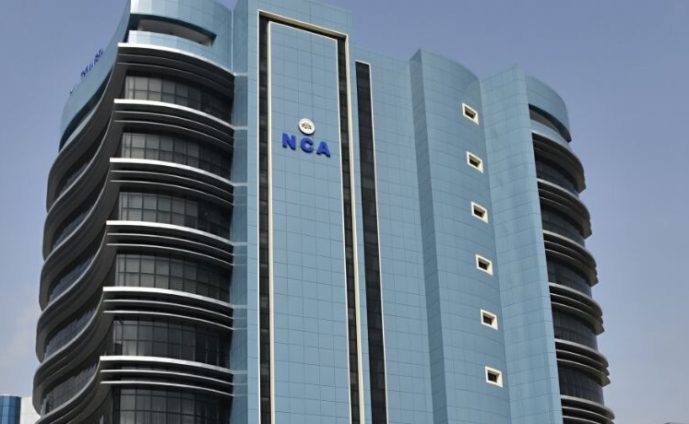
In 2026, Accra finds itself at an inflection point. A new wholesale 5G network has flickered to life, promising revolutionary speeds. A new terrestrial fiber route from Lagos now provides critical redundancy for international connectivity. And the National Communications Authority (NCA) has imposed the strictest quality standards in the nation’s history . Yet, for all the progress, challenges remain: coverage gaps, infrastructure costs, and the slow adoption of next-generation services.

This comprehensive ASJ guide examines the current state of internet connectivity in Accra—from the latest 5G rollout and real-world 4G speeds to practical advice on staying connected, and what the future holds for Ghana’s digital capital.
📢 GET A DETAILED ARTICLES + JOBS
Join ASJ's WhatsApp Channel and never miss a post or opportunity.

The Network Landscape: Who Rules the Airwaves?
Accra’s connectivity is dominated by three mobile network operators (MNOs), with one player towering above the rest.
MTN Ghana: The Undisputed Leader
MTN Ghana is the colossus of Accra’s telecom market, commanding a staggering 73.25% market share as of late 2025 . Its yellow-branded towers are ubiquitous across the capital. In practice, this dominance means MTN generally offers the fastest data speeds and most consistent 4G coverage, particularly in central business districts like Ridge, Airport City, and Osu . For residents and short-term visitors, an MTN SIM card or eSIM is often the most reliable choice for high-bandwidth activities like video conferencing and streaming.
Telecel Ghana (Formerly Vodafone)
Ranking a distant second with approximately 19.25% market share, Telecel has invested significantly in network modernization since its rebranding from Vodafone . Telecel’s coverage shines in specific hubs, particularly in East Legon and the Airport Residential areas, which are popular with expatriates and business travelers . While its speeds may not consistently match MTN’s peak performance, Telecel remains a solid, competitive option.
AT (formerly AirtelTigo)
AT holds about 7.5% of the market and serves as the value-oriented competitor . While AT covers the basics, users often report slower speeds, particularly during peak evening hours (6–8 PM) when network congestion is highest . It is a viable budget option but may frustrate users reliant on lag-free video calls or large file downloads.
5G in Accra: The Long-Awaited Rollout
After years of anticipation and delays, Ghana has officially entered the 5G era. However, the rollout has been unconventional and, for many, confusing.
The Shared Network Model (NGIC)
Instead of auctioning spectrum to individual operators, the government established Next-Gen InfraCo (NGIC) , a public-private partnership. NGIC is building a single, shared wholesale 4G and 5G network . Mobile operators like MTN and Telecel can then connect to this shared platform to offer 5G services to their customers.
As of March 2026, NGIC has received formal clearance from the NCA and launched full commercial operations . The network is now live in selected parts of Accra, Kumasi, and Tamale, with a phased nationwide expansion underway .
Coverage and Performance Reality
While the technology is live, its practical availability is limited. At launch, only 49 sites were operational nationwide, with 43 of those concentrated in or around Accra . For the average Accra resident or visitor, 5G remains a curiosity rather than a daily utility. Most users will continue to rely on 4G LTE for the foreseeable future.
Furthermore, Ghana’s mobile operators have shown reluctance to rush into commercial 5G services. BuddeComm analysts note that existing LTE penetration remains low, and current 4G and LTE-A networks can manage anticipated data traffic growth in the short term . Simply put, there is insufficient user demand for 5G to justify a massive marketing push just yet.
The Future is Uncertain (and Competitive)
A significant regulatory change could reshape the 5G landscape. The NCA has proposed amending NGIC’s licence to remove its exclusivity clause, which would allow other telcos—most notably MTN—to acquire their own 5G spectrum and build competing networks . If adopted, this amendment could spark a genuine 5G race, potentially accelerating rollout and lowering prices for consumers. For now, NGIC is racing to maximize its first-mover advantage before that day comes.
The 70% by 2026 Target
The government has set an ambitious target of achieving 70% 5G population coverage by Ghana’s 70th Independence anniversary (March 2027) . Whether NGIC can scale from a handful of sites in Accra to nationwide coverage within a year remains a significant challenge, but it underscores the administration’s commitment to digital transformation.
4G LTE: The Real Workhorse
For most people in Accra, 4G LTE remains the primary gateway to the internet, and the news here is overwhelmingly positive.
Widespread Availability and Reliable Speeds
Over the last five years, Accra’s 4G coverage has expanded to blanket nearly every district a visitor or resident is likely to see, from the bustling markets of Makola to the beaches of Labadi . Daytime speeds in central Accra typically range between 15–25 Mbps, which is more than sufficient for high-quality video calls, streaming, and social media . While signal can flicker slightly when moving between tall buildings in dense commercial zones, the drop is usually brief.
Stricter Quality Standards from the NCA
Perhaps the most significant development for 4G users is regulatory. In February 2026, the NCA introduced sweeping new Quality of Service (QoS) rules that impose tougher, enforceable thresholds on mobile operators .
| Key Performance Indicator | Old Standard | New Standard (2026) |
|---|---|---|
| Call Drop Rate | Max 3% | Max 1% |
| Minimum 3G Download Speed | 256 Kbps | > 1 Mbps (4x faster) |
| SMS Delivery Success Rate | Less stringent | 98% within 5 seconds |
| Network Coverage | Encouraged beyond district capitals | Mandatory licence obligation |
These new rules are designed to hold operators accountable. The increased minimum download speed for 3G networks (to exceed 1 Mbps) is a game-changer for users on older devices or in fringe coverage areas, while the reduction in allowable call drop rates should lead to more stable connections . The NCA has signalled it will intensify monitoring and field testing, with sanctions for non-compliance. For the average Accra resident, this should translate to a tangibly better and more reliable 4G experience.
The Backbone: International Connectivity and Fiber
Accra’s internet doesn’t just come from cell towers; it relies on robust undersea cables and terrestrial fiber networks.
The Lagos-to-Accra Terrestrial Fiber Route
In a landmark development for regional digital resilience, a new terrestrial fiber route from Lagos, Nigeria to Accra was commissioned in March 2026 . This route achieves a latency of just 11 milliseconds between the two cities.
This project is a direct response to the vulnerabilities exposed in March 2024, when a rockfall off the West African coast damaged multiple subsea cables, causing widespread internet outages across the region . This new terrestrial link provides a critical alternative path for data, ensuring that if the undersea cables are damaged again, Accra can maintain connectivity via land. This redundancy is crucial for Accra’s growing status as a tech and business process outsourcing (BPO) hub.
Fiber to the Home (FTTH) is Growing
While mobile data dominates, fixed broadband is also advancing. Operators like Tizeti have launched “FreeFiber” services in Accra, offering speeds exceeding 1 Gb/s . This is particularly attractive for businesses, high-bandwidth users, and families in upscale neighborhoods. The government’s national fiber backbone, managed by the National Communications Backbone Company, already connects major cities from Accra to Paga and Tamale, providing the foundational infrastructure for nationwide connectivity .
Practical Guide: Staying Connected in Accra (2026)
Whether you are a visitor for a week or a resident for years, choosing the right connectivity option is essential.
Option 1: eSIM – The Traveler’s Best Friend
For short-term visitors (under two weeks) or business travelers who need connectivity the moment they land, an eSIM is the premium, hassle-free choice. Providers like Airalo offer Ghana-specific plans (e.g., 5 GB for 30 days for approximately $20) .
-
Pros: You can purchase and install it before your flight. Activation is instant upon arrival. No need to queue at the airport or present your passport.
-
Cons: Approximately double the price of a local SIM card. Topping up requires an internet connection and a credit card, as you cannot buy scratch cards at street stalls.
Option 2: Local SIM Card – The Budget-Friendly Choice
For longer stays or those who want the absolute cheapest rates, buying a local SIM card is the best option.
-
Where to Buy: Kiosks for MTN, Telecel, and AT are located in the arrival hall of Kotoka International Airport .
-
What You Need: Your passport. Vendors will take a photo and register your fingerprints. You will need to provide a local address (your hotel is fine) .
-
Tourist Packages: MTN and Telecel offer specific tourist packs. For roughly 100 cedis (under $10), you can get 10 GB of data plus local minutes . This is significantly cheaper than any eSIM plan.
-
Topping Up: Scratch cards are sold on every street corner. Dial the code (*124*code#) to add credit, then purchase a data bundle.
Option 3: Public Wi-Fi – Use with Caution
Accra’s hotels, cafes, and restaurants almost universally offer free Wi-Fi. However, security is a major concern.
-
The Risk: “Evil twin” hotspots (fake networks set up by hackers) are a real threat. Even legitimate networks can be compromised. Never perform banking transactions or access sensitive work files on public Wi-Fi without protection.
-
The Solution: Use a VPN (Virtual Private Network) . A VPN encrypts your traffic, turning intercepted data into useless noise. Services like NordVPN are inexpensive and essential for digital security while traveling .
The Future of Connectivity in Accra
Accra’s digital trajectory is undeniably upward, driven by policy, investment, and demand.
Challenges Ahead
-
The 5G Adoption Gap: While the infrastructure exists, consumer and business demand for 5G remains low. The high cost of 5G-ready devices is a significant barrier for many Ghanaians.
-
Network Congestion: Despite improvements, peak-hour slowdowns (6–8 PM) remain a reality, particularly for budget carriers .
-
The NGIC vs. MTN Question: The outcome of the NCA’s decision on NGIC’s exclusivity will determine whether Ghana has a single, shared 5G network or a competitive multi-operator market. A competitive market typically drives down prices and accelerates innovation.
Opportunities Ahead
-
AI and Smart City Potential: The low latency of 5G is essential for advanced technologies like the Internet of Things (IoT), smart traffic management, and AI-driven public services .
-
Digital Economy Growth: Reliable, redundant international connectivity (via the new terrestrial fiber route) directly supports Accra’s ambitions to become a leading hub for Business Process Outsourcing (BPO) and tech startups .
-
National Coverage Goals: The government’s target of 70% 5G population coverage by 2027, coupled with the NCA’s mandate for operators to cover all towns within a district, promises to bridge the digital divide between Accra and the rest of the country .
Key Takeaways at a Glance
| Aspect | Summary |
|---|---|
| Dominant Operator | MTN (73% market share) offers the best speeds and coverage. Telecel is strong in expat hubs (East Legon) . |
| 5G Status | Live in limited parts of Accra via shared wholesale network (NGIC), but not yet widely adopted by consumers . |
| 4G Performance | Reliable speeds of 15-25 Mbps in most of the city. New NCA rules promise stricter quality standards . |
| International Link | New Lagos-to-Accra terrestrial fiber route provides redundancy against subsea cable cuts . |
| For Travelers | eSIM (Airalo) for convenience; local SIM (MTN/Vodafone) for cheapest rates. Use a VPN on public Wi-Fi . |
| Future Outlook | 70% 5G coverage targeted for 2027. Regulatory decisions will determine if the market becomes competitive . |
Frequently Asked Questions (FAQs)
1. Can I rely on mobile internet for video calls and remote work in Accra?
Yes. 4G coverage in Accra is generally reliable, with typical speeds of 15-25 Mbps, which is sufficient for Zoom, Google Meet, and other video conferencing tools. MTN currently offers the most consistent service for this purpose .
2. Is 5G widely available in Accra right now?
Not yet. While the NGIC network is commercially live, it is currently limited to selected parts of Accra, Kumasi, and Tamale. The vast majority of Accra residents and visitors are still using 4G .
3. Should I buy an eSIM or a local SIM card for my trip?
Buy an eSIM (e.g., Airalo) for convenience. You can set it up before you land and be connected immediately. Buy a local SIM (MTN/Telecel) for the best price. It is significantly cheaper but requires a trip to a kiosk and registration with your passport .
4. Is it safe to use hotel and café Wi-Fi in Accra?
No, not without protection. It is very easy for hackers to set up fake hotspots or intercept traffic on unsecured public networks. Always use a VPN (Virtual Private Network) when connecting to public Wi-Fi in Accra to encrypt your data and protect your passwords and banking information .
5. What is the NCA doing to improve internet quality?
In February 2026, the NCA introduced stricter Quality of Service (QoS) rules. These include lowering the maximum allowable call drop rate from 3% to 1% and increasing the minimum 3G download speed from 256 Kbps to over 1 Mbps. The NCA is also mandating operators to provide coverage to all towns within a district, not just capitals .
6. Is Accra’s internet connection vulnerable to undersea cable cuts?
Historically, yes. However, a new Lagos-to-Accra terrestrial fiber route was commissioned in March 2026 to address this exact vulnerability. This land-based cable provides a critical backup, ensuring that if undersea cables are damaged, Accra can maintain connectivity via the inland route
Source: Accra Street Journal
Last Updated on April 3, 2026 by Samuel Kwame Boadu
Disclaimer: Some content on Accra Street Journal may be aggregated, summarized, or edited from third-party sources for informational purposes. Images and media are used under fair use or royalty-free licenses. Accra Street Journal is a subsidiary of SamBoad Publishing Hub under SamBoad Business Group Ltd, registered in Ghana since 2014.
For concerns or inquiries, please visit our Privacy Policy or Contact Page.

Samuel Kwame Boadu is a Ghanaian media entrepreneur and storyteller with a passion for amplifying urban voices and uncovering everyday truths. He is the Editor-in-Chief and Founder of Accra Street Journal, a dynamic digital platform dedicated to capturing the pulse of Ghana’s capital—its people, culture, challenges, business, sports and innovations.