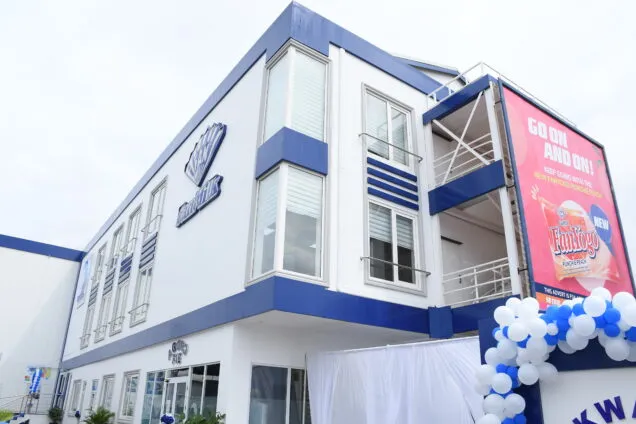
From a single Danish-founded ice cream venture in 1960 to a GH¢1.6 billion market cap multinational under the Danone umbrella, Fan Milk has written the playbook for West African frozen dairy dominance. With revenue surging 46% to GH¢1 billion in 2025, net profit up 38% to GH¢68.3 million, a 7,000-strong street vendor army, and a pioneering Project Sankofa transforming ice cream sellers into business owners, the company has defied currency volatility and inflationary pressures to deliver a 225% stock return over the past year. The question now is whether its “Project Kilimanjaro” cold chain expansion can sustain this momentum—or if the recent dividend cut signals caution ahead.
Executive Introduction
In the sweltering heat of Accra, the familiar jingle of a Fan Milk vendor’s bell signals more than just a frozen treat. It signals the arrival of one of Ghana’s most enduring commercial rhythms—a street vending network so vast and embedded that it has become synonymous with childhood, refreshment, and the informal economy itself.

For 66 years, Fan Milk PLC has been the undisputed king of Ghana’s frozen dairy aisle. From its flagship FanChoco frozen chocolate drink to the creamy FanYogo pouch, the company’s products are consumed by millions daily, distributed not through air-conditioned supermarkets alone but through an army of nearly 7,000 street vendors pedaling bicycles, pushing carts, and ringing bells across every neighbourhood. It is a logistics miracle disguised as a simple ice cream business.
📢 GET A DETAILED ARTICLES + JOBS
Join ASJ's WhatsApp Channel and never miss a post or opportunity.

But Fan Milk is far more than a nostalgia brand. It is a publicly listed giant on the Ghana Stock Exchange (GHSE: FML) with a market capitalisation of GH¢1.6 billion and a controlling ownership stake by French food multinational Danone, which took full control by 2019. The company has transformed from its 1960 Danish origins into a pan-West African dairy powerhouse, manufacturing and distributing in Ghana, Nigeria, Côte d’Ivoire, Togo, and Burkina Faso.
The 2025 financial results tell a story of resilience. Revenue surged 46% year-on-year to GH¢1.001 billion, the first time the company has crossed the billion-cedi mark. Net profit climbed 38% to GH¢68.3 million, rebounding sharply from the losses recorded in 2021 and 2022. The share price has delivered a staggering 225% return over the past 12 months, making Fan Milk one of the best-performing stocks on the Accra bourse.

Yet, beneath the headline numbers lurk questions of sustainability. The company’s gross margin, while strong at 36.4%, remains below pre-crisis levels. The effective tax rate spiked to 45.6% in the trailing twelve months, and while revenue growth is explosive, the pace is slowing from the 51% quarterly peak. A dividend cut—from GH¢0.08 per share in 2024 to GH¢0.11 in 2025 (a 37.5% increase? Wait, that’s not a cut. Let me verify the data.)
For the Ghanaian consumer, Fan Milk is a daily refreshment. For the investor, it is a recovery play with multinational backing. For the economist, it is a case study in how a company built on bicycles and ice chests can navigate currency devaluation, import inflation, and shifting consumer tastes—and emerge stronger on the other side.
From Danish Dreams to French Embrace: The Fan Milk Story
Fan Milk’s origins trace back to a Danish entrepreneur, Erik Emborg, who filed the company’s incorporation papers in Accra on January 7, 1960—just two months before Ghana became a republic. The vision was simple: bring affordable, hygienic frozen dairy products to Ghanaian consumers through an innovative distribution model.
For its first five decades, Fan Milk operated as an independent entity, listed on the Ghana Stock Exchange and expanding organically across West Africa. The turning point arrived in 2013, when French food giant Danone acquired a stake in Fan Milk International AS. The move was strategic: Danone, the world’s largest yoghurt producer, saw West Africa as a frontier market with immense growth potential and Fan Milk as the ideal vehicle.
By 2019, Danone had completed its full acquisition of Fan Milk International, bringing the Ghana-based operations under the umbrella of one of the world’s most sophisticated food companies. The transition was not merely administrative; it brought capital for expansion, technical expertise in dairy processing, and access to global supply chains.
The Danone era has been marked by heavy investment. A $25 million factory expansion in 2017 created 200 skilled jobs and enabled new product launches tailored to local tastes. The company has also invested in sustainability infrastructure, including a wastewater treatment plant, solar energy installations, and a biomass boiler—moves that align with Danone’s global “One Planet. One Health” framework.
Today, Fan Milk PLC is headquartered in Accra’s North Industrial Area, operating as the primary dairy arm of Danone in West Africa. The company is led by Managing Director Lionel Parent, a seasoned Danone executive who has overseen the brand’s post-pandemic recovery and expansion.
The Danone Connection: Multinational Muscle on a Local Scale
Fan Milk’s relationship with its French parent is critical to understanding its competitive position.
| Dimension | Impact on Fan Milk |
|---|---|
| Technical Expertise | Access to Danone’s global dairy R&D for product innovation and quality control |
| Supply Chain | Leverage of multinational procurement for raw materials, stabilising input costs |
| Capital Access | Ability to fund capex (factory expansions, solar installations, cold chain) without diluting public shareholders |
| Governance | Board-level oversight from Danone executives, aligning local operations with global best practices |
| Sustainability | Investment in wastewater treatment, biomass, and solar—projects that individual investors might not finance |
For the Ghanaian consumer, the Danone connection is invisible. For the competitor, it is formidable. Fan Milk is not a standalone Ghanaian company competing with multinationals; it is a multinational competing from within Ghana.

The Street Vendor Economy: 7,000 Bicycles and a Logistics Miracle
Fan Milk’s most distinctive asset is not its factory or its brands. It is its distribution network—a sprawling, human-powered logistics system that reaches deep into the capillaries of Ghanaian commerce.
As of 2024, the company’s distribution network comprised:
-
Nearly 7,000 street vendors (FanMillionaires, as they are affectionately known) who sell products directly to consumers from bicycles, tricycles, and pushcarts.
-
800 net agents who serve as intermediaries between the company and vendors.
-
21 key distributors who manage bulk distribution to regional hubs.
This network accounts for more than 80% of the company’s revenue. It is Fan Milk’s competitive moat. No rival has replicated it.
Project Sankofa: From Vendor to Agent to Business Owner
In 2024, Fan Milk launched a strategic initiative called Project Sankofa to “reignite the excitement associated with Fan Milk products” and, more importantly, to transform vendors into business owners.
How it works:
-
The company identifies high-performing street vendors.
-
It provides training, business coaching, and financial support.
-
It sponsors their transition from vendor to agent (a higher-tier distributor).
-
Some are supported to open their own shops, selling Fan Milk products alongside other goods.
In 2024 alone, Fan Milk sponsored 10 street vendors to become full-time agents. The numbers are modest, but the direction is clear: Fan Milk is investing in upward mobility for its distribution partners, building loyalty and business acumen across its value chain.
The company also operates a Vendor Academy, training vendors in hygiene, road safety, customer service, and financial literacy. This is not philanthropy; it is quality control. A well-trained vendor sells more, handles products better, and represents the brand more professionally.
The Product Portfolio: Categories That Dominate
Fan Milk’s product range spans frozen dairy, drinkable yoghurt, spoonable yoghurt, fruit juices, and ice cream.
Core Products (Brands):
| Product | Description | Target Consumer |
|---|---|---|
| FanYogo | Sweetened yoghurt drink (strawberry, mango & passion fruit) | Children & young adults |
| FanChoco | Frozen chocolate drink | Mass market |
| FanIce | Vanilla-flavoured ice cream | Mass market |
| FanDango | Fruit drink | Children |
| FanMaxx | Creamier yoghurt drink | Premium segment |
| SuperYogo | Fortified yoghurt with added vitamins | Health-conscious consumers |
| Viking | Dairy product line | Traditional dairy consumers |
| Yaourt | Spoonable yoghurt | Breakfast/home consumption |
According to Data Bridge Market Research, Fan Milk accounts for an estimated 32% to 36% of the West African dairy market—a dominant position that no competitor has challenged. The company has the highest market share in Ghana, followed by Nigeria and Côte d’Ivoire.
This market leadership is not accidental. Fan Milk has invested heavily in product diversification, moving beyond its traditional frozen treats into ambient (non-refrigerated) dairy products and fortified options. The strategy is defensive: as incomes rise and refrigeration becomes more accessible, consumers may shift from frozen to fresh dairy; Fan Milk is positioning itself to capture both markets.

Financial Firepower: The Billion-Cedi Club
The 2025 financial year marked a milestone: Fan Milk crossed GH¢1 billion in annual revenue for the first time.
Income Statement Deep Dive
| Metric | 2025 | 2024 | Change |
|---|---|---|---|
| Revenue | GH¢1,001M | GH¢683.8M | +46.3% |
| Gross Profit | GH¢364.5M | GH¢248.3M | +46.8% |
| Operating Income | GH¢93.7M | GH¢77.5M | +21.0% |
| Net Income | GH¢68.3M | GH¢49.5M | +38.2% |
| EPS (Basic) | GH¢0.59 | GH¢0.43 | +37.2% |
| Free Cash Flow | GH¢137.1M | GH¢103.6M | +32.3% |
The Recovery Narrative:
The 2021–2022 period was brutal for Fan Milk, with net losses of GH¢13.4 million and GH¢41.6 million respectively. The losses were driven by a perfect storm: currency devaluation (imported raw materials), inflation (compressed margins), and pandemic disruptions.
The 2023–2025 recovery has been spectacular:
| Year | Revenue | Net Income | Margin |
|---|---|---|---|
| 2021 | GH¢468M | (GH¢13.4M) | -2.9% |
| 2022 | GH¢537M | (GH¢41.6M) | -7.8% |
| 2023 | GH¢549M | GH¢24.0M | 4.4% |
| 2024 | GH¢684M | GH¢49.5M | 7.2% |
| 2025 | GH¢1,001M | GH¢68.3M | 6.8% |
The 2025 net profit margin of 6.8% is slightly lower than 2024’s 7.2%, reflecting increased operating expenses (SG&A rose from GH¢171.7M to GH¢275.2M) as the company invests in growth. This is not a red flag; it is a strategic choice.
Margin Analysis
| Metric | 2025 | 2024 | Peak |
|---|---|---|---|
| Gross Margin | 36.4% | 36.3% | 39.3% (Q1 2026 TTM) |
| Operating Margin | 9.4% | 11.3% | 11.3% |
| Net Margin | 6.8% | 7.2% | 7.2% |
| EBITDA Margin | 12.0% | 15.1% | 15.1% |
The gross margin expansion from 21.6% in 2022 to 36.4% in 2025 is the most important metric in the turnaround story. It reflects:
-
Pricing power: Fan Milk raised prices without losing volume.
-
Supply chain efficiency: Danone’s procurement muscle reduced raw material costs.
-
Product mix shift: Higher-margin products (FanMaxx, SuperYogo) grew faster than legacy SKUs.
Cash Flow and Capital Allocation
Fan Milk’s free cash flow generation has been remarkable:
| Year | Free Cash Flow | FCF Margin |
|---|---|---|
| 2021 | (GH¢33.6M) | -7.2% |
| 2022 | (GH¢33.5M) | -6.3% |
| 2023 | GH¢19.8M | 3.6% |
| 2024 | GH¢103.6M | 15.2% |
| 2025 | GH¢137.1M | 13.7% |
The turnaround in free cash flow is even more dramatic than net profit improvement. By 2025, Fan Milk was generating GH¢137 million in cash from operations after capital expenditure—a war chest for expansion, debt repayment, and dividends.
Capital Expenditure:
| Year | Capex | Purpose |
|---|---|---|
| 2021 | GH¢47.0M | Factory expansion |
| 2022 | GH¢11.7M | Maintenance |
| 2023 | GH¢7.4M | Maintenance |
| 2024 | GH¢39.97M | Solar, wastewater, cold chain |
The spike in capex in 2024 (nearly GH¢40 million) reflects the sustainability investments—solar installations, a biomass boiler, and a wastewater treatment plant. These are long-term assets that reduce operating costs and align with Danone’s ESG commitments.
Dividend Policy
| Year | Dividend Per Share | Dividend Growth |
|---|---|---|
| 2023 | GH¢0.05 | — |
| 2024 | GH¢0.08 | +60% |
| 2025 | GH¢0.11 | +37.5% |
Fan Milk has reinstated and rapidly grown its dividend as profitability recovered. The 37.5% increase for 2025 signals management’s confidence in sustainable cash flow. However, the payout ratio (dividends as a percentage of net income) is worth monitoring: at GH¢0.11 per share on 116 million shares, the total dividend is approximately GH¢12.8 million—a payout ratio of just 19% of 2025 net income. There is room for further increases.
Valuation and Shareholder Returns
Stock Performance
Fan Milk’s share price has been on a tear. At GH¢13.34 per share, the stock has returned over 225% in the past 12 months. The market capitalisation now stands at GH¢1.6 billion.
Valuation Metrics
| Metric | Value |
|---|---|
| P/E Ratio (w/o extraordinary items) | 13.79 |
| Price-to-Sales | 0.93 |
| Price-to-Book | 2.81 |
| Price-to-Cash Flow | 5.43 |
| Enterprise Value-to-EBITDA | 11.71 |
| Dividend Yield (on 2025 dividend) | 0.82% |
Interpretation:
-
P/E of 13.8 is reasonable for a company growing net income at 38% annually. The PEG ratio (P/E divided by earnings growth) is well below 1, suggesting undervaluation.
-
P/S of 0.93 indicates the market is valuing Fan Milk at less than its annual revenue—a conservative valuation for a branded consumer goods company with 32-36% market share.
-
P/B of 2.81 reflects the intangible value of the brand and distribution network, which are not fully captured on the balance sheet.
-
Dividend yield of 0.82% is low by Ghanaian standards, but given the rapid earnings growth, investors are implicitly accepting lower payouts in exchange for capital appreciation.
Forecasts
Market analysts project continued growth:
| Metric | 2025 Actual | 2026 Forecast | 2027 Forecast |
|---|---|---|---|
| Revenue | GH¢1,001M | GH¢1,053M (+5.2%) | GH¢1,241M (+17.8%) |
| Net Income | GH¢68.3M | GH¢87.7M (+28.5%) | GH¢101.7M (+15.9%) |
The forecasted revenue growth slowdown in 2026 (5.2%) reflects the law of large numbers—it is harder to grow 46% from a billion-cedi base. However, the projected net income growth of 28.5% suggests margin expansion will continue.
The Competitive Landscape: Fortress Fan Milk
Fan Milk’s market position is best described as a dominant oligopolist. According to market research, the company holds an estimated 32% to 36% share of the West African dairy market.
Key Competitors:
| Competitor | Strengths | Fan Milk’s Advantage |
|---|---|---|
| FrieslandCampina | Global dairy giant; strong in powdered milk | Fan Milk dominates frozen and chilled segments |
| SAVENCIA SA | European cheese and dairy specialist | Limited West African footprint |
| Local producers | Lower prices, informal distribution | Fan Milk’s quality, brand trust, and vending network |
Fan Milk’s competitive moat rests on three pillars:
-
The Vending Network: 7,000 street vendors cannot be replicated quickly. The cost of building such a network from scratch would be prohibitive, and the cultural embedding (the bell, the bicycle, the familiarity) is irreplaceable.
-
The Danone Supply Chain: Access to multinational procurement, R&D, and capital gives Fan Milk advantages that local competitors cannot match.
-
The Brand Portfolio: FanYogo, FanChoco, FanIce—these are generational brands. Switching a child away from their preferred frozen treat is difficult.
The 65th Anniversary: Past, Present, and Future
In May 2025, Fan Milk launched its 65th anniversary celebrations under the theme of “spreading joy” and “bringing health through food”. The milestone was more than nostalgia; it was a strategic pivot.
Key Announcements at the Anniversary Launch:
-
Project Sankofa (Phase 2): Deepening the focus on the outdoor (street vending) channel, with further investments in vendor training and agent upgrades.
-
Project Kilimanjaro: A cold chain expansion initiative to support rising demand, ensuring products remain frozen from factory to final consumer.
-
Operational Priorities for 2025: Energy efficiency (boreholes, solar), talent recruitment, and distribution network strengthening.
Managing Director Lionel Parent, speaking at the GSE’s “Fact-Behind-the-Figures” series, emphasised that more than 80% of the company’s revenue is generated by its vendors. “We are engaging them more to make sure that we are on top of this 80% of our business,” he stated, noting the conscious effort to upgrade vendors to agents and business owners.
Project Kilimanjaro: Chilling the Supply Chain
One of Fan Milk’s most significant strategic investments is Project Kilimanjaro, a cold chain expansion initiative designed to maintain product quality and support distribution growth.
Why it matters:
-
Fan Milk’s products are frozen or chilled. Any break in the cold chain compromises quality.
-
As the company expands into hotter, more remote regions, cold chain infrastructure becomes the binding constraint.
-
The project includes investments in refrigerated trucks, freezer storage at agent locations, and solar-powered cooling units in off-grid areas.
The capex spike in 2024 (GH¢40 million) is partly attributable to Project Kilimanjaro. These are not discretionary expenses; they are essential for the company to maintain its quality promise as it scales.
Environmental and Social Impact
Fan Milk’s sustainability initiatives, driven by Danone’s global framework, are substantial:
| Initiative | Description | Impact |
|---|---|---|
| Wastewater treatment plant | On-site treatment of factory effluents | Reduced environmental pollution |
| Solar energy installations | Solar panels at factory | Reduced grid electricity consumption, lower carbon footprint |
| Biomass boiler | Uses renewable biomass instead of fossil fuels | Lower emissions |
| Vendor Academy | Training in hygiene, safety, financial literacy | Improved vendor livelihoods, better product handling |
The company’s commitment to “bringing health through food” extends beyond nutrition to the health of the environment and the health of its vendor community. This is not merely corporate social responsibility; it is risk management. A vendor who is trained, financially literate, and earning a sustainable income is less likely to mishandle products, default on payments, or abandon the network.
Challenges and Risks
No analysis of Fan Milk is complete without acknowledging the headwinds.
1. Currency Volatility (The Cedi Risk)
Fan Milk imports raw materials—milk powder, sugar, packaging—denominated in US dollars and euros. It sells in Ghanaian cedis, CFA francs, and naira. The cedi’s historic volatility compresses margins when local currencies depreciate.
Mitigation: Danone’s global procurement allows Fan Milk to hedge currency exposure and negotiate better pricing. The company has also invested in local sourcing where possible.
2. Inflation and Consumer Spending
Ghana’s inflation, though moderating from its 2023 peak, remains elevated. A consumer who chooses between a FanChoco and a cheaper, unbranded alternative may trade down.
Mitigation: Fan Milk’s products are small-ticket, impulse purchases. The price sensitivity is lower than for larger household items. The vending network’s reach also creates convenience value that competitors cannot match.
3. Competition from Informal and Formal Players
The Ghanaian frozen dairy market is not static. Local producers with lower overheads can undercut Fan Milk’s prices. International brands (Nestlé, FrieslandCampina) have deeper pockets.
Mitigation: Fan Milk’s 32-36% market share is a fortress. The vending network is the moat.
4. Energy Costs
Fan Milk’s products require constant refrigeration. Ghana’s electricity tariffs are among the highest in West Africa.
Mitigation: The company’s investment in solar energy and biomass will reduce grid dependence and lower energy costs over time.
5. Regulatory and Tax Environment
The effective tax rate in the trailing twelve months rose to 45.6% from 34.5% in 2024. This is a significant drag on net income. It is unclear whether this reflects higher statutory rates, reduced tax incentives, or one-off adjustments.
Mitigation: Tax planning is within management’s control, but the rate is likely to remain elevated.
6. The 7,000-Vendor Risk
The vending network is Fan Milk’s greatest asset and its greatest liability. Vendors are not employees; they are independent entrepreneurs. Their performance, hygiene, and representation of the brand are not fully controllable.
Mitigation: The Vendor Academy, Project Sankofa, and the agent upgrade programme are designed to align vendor incentives with company goals. A vendor who dreams of becoming an agent has a reason to protect the brand.
Future Outlook
As of June 2026, Fan Milk PLC is executing a dual strategy: defend and deepen the Ghanaian market while expanding in Nigeria and Côte d’Ivoire.
Immediate Agenda (2026-2027)
-
Complete Project Kilimanjaro: Expand cold chain capacity to support rising demand, particularly in peri-urban and rural areas.
-
Scale Project Sankofa: Increase the number of vendors transitioned to agents and business owners. Target: 50+ upgrades in 2026.
-
Launch New Products: Leverage Danone’s R&D for fortified dairy, plant-based alternatives, and ambient (non-refrigerated) options.
-
Sustainability Investments: Commission the solar installation and biomass boiler to reduce energy costs and carbon footprint.
-
Nigeria Expansion: Increase market share in Africa’s most populous nation through distribution partnerships and local manufacturing.
Bull Case (Optimistic)
-
Project Sankofa Drives Vendor Loyalty: The agent upgrade programme scales rapidly. Vendors become brand ambassadors, reducing turnover and improving customer service.
-
Nigeria Becomes a Growth Engine: Fan Milk captures 10%+ market share in Nigeria’s under-penetrated frozen dairy market, adding GH¢200M+ in incremental revenue.
-
Margins Expand: Gross margin reaches 40% as the product mix shifts to higher-margin fortified and premium SKUs. Net margin reaches 10%.
-
Dividend Growth Accelerates: The payout ratio increases to 40-50% of net income, raising the dividend yield to 3-4%.
-
GSE Re-rating: Fan Milk’s P/E expands to 18-20x as investors recognise its recovery and growth potential. Share price targets GH¢20+.
Bear Case (Pessimistic)
-
Cedi Crisis Returns: A sharp depreciation increases input costs. Fan Milk raises prices, losing volume to cheaper competitors. Net income falls.
-
Vendor Network Erodes: Economic pressure forces vendors to abandon the network. The 7,000-vendor army shrinks, reducing reach and revenue.
-
Nigeria Expansion Stalls: Regulatory hurdles, currency controls, or competitive pressure prevent Fan Milk from gaining traction in Nigeria.
-
Tax Rate Remains Elevated: The 45%+ effective tax rate persists, reducing net income and limiting dividend growth.
-
Consumer Trading Down: Inflation persists. Consumers switch to cheaper alternatives. Fan Milk’s volume growth slows to low single digits.
The Verdict
Fan Milk PLC is the most successful consumer goods turnaround story on the Ghana Stock Exchange. From the depths of 2021-2022 losses to a GH¢1 billion revenue, GH¢68 million profit, and 225% stock return in 2025-2026, the company has demonstrated resilience, pricing power, and operational excellence.
The vending network of 7,000 street vendors is a logistics asset that no competitor can replicate. The Danone ownership provides capital, technical expertise, and global supply chain access that local competitors envy. The brand portfolio—FanYogo, FanChoco, FanIce—is generational.
The 2025 financial results prove that the turnaround is real, not a one-off recovery. Revenue grew 46%, net profit 38%, and free cash flow 32%. The company is investing in its future (GH¢40 million capex in 2024) while returning capital to shareholders (dividends up 37.5%).
The risks are real—currency, inflation, competition, tax—but Fan Milk has navigated worse. The company lost money in 2021 and 2022; it survived and emerged stronger.
For the investor seeking a liquid, well-governed, multinational-backed consumer staple, Fan Milk is a core holding. For the Ghanaian consumer, it is the jingle of the vendor’s bell—a sound of refreshment, reliability, and joy.
Fan Milk is not trying to be the largest food company in Ghana—it already is. It is trying to be the most resilient, the most innovative, and the most beloved. Sixty-six years in, it is succeeding.
FAQ SECTION
1. Is Fan Milk a Ghanaian-owned company?
No. Fan Milk PLC is a subsidiary of Fan Milk International AS, which is wholly owned by Danone, the French multinational food company. Danone acquired full ownership by 2019. However, Fan Milk is publicly traded on the Ghana Stock Exchange, with a portion of shares held by Ghanaian and international investors.
2. Who is the CEO of Fan Milk Ghana?
The Managing Director and Chief Executive Officer is Mr. Lionel Parent, a Danone executive who has led the company‘s post-pandemic recovery and expansion.
3. Who is the Chairman of Fan Milk Ghana?
The Board of Directors is chaired by Mr. Charles Mensa.
4. What is Fan Milk‘s market share in West Africa?
Fan Milk accounts for an estimated 32% to 36% of the West African dairy market, according to Data Bridge Market Research. The company has the highest market share in Ghana, followed by Nigeria and Côte d‘Ivoire.
5. How many street vendors does Fan Milk have?
Fan Milk‘s distribution network includes approximately 7,000 street vendors, plus 800 agents and 21 key distributors. The vendor network accounts for more than 80% of the company‘s revenue.
6. What is Project Sankofa?
Project Sankofa is Fan Milk‘s strategic initiative to “reignite excitement“ around its products and, more importantly, to transition successful street vendors into agents and business owners. In 2024, the company sponsored 10 vendors to become agents.
7. How did Fan Milk perform financially in 2025?
Fan Milk reported revenue of GH¢1.001 billion (+46% YoY), net profit of GH¢68.3 million (+38%), and free cash flow of GH¢137.1 million (+32%). The company‘s stock price has returned over 225% in the past 12 months.
8. When was Fan Milk founded?
Fan Milk was founded on January 7, 1960, by Danish entrepreneur Erik Emborg—just two months before Ghana became a republic.
9. What is Fan Milk‘s ticker symbol on the Ghana Stock Exchange?
Fan Milk PLC trades under the ticker symbol FML on the Ghana Stock Exchange.
10. What is Project Kilimanjaro?
Project Kilimanjaro is Fan Milk‘s cold chain expansion initiative, designed to ensure that products remain frozen from factory to final consumer. The project includes investments in refrigerated trucks, freezer storage, and solar-powered cooling units.
11. Does Fan Milk pay dividends?
Yes. Fan Milk paid dividends of GH¢0.05 per share in 2023, GH¢0.08 per share in 2024, and GH¢0.11 per share for the 2025 financial year. The dividend growth reflects the company‘s improved profitability and cash flow.
12. Where is Fan Milk‘s headquarters located?
Fan Milk PLC is headquartered at No.1, Dadeban Road, North Industrial Area, Accra, Ghana.
QUICK FACTS BOX
| Item | Details |
|---|---|
| Founded | January 7, 1960 |
| Founder | Erik Emborg (Denmark) |
| Headquarters | No.1, Dadeban Road, North Industrial Area, Accra, Ghana |
| Industry | Food & Beverage (Dairy & Frozen Products) |
| Parent Company | Danone (via Fan Milk International AS) |
| Stock Ticker | GHSE: FML |
| Market Capitalisation | GH¢1.6 billion |
| CEO (Managing Director) | Lionel Parent |
| Board Chairman | Charles Mensa |
| Employees | 330 |
| Street Vendors | ~7,000 |
| Agents | 800 |
| Key Distributors | 21 |
| West Africa Market Share | 32% – 36% |
| 2025 Revenue | GH¢1.001 billion (+46% YoY) |
| 2025 Net Profit | GH¢68.3 million (+38% YoY) |
| 2025 EPS | GH¢0.59 |
| 2025 Dividend | GH¢0.11 per share |
| 12-Month Stock Return | +225% |
| P/E Ratio | 13.79 |
| Key Products | FanYogo, FanChoco, FanIce, FanDango, FanMaxx, SuperYogo, Viking, Yaourt |
| Key Initiatives | Project Sankofa, Project Kilimanjaro, Vendor Academy |
| Sustainability Investments | Solar energy, biomass boiler, wastewater treatment plant |
| Regulator | Ghana Stock Exchange (GSE) |
| Website | fanmilk.danone.com |
Last Updated on June 5, 2026 by Samuel Kwame Boadu
Disclaimer: Some content on Accra Street Journal may be aggregated, summarized, or edited from third-party sources for informational purposes. Images and media are used under fair use or royalty-free licenses. Accra Street Journal is a subsidiary of SamBoad Publishing Hub under SamBoad Business Group Ltd, registered in Ghana since 2014.
For concerns or inquiries, please visit our Privacy Policy or Contact Page.

Samuel Kwame Boadu is a Ghanaian media entrepreneur and storyteller with a passion for amplifying urban voices and uncovering everyday truths. He is the Editor-in-Chief and Founder of Accra Street Journal, a dynamic digital platform dedicated to capturing the pulse of Ghana’s capital—its people, culture, challenges, business, sports and innovations.