
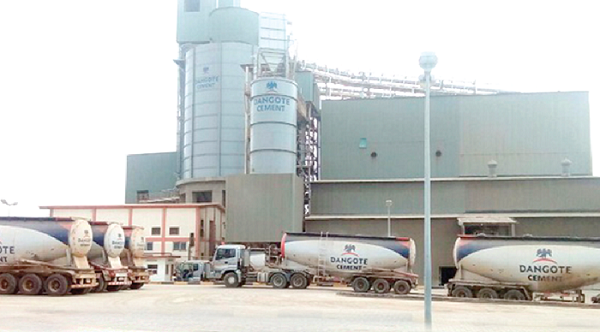
From market share wars to capacity expansion—how two giants are reshaping Ghana’s cement industry
Executive Summary
The battle for dominance in Ghana’s cement industry is contested between two formidable adversaries: GHACEM, the 58-year-old national champion with deep local roots and a 54% market share , and Dangote Cement, the pan-African giant leveraging continental scale and aggressive expansion to challenge the incumbent’s position . While GHACEM remains the market leader, Dangote is rapidly closing the gap through strategic investments in local production capacity, distribution infrastructure, and an expanding retail presence.

This report provides a head-to-head comparison of Dangote Cement and GHACEM across eight critical dimensions:
📢 GET A DETAILED ARTICLES + JOBS
Join ASJ's WhatsApp Channel and never miss a post or opportunity.

| Dimension | GHACEM | Dangote Cement |
|---|---|---|
| Ownership & Heritage | 58-year-old Ghanaian champion; subsidiary of HeidelbergCement (93.1% owned) | Nigerian-headquartered pan-African giant; subsidiary of Dangote Industries |
| Market Share | ~54% (market leader) | ~11% (aggressively growing) |
| Production Capacity (Ghana) | 2.4 million tonnes (Tema + Takoradi) | Existing; 1.5 million tonnes (Takoradi plant in development) |
| Recent Investment | US$100 million new Kumasi plant | US$100 million Takoradi grinding plant |
| Parent Group Capacity | Part of global HeidelbergCement network | 51.6 million tonnes across 10 African countries |
| Global Ambition | Regional export (Burkina Faso) | 90 million tonnes by 2030 (50% more than Saudi Arabia) |
| Product Strategy | Multi-grade portfolio (32.5R, 42.5R) | Focus on premium 42.5R grade |
| Distribution Strength | Established network of 400+ accredited distributors | 1,000-truck fleet; direct distribution model |
The evidence suggests that GHACEM’s incumbent advantages—brand recognition, distribution maturity, and parent company backing—are being challenged by Dangote’s aggressive capacity expansion, vertical integration strategy, and pan-African economies of scale. The next three to five years will determine whether GHACEM can defend its market leadership or whether Dangote will capture its targeted 30% market share .
Part 1: Corporate Profile and Ownership Structure
GHACEM: The 58-Year National Champion
GHACEM (Ghana Cement Works Limited) was founded on 30 August 1967 in partnership with the Government of Ghana and Norcem AS of Norway . Today, it operates as a subsidiary of HeidelbergCement AG, a German multinational with a 150-year history and a global footprint across 50 countries . The ownership structure is clearly defined:

| Shareholder | Stake |
|---|---|
| HeidelbergCement Group | 93.1% |
| Government of Ghana | 5% |
| Estate of J.A. Addison | 1.9% |
GHACEM employs between 1,001 and 5,000 people and maintains key certifications including ISO 14001 (Environmental), OHSAS 18001 (Health & Safety), and ISO 9001 (Quality) . The company’s leadership includes Dr. Frank Huber (Managing Director), Kwasi Kyere (Commercial Director), and Frank Antwi Agyapong (Marketing & PR Lead) . The company’s Foundation is chaired by Ehunabobrim Prah Agyensaim VI .
Dangote Cement: The Pan-African Challenger
Dangote Cement is a subsidiary of the Dangote Industries Group, a Nigerian conglomerate led by Africa’s richest person, Aliko Dangote. The company describes itself as “the largest and leading cement producer in Sub-Saharan Africa” with production capacity of 51.6 million tonnes per year across 10 countries .
Dangote’s African footprint includes :
| Country | Operation Type | Capacity |
|---|---|---|
| Nigeria | Integrated factories | 35.3 million tonnes |
| Senegal | Integrated factories | 1.5 million tonnes |
| South Africa | Integrated factories | 2.8 million tonnes |
| Ethiopia | Integrated factories | 2.5 million tonnes |
| Zambia | Integrated factories | 1.5 million tonnes |
| Tanzania | Integrated factories | 1.5 million tonnes |
| Congo | Integrated factories | 1.5 million tonnes |
| Cameroon | Clinker grinding | 1.5 million tonnes |
| Ghana | Grinding plant/import | 1.5 million tonnes (existing), expansion planned |
| Sierra Leone | Import/distribution | 0.5 million tonnes |
In Ghana, Dangote Cement operates a subsidiary, Dangote Cement Ghana Limited, which has been present in the market for over six years, providing approximately 5,000 direct and indirect jobs to Ghanaians .
| Metric | GHACEM | Dangote Cement |
|---|---|---|
| Year Founded | 1967 | Subsidiary of 1978-founded group |
| Parent Company | HeidelbergCement (Germany) | Dangote Industries (Nigeria) |
| Parent Company Founded | 1874 | 1978 |
| African Presence | Ghana-focused | 10 countries |
| Global Capacity | Part of global leader | 51.6 million tonnes (Africa) |
| Employees (Ghana) | 1,001–5,000 | 5,000+ indirect/direct jobs |
| Local Ownership | 6.9% government | 100% foreign-owned subsidiary |
Part 2: Production Capacity and Manufacturing Footprint
GHACEM’s Manufacturing Network
GHACEM currently operates two grinding plants in Ghana, with a third major facility under construction:
| Plant | Capacity | Status |
|---|---|---|
| Tema Plant | Part of 2.4 million tonnes combined | Operating |
| Takoradi Plant | Part of 2.4 million tonnes combined | Operating; conveyor system linking to port |
| Kumasi Plant (NEW) | 1.5 million tonnes per annum | Under construction (US$100 million investment) |
The new Kumasi plant, announced in January 2026, represents a strategic expansion into the Ashanti Region and surrounding markets . Managing Director Stefano Gallini explained that “the Ghanaian construction sector growth is the driving force behind this agenda” and that “the new plant will produce about 1.5 million tons of cement per annum to serve the Ashanti Region, together with future plans of exporting to Burkina Faso and other neighboring countries” .
Cumulative production since 1967 exceeds 30 million tonnes of cement . GHACEM also has export ambitions, with the new Kumasi plant designed to serve markets in Burkina Faso and other neighbouring countries .
Dangote Cement’s Ghana Expansion
Dangote Cement has made substantial investments in Ghana to challenge GHACEM’s dominance:
| Investment | Amount | Status |
|---|---|---|
| Takoradi grinding plant | US$100 million | Under construction; 1.5 million tonnes capacity |
| Truck fleet procurement | Part of $80 million investment | 1,000 trucks acquired |
| Total direct/indirect jobs | — | 5,000+ created |
The company’s Managing Director, Tor Nygard, noted that the procurement of 1,000 trucks was “in direct response to the demands of the products” and that “these are components of the company’s mission in Ghana, which is to stimulate Ghanaian consumers of our products” .

Continental expansion ambition: Aliko Dangote has announced that Dangote Cement Group is targeting a cement production capacity expansion to approximately 90 million tonnes by 2030—a figure he notes is “50 per cent more than the entire production of Saudi Arabia” . This is part of the company’s Vision 2030 strategy, aimed at transforming Dangote Group into a US$100 billion enterprise by 2030 .
| Metric | GHACEM | Dangote Cement |
|---|---|---|
| Current Ghana Capacity | 2.4 million tonnes | 1.5 million tonnes (existing) |
| New Plant Capacity | 1.5 million tonnes (Kumasi) | 1.5 million tonnes (Takoradi) |
| New Plant Investment | US$100 million | US$100 million |
| Ghana Total Capacity (post-expansion) | ~3.9 million tonnes | ~3.0 million tonnes |
| Global/Continental Capacity | Part of global network | 51.6 million tonnes |
| 2030 Capacity Target | Not specified | 90 million tonnes |
| Export Ambition | Burkina Faso | Pan-African (existing 10 countries) |
Part 3: Market Share and Competitive Positioning
GHACEM: Market Leader with 54% Share
GHACEM remains the undisputed market leader in Ghana, holding approximately 54% market share . This dominance is the result of 58 years of continuous operation, deep distribution networks, and brand recognition built over generations. The company has produced over 30 million tonnes of cement since its founding .
Key competitive advantages:
-
First-mover advantage in the Ghanaian market
-
Established distributor network of over 400 accredited distributors nationwide
-
Parent company backing from HeidelbergCement, a global leader with 150 years of experience
-
Multiple product grades (32.5R and 42.5R) serving different market segments
Dangote Cement: Aggressive Challenger with ~11% Share
Dangote Cement currently holds approximately 11% market share in Ghana but has publicly stated its ambition to capture 30% within the next few years . The company has identified Ghana as a strategic market and is making significant investments to achieve this target.
Key competitive advantages:
-
Pan-African scale with operations in 10 countries—enabling economies of scale that local competitors cannot match
-
Integrated value chain—from clinker production to distribution (unlike GHACEM, which imports clinker and grinds locally)
-
Premium product positioning—supplies only 42.5R grade of ordinary Portland cement, “the highest that could be acquired in the West African market”
-
Direct distribution model—the company has decided “to engage in distribution of cement to make it affordable in Ghana as engaging private distribution company could subsequently cause price hikes”
The market share gap: While GHACEM’s 54% market share remains dominant, Dangote’s 11% share is likely understated given recent investment announcements. The company’s expansion of capacity—from 1.5 million tonnes to an anticipated 3.0 million tonnes post-expansion—will inevitably increase its market presence. Market research confirms that the Ghana cement market is “characterized by a competitive landscape with major players such as Dangote Cement, Ghacem, CIMAF, and Diamond Cement” .
Part 4: Product Quality and Standards
Academic Validation of Quality
A peer-reviewed academic study analyzed the chemical composition of five different brands of Portland cement in Ghana, including Ghacem OPC, Ghacem PLC, and Dangote OPC . The research used X-Ray Fluorescence (XRF) spectrometer analysis and applied Student’s t-test and ANOVA to establish variations.
The findings are significant for consumers:
| Cement Brand | Student’s t-test P-value | Result |
|---|---|---|
| Ghacem OPC | 0.96 | Failed (no significant difference from standard) |
| Ghacem PLC | 0.93 | Failed (no significant difference) |
| Dangote OPC | 0.96 | Failed (no significant difference) |
All tested brands “failed” to reject the null hypothesis—meaning that their chemical compositions were not significantly different from international standard literature values. The study concluded: “using any brand of cement in Ghana was good for any construction works be it concrete or mortar formation” .
Product Grade Differentiation
While both manufacturers produce high-quality cement, they adopt different product strategies:
| Product Characteristic | GHACEM | Dangote Cement |
|---|---|---|
| Product Grades | 32.5R and 42.5R | Primarily 42.5R |
| Target Applications | General construction (32.5R); high-strength (42.5R) | High-strength applications, infrastructure |
| Positioning | Broad market coverage | Premium segment focus |
| Certifications | ISO 9001, ISO 14001, OHSAS 18001 | Not specified in available sources |
Dangote’s focus on the 42.5R grade—the highest available in the West African market—positions the brand as a premium choice for infrastructure projects and high-rise construction where higher strength is required . GHACEM, by contrast, maintains a broader product portfolio to serve the entire market spectrum, from individual homebuilders to major contractors.

The study’s conclusion that all major brands meet international chemical composition standards should reassure consumers that quality is not a differentiating factor between GHACEM and Dangote products .
Part 5: Distribution and Supply Chain
The Logistics Challenge
Both companies face the same structural challenge: Ghana’s cement industry depends on imported clinker, exposing manufacturers to exchange rate volatility, port congestion, and global supply chain disruptions. However, their distribution strategies differ significantly.
GHACEM’s Distribution Model
GHACEM relies on an established network of accredited distributors built over five decades. The company operates a conventional distributor model where independent businesses purchase cement from GHACEM and sell to retailers and end-users. This model benefits from:
-
Nationwide coverage through over 400 accredited distributors
-
Established relationships built over decades
-
Lower capital intensity (distributors bear logistics costs)
However, the model also means GHACEM has less direct control over final consumer prices and availability in remote areas.
Dangote’s Distribution Disruption
Dangote has taken a dramatically different approach to distribution. In a move described as “the largest single importation a company in Ghana had ever made,” the company procured 1,000 trucks to manage its own distribution network .
Why Dangote bypasses third-party distributors:
According to the company’s Media Relations Manager, Etornam Komla Buami, Dangote decided “to engage in distribution of cement to make it affordable in Ghana as engaging private distribution company could subsequently cause price hikes” . By controlling distribution directly, Dangote can:
-
Reduce margins taken by intermediaries
-
Ensure availability in target markets
-
Respond more quickly to demand fluctuations
-
Maintain quality control throughout the supply chain
The 1,000-truck fleet, acquired as part of an $80 million investment, represents a significant capital commitment to vertical integration in the logistics segment of the value chain.
Port Infrastructure
GHACEM benefits from its Takoradi plant’s direct conveyor system connection to the port, which reduces demurrage costs and improves unloading efficiency . Dangote, with its planned Takoradi grinding plant, will likely seek similar logistical advantages.
| Distribution Aspect | GHACEM | Dangote Cement |
|---|---|---|
| Model | Distributor network | Direct distribution (1,000+ trucks) |
| Network Size | 400+ accredited distributors | Company-owned fleet |
| Capital Investment | Lower (distributor-borne) | Higher ($80 million +) |
| Control over pricing | Moderate (market-driven) | High (direct control) |
| Port connectivity | Conveyor system at Takoradi | In development |
Part 6: Financial Performance and Parent Company Backing
GHACEM: HeidelbergCement’s Ghanaian Anchor
GHACEM is a subsidiary of HeidelbergCement AG, a German multinational with a market presence spanning 50 countries. The parent company’s 150-year history provides GHACEM with:
-
Access to global technical expertise in cement manufacturing
-
Financial stability to weather market downturns
-
International best practices in environmental management and safety
-
Research and development support for product innovation
The company’s certifications—ISO 14001 (Environmental), OHSAS 18001 (Health & Safety), and ISO 9001 (Quality)—reflect HeidelbergCement’s global standards .
Dangote Cement: Pan-African Financial Powerhouse
Dangote Cement is part of the Dangote Group, which Aliko Dangote has stated is targeting transformation into a US$100 billion enterprise by 2030 under its Vision 2030 strategy . The parent group is simultaneously expanding across multiple sectors:
| Sector | Expansion Target |
|---|---|
| Petroleum refinery | 650,000 bpd → 1.4 million bpd |
| Fertiliser plant | Increase to 12 million metric tonnes per annum |
| Cement production | 51.6 million tonnes → 90 million tonnes by 2030 |
Dangote Cement’s existing production capacity of 51.6 million tonnes across 10 African countries is already larger than GHACEM’s parent’s Ghana-specific focus. The parent company’s capacity to cross-subsidise Ghanaian operations from other African markets gives Dangote Cement strategic flexibility that GHACEM may lack.
Recognition: Dangote Cement is “the only Nigerian company listed among Forbes Global 2000 companies” .
Part 7: Growth Strategies and Future Outlook
GHACEM’s Strategy: Consolidation and Regional Export
GHACEM’s growth strategy centres on three pillars:
1. Capacity expansion in Kumasi
The US$100 million, 1.5-million-tonne plant represents GHACEM’s largest single investment in years. The facility is designed to serve the growing Ashanti Region market while positioning GHACEM for exports to Burkina Faso and other neighbouring countries .
2. Port efficiency improvements
GHACEM is engaged with the Ghana Port and Harbours Authority “to address some concerns with port handling charges, which also add on to the cost of production” . The company also continues work on completing its Takoradi conveyor system to streamline clinker imports.
3. Market share defence
As Managing Director Stefano Gallini noted: “We want to continue taking care of the Ghanaian market and as you may be aware, there has been an exponential growth in commercial activities in which GHACEM has been involved, and we want to continue with our contribution for the nation’s development” .
Dangote’s Strategy: Aggressive Expansion and Market Share Capture
Dangote’s growth strategy is more aggressive and multi-pronged:
1. Capacity expansion in Takoradi
The US$100 million, 1.5-million-tonne grinding plant in Takoradi mirrors GHACEM’s Kumasi investment in scale . Once operational, Dangote’s total Ghana capacity will increase to approximately 3 million tonnes annually.
2. Distribution infrastructure
The 1,000-truck fleet creates a distribution advantage that GHACEM’s distributor model may struggle to match. Direct control over logistics enables faster response times and potentially lower consumer prices.
3. Pricing pressure
By controlling distribution and benefitting from pan-African economies of scale, Dangote can exert pricing pressure on competitors—potentially forcing GHACEM to reduce margins to defend market share.
4. 30% market share target
The company has publicly stated its ambition to capture 30% of the Ghanaian market within the next few years . Achieving this would significantly reshape the competitive landscape.
The Import Threat
Both companies face a common external threat: the influx of imported bagged cement, primarily from Togo. The Chamber of Cement Manufacturers (COCMAG) has raised concerns that foreign cement is flooding the market, often bypassing mandatory Ghana Standards Authority certification . This “backdoor” competition affects both GHACEM and Dangote by undercutting prices and potentially compromising quality standards.
| Strategic Element | GHACEM | Dangote Cement |
|---|---|---|
| Primary Strategy | Consolidate market leadership | Capture 30% market share |
| Investment Focus | Kumasi plant (Ashanti Region) | Takoradi plant (Western Region) |
| Distribution Strategy | Established distributor network | Direct control (1,000 trucks) |
| Export Ambition | Burkina Faso | Pan-African (already exporting across 10 countries) |
| Price Positioning | Market-driven | Potentially aggressive (direct distribution reduces costs) |
| Parent Group Advantage | Global technical standards | Pan-African economies of scale |
Part 8: Implications for Construction Industry Stakeholders
For Contractors and Large-Scale Builders
-
Price competition between GHACEM and Dangote may benefit large-volume purchasers
-
Product availability should improve as new capacity comes online
-
Quality is comparable between brands according to academic research
-
Supply chain reliability depends on clinker imports—a shared vulnerability
For Retailers and Distributors
-
GHACEM’s distributor network offers established relationships and predictable supply
-
Dangote’s direct distribution model may bypass traditional retailers, reducing their market role
-
Retailers may need to differentiate through value-added services (delivery, credit terms) rather than price
For Individual Homebuilders
-
Price stability will depend on exchange rate movements and competition intensity
-
Quality is not a differentiator—both brands meet international standards
-
Availability should improve as both companies expand capacity
-
Consumer choice is increasing, which typically benefits buyers
For Investors
-
GHACEM offers local market leadership, parent company backing, and established operations
-
Dangote Cement offers pan-African scale, aggressive growth trajectory, and potential for market share expansion
-
The competitive dynamic between these two giants will define Ghana’s cement industry profitability for the next decade
Conclusion: A Contest of Incumbent Advantage vs. Pan-African Scale
The competition between GHACEM and Dangote Cement is a contest of two fundamentally different business models.
GHACEM is the incumbent champion—58 years of market presence, 54% market share, deep distributor relationships, and the technical backing of HeidelbergCement . Its strategy is defensive but proactive: expanding capacity in Kumasi, improving port efficiency, and maintaining the distributor network built over generations. GHACEM’s challenge is to defend its market leadership against a better-capitalised, pan-African rival with lower production costs and a direct distribution model.
Dangote Cement is the pan-African challenger—51.6 million tonnes of continental capacity, operations in 10 countries, and a strategy of aggressive expansion . Its US$100 million Takoradi plant and 1,000-truck distribution fleet demonstrate a willingness to invest heavily in capturing market share . With a stated target of 30% of the Ghanaian market, Dangote is not content to be a secondary player.
The outcome of this contest will be determined by three factors:
-
Capacity utilisation — Both companies are adding 1.5 million tonnes of new capacity. The first to reach full utilisation will gain a competitive advantage.
-
Distribution efficiency — Dangote’s direct distribution model may prove more efficient than GHACEM’s distributor network, but it also requires significant ongoing capital investment.
-
Parent group support — HeidelbergCement’s global resources and Dangote Group’s pan-African scale both provide backing. The question is which parent company is more committed to winning the Ghanaian market.
For now, GHACEM remains the market leader. But Dangote’s trajectory suggests that the gap is closing. The next three to five years will determine whether GHACEM can defend its crown or whether Dangote will capture its targeted market share—fundamentally reshaping Ghana’s cement industry in the process.
Quick Reference: GHACEM vs Dangote Cement at a Glance
| Dimension | GHACEM | Dangote Cement |
|---|---|---|
| Market Share | ~54% (market leader) | ~11% (ambition to reach 30%) |
| Current Ghana Capacity | 2.4 million tonnes | 1.5 million tonnes |
| New Plant Investment | US$100 million (Kumasi) | US$100 million (Takoradi) |
| Post-Expansion Capacity | ~3.9 million tonnes | ~3.0 million tonnes |
| Parent Company | HeidelbergCement (Germany) | Dangote Group (Nigeria) |
| Continental Capacity | Part of global leader | 51.6 million tonnes across 10 countries |
| Distribution Model | 400+ accredited distributors | 1,000-truck direct fleet |
| Product Grades | 32.5R and 42.5R | Primarily premium 42.5R |
| Quality Certification | ISO 9001, ISO 14001, OHSAS 18001 | Meets international standards |
| Export Ambition | Burkina Faso | Pan-African (10 countries) |
| Employees (Ghana) | 1,001–5,000 | 5,000+ (direct and indirect) |
Source: Accra Street Journal
Last Updated on June 9, 2026 by Samuel Kwame Boadu
Disclaimer: Some content on Accra Street Journal may be aggregated, summarized, or edited from third-party sources for informational purposes. Images and media are used under fair use or royalty-free licenses. Accra Street Journal is a subsidiary of SamBoad Publishing Hub under SamBoad Business Group Ltd, registered in Ghana since 2014.
For concerns or inquiries, please visit our Privacy Policy or Contact Page.

Samuel Kwame Boadu is a Ghanaian media entrepreneur and storyteller with a passion for amplifying urban voices and uncovering everyday truths. He is the Editor-in-Chief and Founder of Accra Street Journal, a dynamic digital platform dedicated to capturing the pulse of Ghana’s capital—its people, culture, challenges, business, sports and innovations.