EXECUTIVE INTRODUCTION
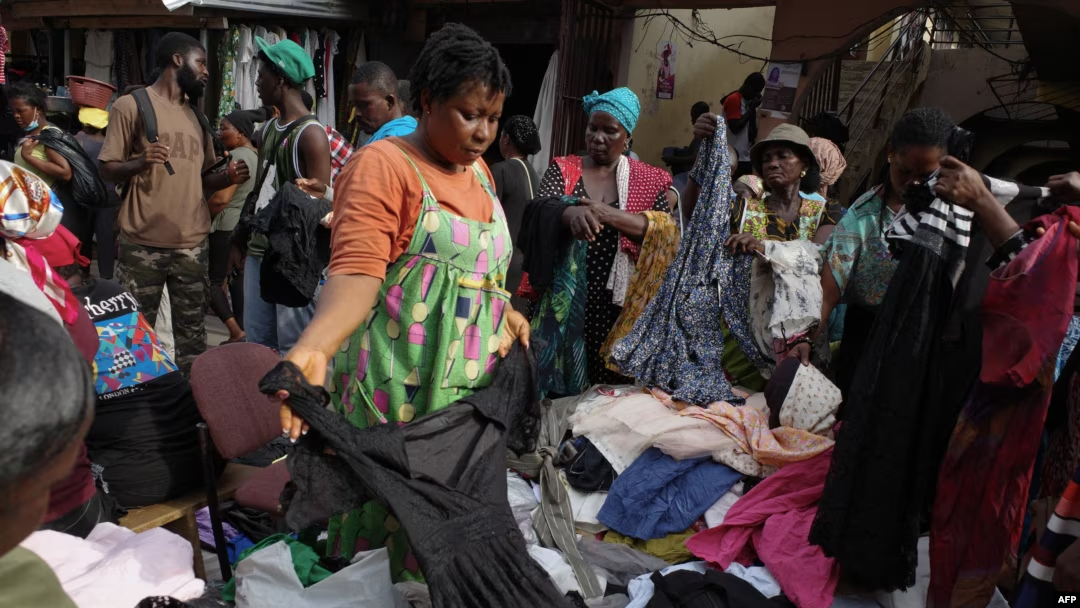
Walk through the bustling aisles of Makola, the tidy shelves of a neighbourhood provisions shop in Dansoman, or the gleaming aisles of a supermarket in East Legon, and a single, overwhelming visual truth confronts the observer. The overwhelming majority of goods on display—the textiles, the cookware, the electronics, the tinned foods, the plastic buckets, the children’s toys, the footwear, the furniture—have travelled thousands of kilometres across an ocean to be there. They carry the labels of factories in Guangzhou, Mumbai, Istanbul, and Johannesburg. The “Made in Ghana” product, while present and growing, remains, in most categories, a small and often hard-fought-for share of the shelf. Accra, the capital of a nation with a proud history, abundant natural resources, and a vast pool of entrepreneurial talent, is, in its daily commercial reality, a vast, efficient, and deeply entrenched distribution node for the manufacturing output of other economies.
This is not a temporary imbalance that will be corrected by a single government policy, a patriotic consumer campaign, or the next cedi depreciation. It is a deep, structural, and self-reinforcing feature of the Ghanaian economy, the result of a complex and interlocking set of historical, financial, logistical, and perceptual forces that have, over decades, tilted the playing field decisively in favour of the imported good. This Accra Street Journal analysis is a dispassionate, forensic examination of the specific, powerful mechanisms that sustain the dominance of imports in the Accra market. We trace the brutal economics of manufacturing in a high-cost, infrastructure-poor environment, the irresistible cost advantage of the Asian factory operating at planetary scale, the well-worn, efficient, and deeply embedded global logistics pipelines that deliver a container from Shanghai to Tema more cheaply than a truck can haul goods from Kumasi, the persistent and often justified consumer perception of the imported good as the quality benchmark, and the quiet, powerful commercial interests that have built profitable empires on the importation and distribution model. The container is not just a metal box; it is a formidable competitive weapon, and to understand why it still wins is to understand the central structural challenge of the Ghanaian economy.

THE TILTED MANUFACTURING FIELD: WHY MAKING IT HERE COSTS SO MUCH
The fundamental starting point for understanding import dominance is the sheer, punishing cost disadvantage faced by the domestic manufacturer before a single product even leaves the factory gate. The Ghanaian producer is embedded in an operating environment that imposes a cascade of costs that the competitor in a well-run industrial zone in China, Vietnam, or India simply does not face, or faces at a dramatically lower scale. The power problem, as explored in depth in our analysis of fuel costs, is the first and most relentless burden. The Ghanaian factory cannot rely on the national grid for uninterrupted, quality power. It must invest in, fuel, and maintain a private diesel or petrol generator plant, adding a massive, volatile, and globally uncompetitive energy cost to every unit of production.
📢 GET A DETAILED ARTICLES + JOBS
Join ASJ's WhatsApp Channel and never miss a post or opportunity.

Beyond energy, the financial environment is hostile to productive investment. The cost of borrowing capital to build a factory, purchase machinery, or fund working capital is, as we have analysed in our piece on loan access, among the highest in the world. A Ghanaian manufacturer trying to finance a new production line with a commercial bank loan at 30% interest is competing against a Chinese manufacturer who may have access to state-directed credit at a fraction of that cost. The Ghanaian producer also bears the cost of importing the very machinery and often the raw materials needed for production, incurring the same port charges, clearing agent fees, and logistics costs that the importer of finished goods pays, but without the benefit of the finished good’s higher value-to-weight ratio. The result is a domestic manufacturing sector that is often fighting a competitive battle with one hand tied behind its back, producing goods at a cost that is frequently higher than the landed cost of a fully finished, ready-to-sell imported equivalent. The tilt begins long before the consumer makes a choice; it is baked into the fundamental economics of production.
THE SCALE OF THE ASIAN FACTORY: THE UNBEATABLE UNIT COST
Even if Ghana were to solve its power, infrastructure, and capital cost problems tomorrow, the domestic manufacturer would still confront a second, formidable structural barrier: the sheer, crushing scale of the Asian manufacturing ecosystem. The factory in Guangzhou, Shenzhen, or Dhaka that produces the plastic goods, the electronics, the textiles, and the household items that fill Accra’s markets is not just a single factory. It is a highly specialised node in a vast, densely integrated, and hyper-efficient industrial cluster. Its raw materials are sourced from a neighbouring supplier at a cost that reflects the aggregated demand of an entire industry. Its machinery is maintained by a local technician who services a dozen identical factories on the same industrial park. Its labour force is massive, skilled in the specific repetitive task, and managed with a productivity-obsessed discipline. Its production runs are for a global, not a national, market, allowing it to amortise the cost of product development, mould-making, and branding over millions of identical units.

The Ghanaian manufacturer, even an efficient one, is producing for a domestic market of some thirty million people, with limited and difficult access to the regional West African market. Their production run is a fraction of the Asian competitor’s, their per-unit fixed cost is higher, their access to specialised inputs and services is less developed, and their ability to invest in sophisticated branding and packaging is constrained. The container that arrives in Tema is not just carrying goods; it is carrying the brutal, silent, and immensely powerful competitive advantage of planetary-scale mass production. The individual, artisanal Ghanaian ceramicist cannot compete on the unit price of a coffee mug with the Guangdong factory that produces a million identical mugs a month. The only viable defence is to move upmarket, to offer a design story, a cultural provenance, and a quality that the generic, container-shipped commodity cannot match, a strategy explored in our piece on the local sourcing revolution, but one that only serves a premium niche, not the mass market.
THE LOGISTICS HIGHWAY: WHY SHANGHAI IS CLOSER THAN KUMASI
The third pillar of import dominance is a perverse, but stubbornly persistent, reality of the Ghanaian economic geography: the well-worn, efficient, and deeply embedded logistics pipeline that connects the factory in Asia to the retail shelf in Accra is often cheaper, faster, and more reliable than the domestic logistics chain connecting a Ghanaian producer to the same shelf. The global shipping container is a marvel of standardisation and cost-efficiency. The marginal cost of moving a single plastic chair inside a container carrying thousands of identical chairs from Shanghai to the port of Tema, via a massive, fuel-efficient container vessel, is astonishingly low. The freight cost per unit is a negligible fraction of the final retail price.
Once that container clears the port, it enters a well-established network of clearing agents, bonded warehouses, and wholesale distribution channels that have been refined over decades. The goods flow smoothly and predictably to the wholesale hubs and from there to the retail stalls. The Ghanaian manufacturer, by contrast, must often contend with the domestic logistics nightmare: the poor road network, the crippling traffic congestion in Accra, the high cost of diesel for trucking, and the absence of a reliable, cost-effective national distribution infrastructure. The cost and the uncertainty of moving a truckload of locally manufactured furniture from a workshop in Kumasi to a showroom in Accra can, in some cases, exceed the cost and predictability of the container freight from China. The global logistics system, paradoxically, has made the distant factory more accessible, and often more commercially viable, than the domestic producer just a few hundred kilometres up the road. The container ship is a subsidised, high-efficiency conveyor belt, while the Ghanaian highway is a potholed, traffic-choked, and diesel-expensive obstacle course.
THE QUALITY PERCEPTION TRAP: THE ENDURING AURA OF THE FOREIGN
A powerful, non-economic layer reinforces the structural cost and logistics advantages: the deep-seated, historically rooted, and persistently reproduced consumer perception that the imported good is intrinsically superior to the locally manufactured alternative. This is a legacy of decades of economic history, a residue of the import-dependent structural adjustment era, the flood of cheap, low-quality goods that followed trade liberalisation, and the subsequent years of unreliability from poorly capitalised local industries. The “Made in China” label, once a mark of cheapness, has evolved into a complex, tiered signal, often now associated with acceptable, modern, and feature-rich quality. The “Made in Ghana” label, despite the valiant efforts of a new generation of producers, is still, for many mass-market consumers, fighting a rearguard action against a deeply embedded perception of being inferior, less durable, less stylish, or simply less “modern.
This perception is not always accurate, but it is a commercially devastating reality. The consumer, faced with an imported cooking pot and a locally made one at a similar price point, will often default, consciously or unconsciously, to the imported one, assuming it to be of better quality. This perceptual bias acts as a powerful, self-fulfilling barrier. It starves the local manufacturer of the sales volume needed to achieve the economies of scale that would lower their unit cost and fund the quality improvements that would, over time, shift the perception. The local producer is trapped in a vicious cycle of low volume, high perceived cost, and a quality reputation that they cannot afford to disprove at scale. Breaking this perceptual trap is a slow, generational marketing and branding challenge, requiring consistent quality, sophisticated packaging, and a deliberate, sustained effort to change the consumer’s mind, one product at a time.
THE IMPORT CARTEL: THE COMMERCIAL INTERESTS VESTED IN THE STATUS QUO
Finally, it must be acknowledged, without resorting to conspiracy theory, that a powerful and deeply entrenched set of commercial interests is heavily invested in the continuation of the import-dominated model. The business of importing—the networks of foreign suppliers, the established relationships with shipping lines and clearing agents, the bonded warehouses, the wholesale distribution monopolies, the trade credit lines extended by foreign exporters—constitutes a vast, profitable, and politically connected economic ecosystem. The individuals and companies that control these import pipelines have accumulated significant capital, deep market knowledge, and often, influential political relationships. They are not passive victims of the import tide; they are its skilled and powerful architects. A significant shift towards domestic production would be a direct threat to their business models, their profit margins, and their established market dominance. They have a powerful, rational, and commercially motivated interest in maintaining the status quo, and their influence is a quiet but significant factor in the persistence of import dominance.
CONCLUSION: THE CONTAINER AND THE CHALLENGE
The dominance of imported goods on the shelves of Accra is not an accident, a conspiracy, or a simple failure of patriotism. It is the perfectly logical, if deeply uncomfortable, outcome of a set of powerful, interlocking structural forces. The Ghanaian manufacturer is fighting a multi-front war against a cripplingly high domestic cost structure, the planetary scale and efficiency of the Asian factory, a perversely efficient global logistics system that makes distance irrelevant, a consumer perception shaped by decades of import dependency, and an established commercial ecosystem that profits from the container trade. The container is a formidable opponent, and it will not be defeated by rhetoric, by a single tariff adjustment, or by a “Buy Ghanaian” slogan alone.
The strategic path to a more balanced market is long, difficult, and requires a coordinated, multi-decade assault on every single one of the structural pillars of import dominance. It requires a fundamental fix to the cost, reliability, and affordability of domestic power and capital. It requires a deliberate, strategic industrial policy that identifies specific, high-potential sectors and provides the targeted infrastructure, financing, and regulatory support to nurture globally competitive Ghanaian manufacturers. It requires a generational investment in branding, quality assurance, and consumer education to shift the stubborn perception of the locally made good. And it requires the Ghanaian consumer, at every income level, to make the conscious, daily choice, wherever a viable and competitive local alternative exists, to put their cedi behind the product that carries their own nation’s name. The container will not simply sail away. It must be outcompeted, and that is the defining economic challenge of the Ghanaian century.
QUICK FACTS BOX: IMPORT DOMINANCE IN ACCRA MARKETS
-
Cost Structure Tilt: The Ghanaian manufacturer faces a crippling combination of unreliable and expensive generator-dependent power, among the world’s highest commercial interest rates, and the high cost of importing machinery and raw materials.
-
Scale Asymmetry: The Asian factory produces for the planet at an unimaginable scale, achieving per-unit costs that the Ghanaian producer, limited to a small domestic market, cannot match.
-
The Logistics Paradox: The global container shipping system is so efficient that the marginal cost of moving goods from Shanghai to Tema is often lower and more reliable than trucking domestic goods from Kumasi to Accra.
-
Consumer Perception: A deep-seated, historically rooted bias that the imported good is inherently superior in quality, design, and modernity, creating a powerful, self-reinforcing barrier for the “Made in Ghana” brand.
-
Vested Commercial Interests: A powerful, well-capitalised, and politically connected ecosystem of importers, clearing agents, and distributors has a direct commercial interest in maintaining the import-dependent status quo.
FAQ SECTION
1. Why can’t Ghanaian factories just make the same goods as the imported ones?
They can, and some do, but they face a massively uneven playing field. The cost of power, capital, and logistics in Ghana is so high that the locally made good often costs more to produce than the imported one costs to buy, even after shipping.

2. Is it just about price, or do imported goods have other advantages?
It is a combination of price, perceived quality, and variety. The massive Asian factories can offer an unbelievably wide range of designs, colours, and features at a scale that a small Ghanaian factory cannot match.
3. How is it cheaper to ship a product from China to Accra than from Kumasi?
Global container shipping is incredibly efficient and operates at a massive scale, making the per-unit transport cost very low. Ghana’s domestic logistics, by contrast, suffer from bad roads, chronic traffic, and high diesel costs.
4. Are imported goods always of better quality than Ghanaian ones?
Not necessarily. This is a complex and often inaccurate consumer perception, but it’s a powerful one. Many Ghanaian producers now make world-class goods, but the decades-old bias in favour of the foreign label is a stubborn barrier they must overcome.
5. Doesn’t the depreciation of the cedi make imports more expensive and help local goods?
It makes imports more expensive in cedi terms, which does help local competitiveness in theory, but it also massively increases the cost of any imported raw materials or machinery the local factory needs, and fuels general inflation that erodes consumer purchasing power.
6. Who are the main beneficiaries of Accra’s import-dominated market?
A powerful ecosystem of established importers, clearing agents, shipping line agents, bonded warehouse owners, and wholesale distributors who have built highly profitable businesses on the smooth and continuous flow of containers.
7. Is the Ghanaian government not doing anything to support local manufacturing?
There are policies like the “One District, One Factory” initiative, but critics argue they are insufficient to address the fundamental structural cost disadvantages in power, finance, and logistics that are the root of the problem.
8. What kind of products can a Ghanaian business still successfully make and sell against the imports?
Products where a unique local story, artisanal quality, cultural design, extreme freshness (like some foods), or a deep, trust-based service relationship can justify a premium price that the undifferentiated, mass-produced import cannot command.
9. Will the African Continental Free Trade Area (AfCFTA) help Ghanaian manufacturers compete with imports?
It holds the potential to help by creating a much larger regional market, which would allow Ghanaian factories to achieve greater scale. However, this is a long-term play and depends on significant infrastructure and policy harmonisation across the continent.
10. As a consumer, what can I do if I want to support local businesses?
Make a conscious effort to look for, ask for, and try out high-quality “Made in Ghana” alternatives. Be willing to pay a small premium for a superior local product with a genuine story. Your purchase is the single most powerful vote you can cast for a more balanced economy.
Source: Accra Street Journal

Last Updated on July 30, 2026 by Samuel Kwame Boadu
Disclaimer: Some content on Accra Street Journal may be aggregated, summarized, or edited from third-party sources for informational purposes. Images and media are used under fair use or royalty-free licenses. Accra Street Journal is a subsidiary of SamBoad Publishing Hub under SamBoad Business Group Ltd, registered in Ghana since 2014.
For concerns or inquiries, please visit our Privacy Policy or Contact Page.

Samuel Kwame Boadu is a Ghanaian media entrepreneur and storyteller with a passion for amplifying urban voices and uncovering everyday truths. He is the Editor-in-Chief and Founder of Accra Street Journal, a dynamic digital platform dedicated to capturing the pulse of Ghana’s capital—its people, culture, challenges, business, sports and innovations.