








12 min read
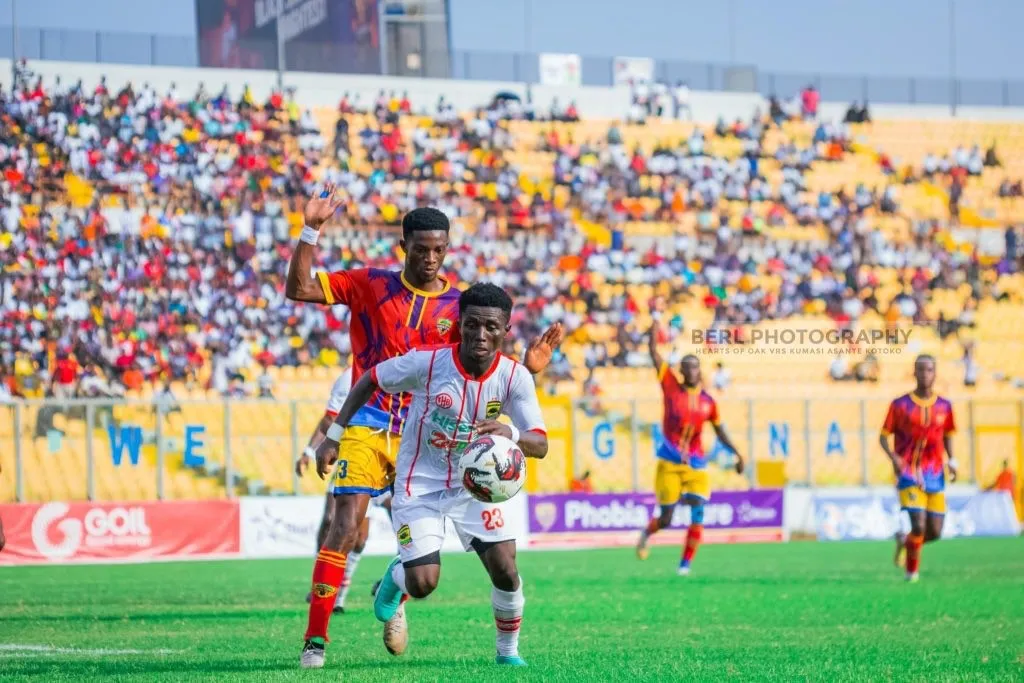
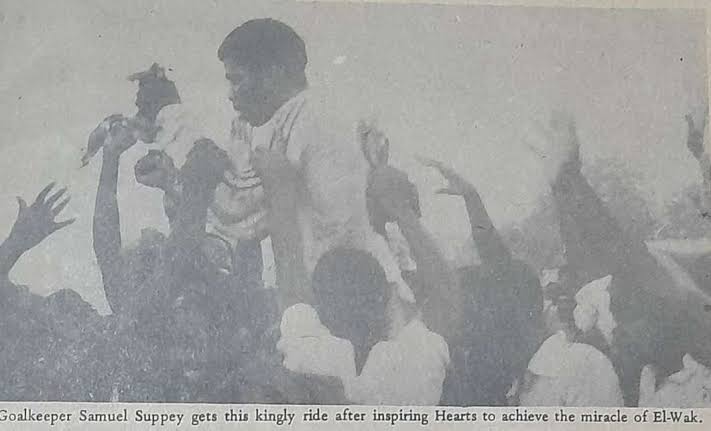
The 1977 Miracle of El-Wak proved that Hearts of Oak could produce a night of impossible football. The 2000 squad proved something more durable: that a Ghanaian club could be built, deliberately and methodically, into the most feared team on the continent. They called it the 64 Warfare. They went through an entire CAF Champions League campaign without losing a single match.
The Name and the Mindset
The “64 Warfare” squad took its nickname from the elite 64 Infantry Regiment of the Ghana Armed Forces. It was not a marketing slogan. It described how the team played: military-like discipline, relentless stamina, and explosive attacking power.
Key Takeaways
- During the 2000 CAF Champions League, his crucial goals in the group stages and his late strike in the final second leg against Espérance sealed the historic title.
- They were unbeaten champions, winning the 2000 CAF Champions League without losing a single match across the entire tournament.
- Did Hearts of Oak lose any match in the 2000 CAF Champions League?
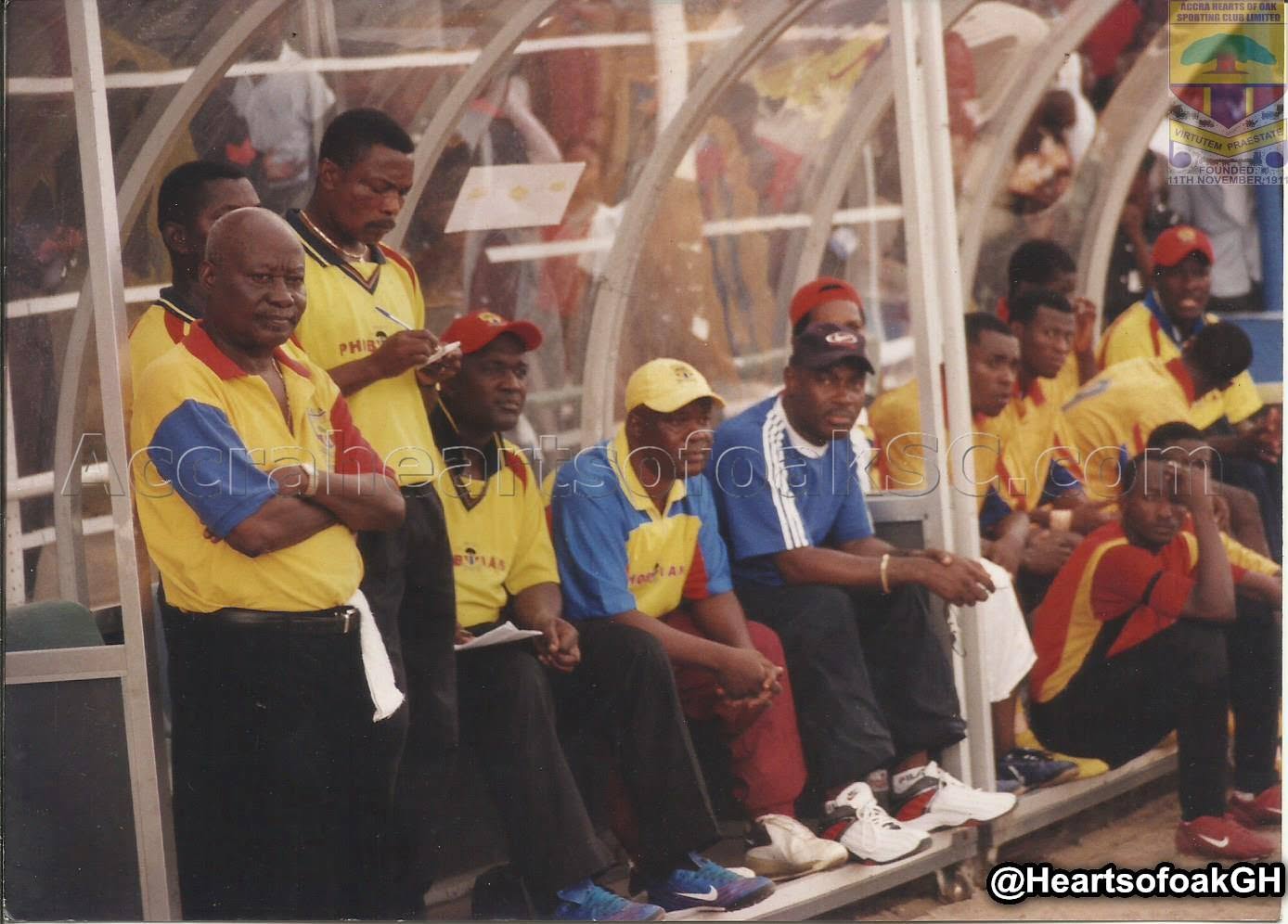
The man behind it was Sir Cecil Jones Attuquayefio, who took charge of Hearts of Oak in 1998. He did not assemble an expensive collection of finished stars. He built a system. The average age of the squad he created was just 21.5 years old, blending fearless teenagers with converted veterans who understood their roles precisely.
The Blueprint: How the Squad Was Built
The Under-17 Pipeline
Before taking the Hearts job, Attuquayefio managed Ghana’s national Under-17 team, the Black Starlets, leading them to a bronze medal at the 1999 FIFA U-17 World Championship. That role gave him a direct view of the best young talent in the country.
He used that knowledge to bring disciplined, hungry teenagers into the senior squad. Sammy Adjei was fast-tracked from the youth levels to take over the first-team goalkeeping position. Ishmael Addo was integrated as a teenager, giving the team a raw energy that veteran African defences were not prepared for.
Radical Positional Shifts
Attuquayefio saw qualities in players that they did not see in themselves. Rather than buying finished products, he reshaped existing players to fit his aggressive system.
Emmanuel Osei Kuffour was originally a right-back. Attuquayefio recognised his football intelligence, spatial awareness, and composure, and converted him into a roaming forward. Kuffour went on to become the top scorer and most lethal player of the 2000 CAF Champions League campaign.
Edward Agyemang-Duah was a veteran midfielder nearing the end of his career. Attuquayefio moved him into central defence alongside the young, energetic Stephen Tetteh. Duah brought calmness and composure, balancing Tetteh’s raw physical power.
Sourcing Raw Local Gems
The squad relied heavily on shrewd scouting within the domestic league. Charles Taylor was signed from Great Olympics as a raw dribbler and refined into a devastating tactical weapon on the flanks. Lawrence Adjah-Tetteh was scouted locally and transformed into a tireless, hard-tackling midfield anchor who provided the physical steel required to survive difficult away trips in Africa.
Psychological Hardening
Hearts of Oak had suffered heartbreaking continental failures in previous decades. Attuquayefio focused heavily on building willpower and tactical resilience. He conditioned the players to withstand the hostile environments of North and West African stadiums, instilling a military-style mindset where the team refused to break, even when conceding early goals away from home.
The result was a perfectly balanced ecosystem: fearless youth, converted veterans, and a tactical system that maximised every player’s strengths.

The Tactical Formation: A Fluid 4-4-2
Attuquayefio built the team around a highly fluid 4-4-2. On paper, it looked traditional. On the pitch, it operated as a high-pressing, hard-tackling, rapidly transitioning system that often resembled a 4-2-4 when attacking.
The defensive block was organised and rugged. The fullbacks, Amankwah Mireku on the right and Jacob Nettey on the left, were tasked with defensive solidity first. Unlike modern wingbacks who constantly overlap, they focused on locking down the flanks, allowing the wingers ahead of them to play with complete freedom. The centre-back pairing of Stephen Tetteh and Edward Agyemang-Duah provided the aerial and physical shield, playing a relatively deep line to protect against counter-attacks while the rest of the team pressed high.

The double pivot was the engine room. Lawrence Adjah-Tetteh sat right in front of the back four. His sole responsibility was to break up opposition plays, win aerial duels in midfield, and immediately hand the ball to the creatives. Edmund Copson provided the mobility. He was the tireless runner who pressed opponents relentlessly, covered the ground when the wingers pushed forward, and linked defence to attack.
The wing play was devastating. Charles Taylor, operating on the right, was given the license to isolate defenders one-on-one. His explosive dribbling stretched opposition defences horizontally, creating gaps in the centre. On the left, Charles Allotey played a more balanced role. He would drift inside to overload the midfield when Hearts lost possession but burst forward to provide crosses when attacking.
The strike partnership was telepathic. Emmanuel Osei Kuffour, the “Second Striker” and roaming General, was the tactical glue. Though paired up front, he routinely dropped deep into the number 10 space between the opponent’s midfield and defence. This dragged centre-backs out of position and allowed him to pull the strings. Ishmael Addo played on the shoulder of the last defender. With Kuffour dropping deep and Taylor drawing attention out wide, Addo used his blistering acceleration to exploit the vacated spaces in the box, finishing with cold-blooded precision.
The 2000 CAF Champions League: Unbeaten From Start to Finish
The campaign is the greatest continental achievement in the club’s history. Hearts of Oak went through the entire tournament without losing a single match.
The Group Stage
Hearts were placed in Group B alongside Al Ahly of Egypt, Jeanne d’Arc of Senegal, and Lobi Stars of Nigeria. They blew through the group unbeaten, winning four matches and drawing two, finishing comfortably at the top.
They opened with a 2–1 win over Al Ahly in Accra, with goals from Ishmael Addo and Emmanuel Osei Kuffour. They then won 2–0 away to Lobi Stars in Makurdi, with Addo striking twice. The 4–2 away win over Jeanne d’Arc in Dakar was a classic away performance, with Kuffour and Charles Allotey headlining the attack.
The return leg against Jeanne d’Arc in Accra ended 1–1, the Senegalese side fighting back valiantly but failing to break Hearts’ grip on the group. The decisive test came in Cairo, where Hearts held Al Ahly to a 1–1 draw, a result that mathematically booked their place in the final. They wrapped up the group with a 2–0 win over Lobi Stars in Accra.
The masterclass was the away form. Taking five points from a possible nine in Cairo, Dakar, and Nigeria is what separated Attuquayefio’s side from every other club on the continent that year.
The Final: The Parallel to El-Wak
The final was against Espérance de Tunis, the Tunisian powerhouse.
The first leg was played in Tunis, and Hearts won 2–1. It was a crucial away result, but it left the tie open.

The second leg was played at the Accra Sports Stadium on 17 December 2000. Hearts went down 1–0 early, and the tension was familiar. It was the same scenario as 1977: a deficit at home, a crowd waiting for the breakthrough, a team that needed to find something.
In a dramatic final 20 minutes, Emmanuel Osei Kuffour scored twice and Ishmael Addo added a third. Hearts won 3–1, and 5–2 on aggregate. The club lifted its first and only CAF Champions League trophy, finishing the entire tournament unbeaten.
The parallel to El-Wak was unmistakable. Once again, Hearts had turned a deficit into a night of delirium in Accra. But this time, the prize was the trophy itself.
The 2001 CAF Super Cup: Beating Zamalek and Ranking Above Real Madrid
As champions of Africa, Hearts hosted Egyptian giants Zamalek SC, the winners of the 2000 African Cup Winners’ Cup, at the Kumasi Sports Stadium on 11 February 2001.
Hearts won 2–0. Charles Taylor opened the scoring before Emmanuel Osei Kuffour sealed the victory.
The result briefly placed Hearts of Oak at 8th in the CNN/World Soccer team rankings, ahead of clubs like Real Madrid and Arsenal at the time. It was a moment of global recognition that no Ghanaian club had achieved before.
The 2004 CAF Confederation Cup: The Maiden Edition and the Super Clásico Final
Hearts made history again by winning the inaugural edition of Africa’s secondary club competition, and the final was an all-Ghanaian dream: Hearts of Oak against Asante Kotoko.
The Road to the Final
Hearts topped a difficult group containing Cotonsport of Cameroon, Sable Batié, and Santos of South Africa.
The Two-Legged Final
The first leg in Accra ended in a tense 1–1 draw. The second leg was played in January 2005 at Kotoko’s fortress in Kumasi, in front of a hostile crowd. The match finished 1–1.
The Penalty Drama
Hearts of Oak held their nerve in a gruelling penalty shootout in Kumasi, winning 8–7 to secure the trophy on enemy territory. It was a victory that no Hearts fan who was there will ever forget.
Ishmael Addo: The Baby-Faced Assassin
At just 18 years old during the 2000 campaign, Ishmael Addo was the most feared striker on the continent. He possessed incredible acceleration, spatial awareness, and a cold, clinical finish that earned him his nickname.
He won the Ghana Premier League Golden Boot three consecutive times, in 1999, 2000, and 2001. In the 2001 season, he scored a staggering 22 goals in the league alone. During the 2000 CAF Champions League, his crucial goals in the group stages and his late strike in the final second leg against Espérance sealed the historic title.
He remains one of the most prolific goalscorers in the history of Ghanaian club football.
What Made Them Special
They were unbeaten champions, winning the 2000 CAF Champions League without losing a single match across the entire tournament.
They won the treble in 2000: the Ghana Premier League, the Ghana FA Cup, and the CAF Champions League.
And they had the fear factor. Teams visiting Accra knew they were in for a footballing war. The squad specialised in late surges, often devastating opponents in the final 20 minutes when their superior fitness took over. The 4-4-2 easily morphed into a devastating 4-2-4 that blew teams away as they tired.
ASJ Bottom Line
The 1977 Miracle of El-Wak proved that Hearts of Oak could produce a night of impossible football. The 2000 squad proved that the club could be built into a machine that did not need miracles. It needed discipline, a system, and a coach who saw the right players in the right places.
Attuquayefio built the 64 Warfare from the Under-17 pipeline, from positional conversions, from local scouting, and from psychological hardening. The result was a team that went through a continental campaign unbeaten, beat Zamalek to rank above Real Madrid, and won the maiden Confederation Cup in a penalty shootout in Kumasi.
The legacy of 1977 was not just a memory. It was a foundation. The 2000 squad built on it and turned it into a trophy.
Quick Facts
The 2000 CAF Champions League was won without a single defeat across the entire tournament. The final second leg was played on 17 December 2000 at the Accra Sports Stadium, where Hearts came from 1–0 down to win 3–1 and 5–2 on aggregate. Emmanuel Osei Kuffour scored twice, and Ishmael Addo scored the third. The 2001 CAF Super Cup was won 2–0 against Zamalek in Kumasi on 11 February 2001, with goals from Charles Taylor and Kuffour. The result briefly placed Hearts 8th in the CNN/World Soccer rankings, ahead of Real Madrid and Arsenal. The 2004 CAF Confederation Cup final was an all-Ghanaian affair against Asante Kotoko, won 8–7 on penalties after a 1–1 draw in the second leg in Kumasi. The squad’s average age was 21.5 years. The coach was Sir Cecil Jones Attuquayefio.
Last Updated on November 8, 2026 by Samuel Kwame Boadu
🏟️ Discover More Sports Stories
Looking for more in-depth sports news, interviews, and features? Visit Accra Sports News — your go-to for exclusive sports content in Ghana and beyond.
Disclaimer: Some content on Accra Street Journal may be aggregated, summarized, or edited from third-party sources for informational purposes. Images and media are used under fair use or royalty-free licenses. Accra Street Journal is a subsidiary of SamBoad Publishing Hub under SamBoad Business Group Ltd, registered in Ghana since 2014.
For concerns or inquiries, please visit our Privacy Policy or Contact Page.

Samuel Kwame Boadu is a Ghanaian media entrepreneur and storyteller with a passion for amplifying urban voices and uncovering everyday truths. He is the Editor-in-Chief and Founder of Accra Street Journal, a dynamic digital platform dedicated to capturing the pulse of Ghana’s capital—its people, culture, challenges, business, sports and innovations.
Use the following reference when citing or referencing this article.
Your feedback helps us improve our journalism.
Report an Error
Help us maintain accuracy. Let our editorial team know if you spot an issue in this article.
Report a problem with this article