







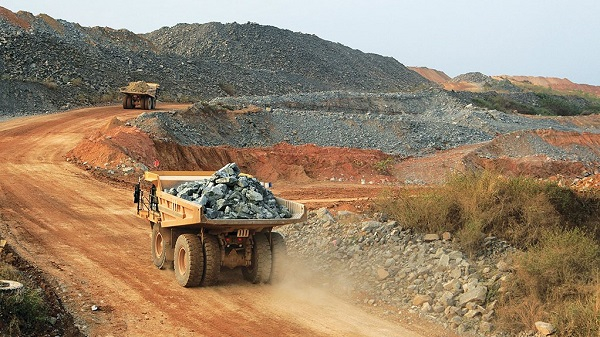
What the Damang Deal Signals for Ghana’s Mining Policy
A Defining Moment in Ghana’s Mining Direction
Ghana’s decision to reject the renewal of the Damang mining lease and take back control of the asset marks one of the most significant policy shifts in its mining sector in decades. For years, mining leases—especially for large-scale gold operations—were often extended with limited disruption. The Damang case breaks that pattern.
The government declined a 30-year renewal application from Gold Fields when the lease expired in April 2025, effectively ending a long-standing operational arrangement that had been in place since the mid-1990s. This was followed by a structured transition process, including a one-year extension to ensure continuity before full transfer of ownership back to the state.

This decision is not isolated. It reflects a broader recalibration of how Ghana intends to manage its mineral resources—particularly gold, which remains central to the economy.
📢 GET A DETAILED ARTICLES + JOBS
Join ASJ's WhatsApp Channel and never miss a post or opportunity.

Historical Context: From Stability to Strategic Intervention
The Traditional Mining Model
For decades, Ghana’s mining sector has been anchored in stability. Long-term leases, foreign operator dominance, and predictable regulatory frameworks made the country one of Africa’s most attractive mining destinations. Companies like Gold Fields operated assets such as Damang under extended agreements that prioritized continuity and production.
The Damang mine itself has been in operation for nearly 30 years, contributing significantly to employment, tax revenues, and local economic activity.

Breaking with Precedent
The rejection of the lease renewal represents a deliberate break from that model. It signals that lease renewal is no longer automatic and that existing operators must meet stricter conditions to retain assets.
Government justification has been tied to regulatory compliance and resource optimization. The Minerals Commission indicated that failure to meet renewal requirements can justify non-extension under Ghanaian law.
This marks a shift from a passive regulatory approach to a more interventionist one.
Financial Implications: Value Capture and Economic Stakes
The Economic Weight of Damang
Damang is not a marginal asset. Estimates suggest it holds around 3.5 million ounces of gold, representing potential value in the billions of dollars.
Historically, multinational operators have extracted value through production, exports, and global trading capabilities. However, the Damang decision suggests that Ghana now seeks to capture a greater share of that value domestically.
Investment Requirements and Risk
Reviving and sustaining Damang is capital-intensive. Estimates indicate that between $600 million and $1 billion may be required to fully develop and extend the mine’s life.
This introduces a financial reality: while local ownership increases national control, it also transfers operational and financial risk to domestic entities or state-backed arrangements. Unlike multinational firms with deep balance sheets, local operators must secure financing under tighter constraints.
Revenue Strategy Shift
The Damang case aligns with broader efforts by Ghana to extract more value from its resources. This includes policies such as increased state participation, revised royalty structures, and direct gold purchasing programs to strengthen reserves.
The implication is clear: Ghana is moving from a volume-based extraction model to a value-maximization model.

Investor Interest: Confidence, Caution, and Repricing Risk
Immediate Investor Reaction
The decision to reject Gold Fields’ lease renewal and assume control of the asset sent a strong signal to investors. It demonstrated that Ghana is willing to override historical expectations in pursuit of national objectives.
While this may strengthen domestic control, it introduces uncertainty into the investment environment. Investors rely heavily on predictability, particularly in capital-intensive sectors like mining.
Local Participation as a Policy Priority
The subsequent award of the Damang lease to Engineers and Planners, a Ghanaian firm, reinforces the government’s intention to increase local participation in the mining sector.
This is a significant shift. It suggests that future mining projects may prioritize Ghanaian ownership or partnerships, potentially reshaping the competitive landscape.
The Balance Between Sovereignty and Capital
For international investors, the key concern is not the policy direction itself but how consistently it is applied. Sudden or unclear policy changes can increase perceived risk, raising the cost of capital or delaying investment decisions.
At the same time, clear frameworks that define when and how the state intervenes can mitigate these concerns. The Damang case, therefore, becomes a test case for policy clarity.
Government Policy Direction: Toward Resource Nationalism and Strategic Control
Ending Automatic Renewals
One of the clearest signals from the Damang decision is the end of automatic lease renewals. The government has demonstrated that it will reassess assets at the end of their lifecycle rather than default to extension.
This introduces a performance-based framework where operators must justify continued control.
Increasing Local Ownership
The selection of a local firm to take over Damang reflects a deliberate policy to deepen Ghanaian participation in mining.
This aligns with broader economic goals, including job creation, skills development, and retention of profits within the country.
Strategic Asset Reclassification
Damang is increasingly being framed as a “strategic national asset,” highlighting a shift in how resource assets are perceived—not just as commercial ventures, but as instruments of national development.

This reclassification supports more direct government involvement in decision-making.
Policy Coordination Across the Sector
The Damang decision does not stand alone. It aligns with other initiatives, including increased gold purchases by the state and revised royalty frameworks. Together, these policies indicate a coordinated effort to redefine Ghana’s mining strategy.
What the Deal Means for Ghana’s Economy
Greater Control Over Resource Wealth
At its core, the Damang transition is about control. By reclaiming the asset and reallocating it to a local operator, Ghana increases its influence over production, revenue flows, and long-term planning.
This has the potential to increase the share of mining wealth retained within the country.
Short-Term Uncertainty, Long-Term Opportunity
In the short term, the transition introduces uncertainty. Changes in ownership, financing challenges, and operational adjustments can affect production levels and revenue.
However, in the long term, successful local operation could redefine how mining contributes to the economy—shifting from external profit extraction to domestic value retention.
Employment and Local Economic Impact
If managed effectively, the transition could strengthen local supply chains, increase employment, and deepen linkages between mining and other sectors of the economy.
Structural Risk
The risks are equally clear. Without sufficient capital, technical expertise, and governance, local operators may struggle to maintain production efficiency. This could reduce output and government revenue.
The success of the Damang transition will depend heavily on execution.
A Turning Point for Ghana’s Mining Future
The Damang deal represents more than a single asset transition. It is a signal of intent. Ghana is redefining its mining policy to prioritize national interest, local participation, and value maximization.
Accra Street Journal notes that this shift introduces both opportunity and tension. It strengthens economic sovereignty but tests investor confidence. It promises greater domestic benefit but requires stronger institutional capacity.
The long-term outcome will depend on whether Ghana can translate policy ambition into consistent, effective execution. If successful, the Damang model could reshape not just gold mining, but the broader resource economy. If not, it risks becoming a cautionary example of policy overreach.
What is clear is that Ghana’s mining sector is no longer operating under its old rules. The Damang decision has set a new precedent—one that will influence every major mining negotiation going forward.
FAQs
What happened to the Damang mining lease?
The government rejected Gold Fields’ renewal application and took back control after the lease expired in April 2025.
Why did Ghana refuse to renew the lease?
The decision was based on regulatory considerations and a broader strategy to increase national value from mining assets.
Who is taking over the Damang mine?
A Ghanaian company, Engineers and Planners, has been selected to operate the mine.
What does this mean for foreign investors?
It introduces more policy risk but also signals a shift toward structured, performance-based asset control.
How does this affect Ghana’s economy?
It could increase domestic value capture but also introduces short-term operational and financial risks.
Is this a one-off decision or a broader policy shift?
It appears to be part of a broader shift toward greater state control and local participation in mining.
What are the risks of this approach?
Key risks include financing challenges, operational efficiency, and potential investor uncertainty.
Could this model apply to other mines in Ghana?
Yes, the Damang decision may set a precedent for how future mining leases are reviewed and managed.
Source: Accra Street Journal
Last Updated on April 29, 2026 by Samuel Kwame Boadu
Disclaimer: Some content on Accra Street Journal may be aggregated, summarized, or edited from third-party sources for informational purposes. Images and media are used under fair use or royalty-free licenses. Accra Street Journal is a subsidiary of SamBoad Publishing Hub under SamBoad Business Group Ltd, registered in Ghana since 2014.
For concerns or inquiries, please visit our Privacy Policy or Contact Page.

Samuel Kwame Boadu is a Ghanaian media entrepreneur and storyteller with a passion for amplifying urban voices and uncovering everyday truths. He is the Editor-in-Chief and Founder of Accra Street Journal, a dynamic digital platform dedicated to capturing the pulse of Ghana’s capital—its people, culture, challenges, business, sports and innovations.