










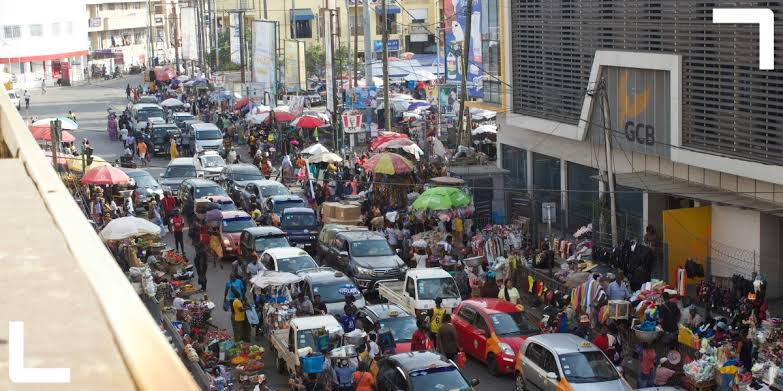
Accra’s future hinges on the decisions made today. From flooding and congestion to housing and inequality, urban policy determines whether the city will become a sustainable, liveable metropolis or remain a place where growth outpaces planning.
Introduction: A City at a Crossroads
Accra is at a defining moment. Every rainy season, the city is reminded of a painful reality: roads become rivers, businesses shut down, homes are inundated, and families are displaced . These floods are not isolated natural disasters—they are symptoms of deeper urban planning challenges.

Yet, despite these setbacks, Accra remains one of Africa’s most promising cities. Its strategic location on the Gulf of Guinea, political stability, youthful population, and growing digital economy position it to become one of West Africa’s leading commercial and innovation hubs . The question is no longer whether Accra will continue to grow—it certainly will. The more important question is whether the city will grow sustainably.
📢 GET A DETAILED ARTICLES + JOBS
Join ASJ's WhatsApp Channel and never miss a post or opportunity.

The answer to that question depends on urban policy. Policy determines where people can build, how they move around the city, whether they have access to clean water and sanitation, and whether they are protected from floods and extreme heat. Policy determines who benefits from urban growth—and who is left behind.
The Growing Pains of a Rapidly Expanding City
Accra’s population has expanded dramatically over the past few decades. Urbanisation has outpaced infrastructure development, creating enormous pressure on the city’s systems .

Congestion and Economic Cost
Traffic congestion has become one of the city’s defining characteristics. Hours that could be spent productively are instead lost in traffic. The economic cost runs into millions of cedis annually through lost productivity, increased fuel consumption, and environmental pollution .
The fragmentation of governance has made the problem worse. Between 1989 and 2017, Accra moved from one assembly to about twenty-four, but urban movement does not respect political boundaries . According to CUTS International, “You cannot run a single city with multiple transport decision centres working in isolation” . The think tank has called for the establishment of an Accra City Transportation Authority to regulate, plan, and coordinate transport across the capital .
The Housing Deficit
The demand for affordable housing far exceeds supply. Ghana’s housing deficit is estimated at more than 1.8 million units, with lower- and middle-income earners, who form the backbone of the economy, struggling daily to find decent accommodation . This shortage has led to sprawling informal settlements, rising rents, and development in flood-prone areas .
The Environmental Toll
Urban expansion has come at a cost to Accra’s natural systems. In the Aburi Hills, once a defining ecological asset, development has spread across slopes with as much as 50% of the area lacking guiding local plans . A detailed slope analysis reveals that approximately 92% of the area comprises landforms ranging from strongly sloping to very steep, rendering them inherently unsuitable for development . When disturbed, these slopes trigger cascading environmental consequences, including landslides, accelerated runoff, flooding, and sedimentation in the plains below .
The Fragmentation Problem
One of the most persistent challenges is institutional fragmentation. Responsibility for drainage, transport, housing, and planning is scattered across multiple agencies, and administrative boundaries frequently fail to align with natural drainage basins .
The Aburi Hills: A Case Study in Fragmented Governance
The Aburi Hills illustrate the consequences of this fragmentation. The involvement of three municipal assemblies—Akwapim South, Ga East, and La Nkwantanang-Madina—has created administrative overlaps and boundary disputes that weaken enforcement . In some instances, conflicting local plans have been approved for the same areas, undermining coordinated land use planning .
The problem extends beyond formal permits. Aerial and orthophotographic analysis reveals widespread development activity not captured in official records, pointing to “a deeper systemic failure: a disconnect between planning, enforcement, and political will” .
Political Interference and Patronage
The Coordinator of the Greater Accra Resilient and Integrated Development (GARID) Project, Dr. Ohene Sarfoh, has attributed Accra’s worsening flood situation partly to political interference and weak enforcement of planning regulations . He explained: “We should get away from this patronage system where one person gets into a problem and then an uncle, a father, a mother or somebody intervenes, thereby undermining the law” .
He disclosed that inspections have revealed extensive obstruction of natural drainage channels by private developments, with video footage showing people “actually blocking them entirely and building over them” . He argued that unless Ghana overcomes political interference and consistently applies planning laws, investments in drainage infrastructure alone will not significantly reduce flooding .

The Policy-Reality Gap
A recurring theme in Accra’s urban development is the gap between policy and lived reality. Research on participatory slum upgrading has identified significant challenges in translating policy intentions into meaningful outcomes.
The “Yes-Man Syndrome”
Studies of participatory processes in Accra’s informal settlements have identified a “yes-man syndrome” where residents fear to voice disagreements because they worry that contestations could cause international funders to pull out of projects . This is particularly acute in World Bank-funded projects, where residents feel the funder possesses the ultimate power to set the agenda and make decisions .
Maladaptation Risk
Research on heat-related policies in Accra has identified risks of “maladaptation”—interventions that inadvertently worsen inequality or vulnerability. The study found three areas of concern: lack of coherent strategies for including vulnerable communities, green initiatives that do not account for historical green inequality and complex land tenure arrangements, and institutional silos that could lead to maladaptive outcomes benefiting certain places and people at the cost of others .
Transport Inequality
The imbalance in transport planning is stark. Cars, used by a small minority, occupy 75% of road space, while most residents depend on walking and trotros—informal minibuses that serve most residents . This imbalance fuels congestion, limits access to essential services, and drives rising emissions .
Gender-disaggregated data highlights how women and men experience mobility differently, with women often paying more, both in time and cost . Gaps in transport and land-use planning often reinforce these inequalities .
What Is Being Done: Policy Responses
The Medium-Term Development Plan
The Accra Metropolitan Assembly is finalising its Medium-Term Development Plan (MTDP) for 2026–2029, which envisions Accra as a “Smart, Safe, and Climate-Resilient City with Secured Jobs and Prosperity for All” . The plan aligns with the national “Resetting Ghana Agenda” and focuses on five key dimensions: economic development, social development, environmental and human settlement management, governance, institutional development, and international relations .
Community engagements in the Ablekuma South, Okaikoi South, and Ashiedu Keteke Sub-Metropolitan District Councils identified pressing local challenges: poor roads, flooding, youth unemployment, open defecation, drug abuse, prostitution, poor security in schools, malfunctioning traffic lights, and coastal erosion .
New Initiatives
The AMA Executive Committee has adopted a comprehensive set of initiatives, including:
-
24-Hour Clean Accra Initiative: A three-shift sanitation system and waste segregation for continuous cleanliness and job creation .
-
Green Accra Initiative: Enhancing urban greening, biodiversity, and air quality .
-
Special Weekend Trading Initiative: Institutionalising designated vending days and spaces to promote lawful, organised trading and reduce congestion .
-
Public-Private Partnership Programme: For large-scale infrastructure redevelopment, including markets and transport terminals .
Transport Reforms
The OECD and the Greater Accra Passenger Transport Executive (GAPTE) have explored scenarios for Accra’s Sustainable Urban Mobility Plan, proposing a multimodal transport system integrating trotros with formal bus networks . This includes Bus Rapid Transit (BRT) routes, trotro network extensions, and safer walking and cycling infrastructure .
Calls for a New Master Plan
The Ga Mantse, King Tackie Teiko Tsuru II, has renewed calls for a fundamental rethink of Accra’s urban planning framework, describing the capital as a city “choked with congestion on planned settlements, strained sanitation systems, inadequate drainage, and uncondemnated infrastructure” . He urged the government and private sector to form “a strong, well-coordinated coalition to revise the current master plan of Accra,” emphasising that a new plan must cover everywhere, especially the central business district .
The Way Forward: Principles for Effective Urban Policy
Drawing on the evidence, several principles emerge for effective urban policy in Accra:

1. Integrate, Don’t Fragment
The fragmentation of governance has been a key driver of failure. Coordinated, catchment-wide planning is essential for transport, drainage, and land use. This is why experts are calling for the establishment of an Accra City Transportation Authority and the harmonisation of local plans across assemblies .
2. Enforce the Law
Ghana has strong planning laws, including the Land Use and Spatial Planning Act, 2016 (Act 925) and its regulations . The problem is enforcement. As the GARID Coordinator stated: “We should get away from this patronage system… thereby undermining the law” . The AMA is building the capacity of its Spatial Planning Committee to enforce building permit rules and curb unapproved development .
3. Protect Natural Infrastructure
The Aburi Hills are a natural infrastructure that protects Accra from floods. By allowing them to be degraded, the city is “dismantling a natural infrastructure that protects it from floods, regulates its microclimate, and preserves biodiversity” . Restoring wetlands and protecting slopes must be a priority.
4. Plan with, Not For, Communities
The evidence shows that participation is often performative rather than meaningful . Genuine co-decision and empowerment are essential to avoid maladaptation and ensure that policies benefit everyone, not just the wealthy few .
5. Invest in Public Transport
Procuring buses alone will not solve the problem. “Without policy reform, coordination, and strong institutions, the same crisis will return within a few years” . Accra needs a coordinated, well-funded public transport system that serves everyone, not just car owners .
Conclusion: A City Must Not Cut Its Nose to Spite Its Own Face
The metaphor is stark: a city must not cut its nose to spite its own face . By allowing unregulated development in ecologically fragile zones, failing to enforce planning laws, and neglecting long-term planning, Accra risks amplifying the very disasters it seeks to avoid.
Yet the city is not without hope. It has strong institutions, a vibrant civil society, and a growing recognition that the status quo is unsustainable. The Medium-Term Development Plan, the Green Accra Initiative, and the calls for a new master plan all point in the right direction.
The question is whether there will be the political will to move from policy to action. As the Ga Mantse said: “The modern capital is not inherited. It is designed. It is planned. It is deliberately built” . The future of Accra will be determined by the urban policies that are chosen—and enforced—today.
Quick Facts
| Topic | Details |
|---|---|
| Housing Deficit | Over 1.8 million units |
| Aburi Hills Development | 50% lack guiding local plans; 92% strongly sloping to steep |
| Urban Expansion (1985–2020) | Accra’s urban footprint expanded by more than 400% |
| Road Space Allocation | Cars occupy 75% despite serving a minority |
| Municipal Assemblies | Over 20, fragmented governance of one city |
| GARID Project | Drainage and flood mitigation, but political interference undermines enforcement |
| AMA MTDP | 2026–2029, envisions “Smart, Safe, and Climate-Resilient City” |
Frequently Asked Questions
1. Why is urban policy important for Accra?
Urban policy determines how the city grows, who benefits from development, and whether residents are protected from floods, heat, and other risks. Without strong policy, growth becomes chaotic and unsustainable .
2. What is Accra’s housing situation?
Ghana faces a housing deficit of over 1.8 million units. Lower- and middle-income earners struggle to find decent accommodation, leading to informal settlements, rising rents, and development in flood-prone areas .
3. Why does Accra flood so often?
Flooding is caused by a combination of factors: low-lying geography, loss of natural water retention systems, encroachment on wetlands and waterways, inadequate drainage infrastructure, political interference in enforcement, and institutional fragmentation .
4. What is the Aburi Hills issue?
The Aburi Hills, a critical ecological asset, have been heavily developed despite being unsuitable for construction. About 92% of the area comprises strongly sloping to steep land, and development has occurred without adequate planning, increasing flood risk in Accra .
5. What is being done to address transport problems?
Calls have been made for an Accra City Transportation Authority . Accra’s Sustainable Urban Mobility Plan is exploring Bus Rapid Transit, trotro network extensions, and safer walking and cycling infrastructure .
6. What is the AMA Medium-Term Development Plan?
The 2026–2029 MTDP envisions Accra as a “Smart, Safe, and Climate-Resilient City with Secured Jobs and Prosperity for All.” It focuses on economic development, social development, environmental management, governance, and institutional development .
7. What is maladaptation in urban policy?
Maladaptation refers to interventions that inadvertently worsen inequality or vulnerability. Research on Accra’s heat-related policies found risks of excluding vulnerable communities, ignoring historical inequality, and creating institutional silos that benefit some groups at the expense of others .
8. What is the GARID Project?
The Greater Accra Resilient and Integrated Development (GARID) Project is a flood mitigation initiative. Its Coordinator has noted that political interference and weak enforcement of planning regulations undermine its effectiveness .
9. What is the “yes-man syndrome” in urban planning?
It is a phenomenon where residents in participatory projects fear to voice disagreements because they worry that contestations could cause international funders to pull out of projects. This is particularly acute in World Bank-funded projects .
10. What is the solution to Accra’s urban challenges?
Experts call for a new master plan covering all of Accra , stronger enforcement of planning laws , political will to overcome patronage , integration of governance across assemblies , and genuine community participation
Source: Accra Street Journal
Last Updated on September 2, 2026 by Samuel Kwame Boadu
Disclaimer: Some content on Accra Street Journal may be aggregated, summarized, or edited from third-party sources for informational purposes. Images and media are used under fair use or royalty-free licenses. Accra Street Journal is a subsidiary of SamBoad Publishing Hub under SamBoad Business Group Ltd, registered in Ghana since 2014.
For concerns or inquiries, please visit our Privacy Policy or Contact Page.

Samuel Kwame Boadu is a Ghanaian media entrepreneur and storyteller with a passion for amplifying urban voices and uncovering everyday truths. He is the Editor-in-Chief and Founder of Accra Street Journal, a dynamic digital platform dedicated to capturing the pulse of Ghana’s capital—its people, culture, challenges, business, sports and innovations.





