







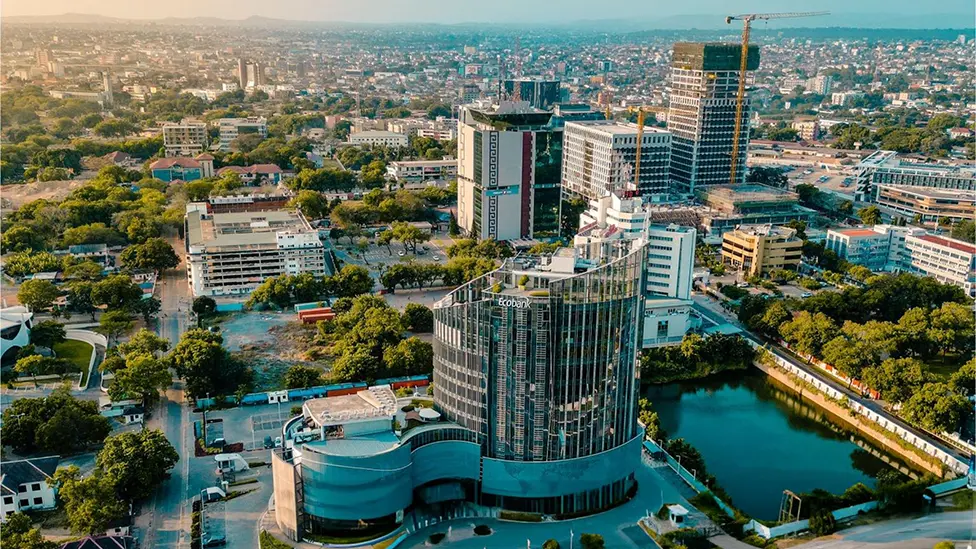

Accra in 2030 will not resemble the city of a decade ago — and it will barely resemble the Accra of today. As Ghana’s political, economic, and cultural heart, the capital is poised for profound transformation over the next few years. By the time 2030 arrives, demographic trends, infrastructure upgrades, urban policy shifts, and global economic forces will have reshaped the way people live, work, and move in Accra.

This editorial by Accra Street Journal explores the likely contours of Accra in 2030 — a city simultaneously grappling with opportunity and complexity.
Population Growth and Urban Density
Accra’s population is projected to continue increasing well into the next decade. Rural–urban migration, natural population growth, and economic attraction will likely push the metropolitan population well past 6 million residents by 2030. This growth will intensify urban density, especially in established corridors such as Greater Accra, Tema, and parts of the North Kaneshie–Madina axis.
📢 GET A DETAILED ARTICLES + JOBS
Join ASJ's WhatsApp Channel and never miss a post or opportunity.
Higher density will bring energy and vibrancy, but also renewed pressure on housing, utilities, transport, and public services — forcing planners and policymakers to innovate rather than merely expand.
A More Connected City: Roads and Transit
By 2030, Accra’s transport landscape will look markedly different. The completion and extension of major road networks — such as expressway linkages to Pokuase, Nsawam Road upgrades, and improvements around the Tetteh Quarshie Interchange — will reduce bottlenecks and redistribute traffic flows.
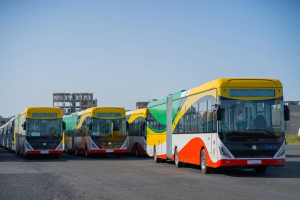
Public transport reforms will also become more visible. While trotros and shared taxis will still ferry millions daily, the introduction of dedicated bus rapid transit (BRT) lanes and a modernised rail network — planned in phases through the Greater Accra Metropolitan Area Transport Authority (GAMATA) — will offer commuters alternatives that are more reliable and less congested.
These changes will not eliminate traffic, but they are likely to alter commuting patterns in meaningful ways.
Suburban Expansion and New Growth Corridors
Accra’s physical footprint will extend even further outward. Areas previously considered peripheral — such as Pokuase, Ofankor, Ashaley Botwe, and the Kasoa Eastern Corridor — will host thousands more residents and new commercial clusters.
By 2030, these suburbs will be better integrated into the city through improved transport access and infrastructure investment. Mixed-use developments, residential estates, and business parks will emerge along key routes, creating new hubs that complement — rather than compete with — central Accra.
Urban growth will no longer be radial only; it will be strategic and networked.
Housing: High Demand, High Innovation
Housing demand in 2030 will be unequivocally high. But the way Accra accommodates that demand is likely to shift.
Expect to see:
-
More vertical residential developments, especially in prime and mid-city zones
-
A rise in mixed-use communities with work–live–play environments
-
Growth of affordable housing initiatives, both public and private
-
Expansion of short-term rental ecosystems in suburbs and near commercial centres
By 2030, housing affordability will remain a challenge, but innovative construction technologies, modular building systems, and policy incentives may begin to ease pressures that today seem entrenched.
Technology, Connectivity, and the Digital Economy
Accra’s digital transformation will accelerate significantly by 2030. Internet coverage and mobile connectivity will deepen across residential communities, enabling broader adoption of:
-
remote and hybrid work
-
mobile financial services
-
digital health platforms
-
e-learning systems
With the expansion of 4G and 5G networks and falling data costs, Accra will position itself not just as a regional centre of commerce, but as a hub for digital talent and innovation. Tech clusters — particularly around East Legon, Airport, and Dansoman — will attract startups, coding schools, and creative media companies.
The city’s young workforce will benefit from these trends, tying Accra’s identity to a vibrant digital economy by 2030.
The Evolution of Work and Employment
Employment patterns in Accra will continue to diversify. While traditional sectors like government, banking, trade, and education will remain significant, new forms of work will proliferate. Gig economy platforms, freelance digital services, and creative industries will expand, supported by stronger internet infrastructure.
This economic diversification will ease some pressure on formal employment systems, but it will also require new forms of worker protection, training, and support — especially for young professionals navigating informal or hybrid work environments.
Public Services and Urban Amenities
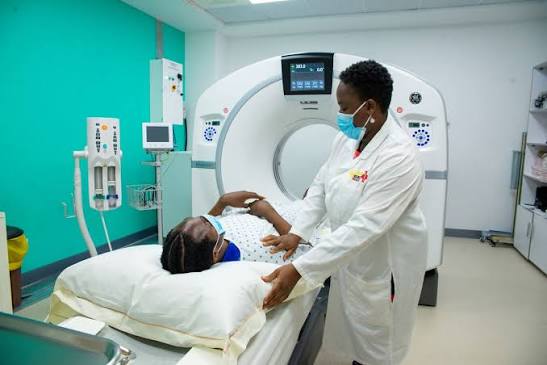
By 2030, Accra’s urban services will need to adapt to population growth and density. Improved waste management systems, upgraded water and sanitation networks, and modernised healthcare facilities will be imperative.
Municipal authorities may also invest more deeply in:
-
public parks and green spaces
-
community health centres
-
recreational hubs for youth
-
urban markets with regulated hygiene and safety standards
The success of these improvements will hinge on partnerships between government, private sector actors, and community organisations.
Housing Affordability and Social Inclusion
Despite growth and innovation, Accra will still grapple with affordability and inclusion. Unless affordable housing options expand meaningfully, many residents — especially young families and low-income households — will continue to face escalating living costs.
Neighbourhoods on the city’s edges may offer more affordable options, but they will require improved transport and services to prevent socio-economic isolation. The effort to keep Accra inclusive will be one of the defining policy challenges of the decade.
Cultural and Social Life: A Cosmopolitan Identity
Accra’s cultural scene in 2030 will be richer and more diverse. Music, art festivals, film, and food culture will continue to flourish, attracting regional tourism and creative collaboration.
The city’s cosmopolitan identity will be reinforced by:
-
multiple cultural districts
-
public art initiatives
-
international events
-
tech-driven entertainment platforms
This cultural growth will enhance social cohesion and enrich the city’s brand as a dynamic African capital.
Environmental Resilience and Climate Concerns
Accra will also confront environmental pressures. Flooding, coastal erosion, and waste management challenges will need targeted responses. Urban planners and community groups will likely push for:
-
resilient infrastructure projects
-
green building standards
-
expanded tree cover
-
improved drainage systems
Climate adaptation solutions will become central to long-term planning and investment.
Security, Governance, and Urban Policy
Security will remain a priority as population density increases. By 2030, technology will play a greater role in emergency response, public safety monitoring, and traffic management. Governance innovations — including digital citizen services — may improve the interface between residents and public institutions.
Yet ensuring safety and equity across all Accra neighbourhoods will require both innovation and sustained investment.
Final Reflection From ASJ
Accra in 2030 will be a city of contrasts: fast-growing yet constrained by infrastructure demands; digitally connected yet grappling with affordability; cosmopolitan yet challenged by inclusion. Its evolution will reflect both the promise and complexity inherent in rapid urbanisation.
What is certain is that Accra will remain Ghana’s central stage — a place where economic aspiration, cultural innovation, and social transformation converge.
For residents new and old, 2030 will be defined not just by how the city looks, but by how it functions — in housing, in work, and in daily life.
Accra’s story in the next decade will be one of expansion, adaptation, and resilience.
FAQs
Will Accra be more expensive by 2030?
Most projections suggest costs (especially housing and transport) will continue rising unless policy changes and infrastructure expansion catch up with demand.
Will traffic become worse or better?
Improved transport infrastructure — including BRT lanes and rail plans — should ease some congestion, though daily peaks will still present challenges.
Will Accra be more digital by 2030?
Yes. Connectivity and mobile services are expected to improve, enabling broader tech adoption and supporting remote work.
Is Accra likely to remain Ghana’s largest economic hub?
Yes. Accra’s role as a national centre of commerce and government is unlikely to change.
Can affordable housing improve by 2030?
There is potential if public and private efforts target supply, financing, and planning reform.
Source: Accra Street Journal
Last Updated on January 28, 2026 by Samuel Kwame Boadu
Disclaimer: Some content on Accra Street Journal may be aggregated, summarized, or edited from third-party sources for informational purposes. Images and media are used under fair use or royalty-free licenses. Accra Street Journal is a subsidiary of SamBoad Publishing Hub under SamBoad Business Group Ltd, registered in Ghana since 2014.
For concerns or inquiries, please visit our Privacy Policy or Contact Page.

Samuel Kwame Boadu is a Ghanaian media entrepreneur and storyteller with a passion for amplifying urban voices and uncovering everyday truths. He is the Editor-in-Chief and Founder of Accra Street Journal, a dynamic digital platform dedicated to capturing the pulse of Ghana’s capital—its people, culture, challenges, business, sports and innovations.