







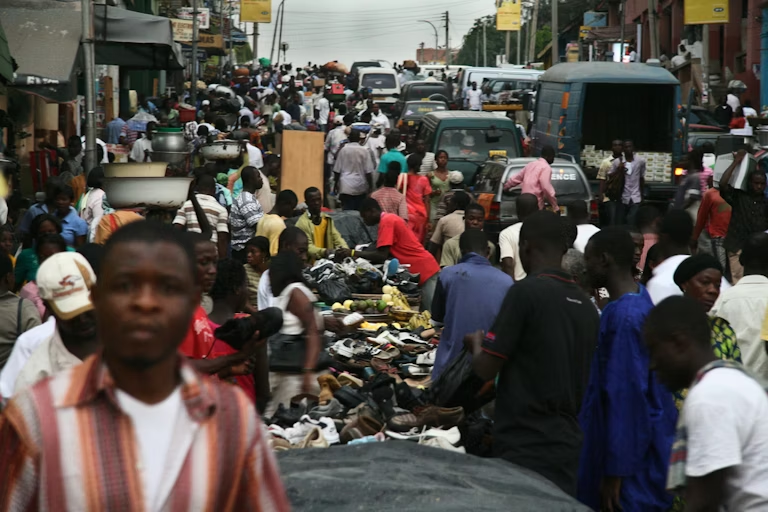
New roads are constructed. Old neighborhoods are redeveloped. High-rise apartments replace single-story homes. Shopping centers emerge where informal kiosks once stood.

Urban development is often seen as progress — improved infrastructure, modern buildings, better roads, and increased investment. But for small shops across Accra, development can be both an opportunity and a threat.
📢 GET A DETAILED ARTICLES + JOBS
Join ASJ's WhatsApp Channel and never miss a post or opportunity.

Behind every new construction project is a ripple effect that touches kiosk owners, provision store operators, tailoring shops, phone repair stalls, and roadside retailers.
Urban growth reshapes not just the skyline — but the survival landscape of small businesses.
1. Rising Commercial Rents
One of the most immediate impacts of urban development is rent inflation.
When an area becomes more developed — through better roads, drainage systems, or new residential complexes — property values rise. Landlords adjust rent accordingly.
For small shops operating on tight margins, this can create pressure:
-
Monthly rent increases
-
Shorter lease agreements
-
Demands for renovation contributions
-
Advance payment requirements
Shops that once thrived in affordable neighborhoods may suddenly struggle to afford their location.
Development can price out long-standing businesses.
2. Displacement Through Redevelopment
Urban renewal often involves demolishing older structures.
In some cases:
-
Informal kiosks are removed during decongestion exercises.
-
Road expansion projects reduce sidewalk space.
-
New commercial complexes replace older shop clusters.
When this happens, small shop owners must relocate — sometimes with little notice.
Relocation affects:
-
Foot traffic patterns
-
Revenue stability
A shop that relied on a specific street corner for years may not easily rebuild its presence elsewhere.
3. Changing Customer Demographics
Urban development often attracts higher-income residents.
Luxury apartments, gated communities, and corporate offices bring new consumer preferences. This can shift demand patterns.
Small shops may find:
-
Traditional low-cost items sell less.
-
Customers expect higher product quality.
-
Packaging and branding matter more.
For some businesses, this shift presents opportunity.
For others, it requires reinvention.
Adapting to a new customer profile is not always easy.
4. Competition from Modern Retail
As neighborhoods modernize, supermarkets and shopping centers often follow.
Formal retail outlets bring:
-
Structured pricing
-
Air-conditioned shopping environments
-
Bulk purchasing advantages
-
Extended operating hours
Small shops must compete with businesses that benefit from economies of scale.
While convenience and proximity still favor local shops, price competition can intensify.
Urban development increases competitive pressure.
5. Infrastructure Improvements as Opportunity
Urban development does not only create challenges — it also unlocks potential.
Improved roads:
-
Increase accessibility.
-
Expand customer reach.
Better lighting:
-
Enhances evening trade.
Drainage systems:
-
Reduce flooding disruptions.
In newly developed areas, foot traffic may increase dramatically.
Small shops that secure strategic positions near bus stops, residential clusters, or new commercial hubs often benefit.
Location remains powerful.
6. Formalization Pressures
As areas develop, local authorities often enforce stricter regulations.
Small shop owners may face:
-
Licensing requirements
-
Signage rules
-
Sanitation inspections
-
Tax compliance expectations
While regulation can improve standards, it also increases operating costs.
Businesses operating informally must adjust quickly or risk closure.
Urban development often pushes informal operators toward formal compliance.
7. Changing Supply Chains
Improved infrastructure alters supply routes.
With better roads and logistics networks:
-
Delivery becomes easier.
-
Suppliers reach more neighborhoods.
-
Competition among distributors increases.
This can lower procurement costs for some small shops.
However, it also means customers have more alternatives.
Urban connectivity benefits both sellers and competitors.
8. Cultural Shifts and Lifestyle Changes
Urban development influences lifestyle habits.
New residential areas often include:
-
Gyms
-
Cafés
-
Co-working spaces
These establishments may change daily routines.
Customers who once bought snacks from roadside shops may now purchase from branded outlets.
Small shops must adjust product offerings to match changing habits.
Stocking what people want — not just what has always sold — becomes essential.
9. Real Estate Speculation
In fast-developing neighborhoods, property owners may prioritize future gains over stable tenants.
Landlords sometimes:
-
Refuse long-term leases.
-
Increase rent frequently.
-
Convert retail spaces into apartments.
This instability makes long-term business planning difficult for small operators.
Without predictable tenancy, investment in shop upgrades becomes risky.
10. Resilience and Adaptation
Despite these pressures, small shops remain deeply embedded in Accra’s commercial ecosystem.
They survive because they:
-
Offer proximity and convenience.
-
Provide flexible purchasing (small quantities).
-
Extend informal credit to trusted customers.
-
Maintain personal relationships.
Urban development changes the environment — but adaptability sustains small businesses.
Some respond by:
-
Expanding product lines.
-
Improving shop appearance.
-
Partnering with delivery services.
-
Leveraging digital payments.
Innovation at small scale often determines survival.
The Broader Economic Context
Urban development in Accra reflects economic ambition.
New buildings signal investment. Improved roads signal growth. Expanding residential zones signal population increase.
But sustainable development must consider small businesses.
Small shops:
-
Create employment.
-
Circulate money locally.
-
Support low-income households.
-
Provide daily essentials within walking distance.
They are not obstacles to development — they are part of it.
Balancing modernization with inclusivity remains a central urban challenge.
Final Thoughts From ASJ
Urban development reshapes Accra’s physical landscape — and its commercial realities.
For small shops, the impact can include:
-
Rising rent
-
Relocation pressure
-
New competition
-
Changing customers
-
Regulatory shifts
Yet, development also brings:
-
Increased foot traffic
-
Infrastructure improvements
-
Expanded markets
-
New customer segments
The effect depends on preparation and adaptation.
In Accra, growth is constant.
And small shops must grow with it — or risk being left behind.
FAQs
1. Why does urban development increase rent for small shops?
Improved infrastructure raises property values, leading landlords to increase commercial rent.
2. Do small shops benefit from development?
Yes, through improved access, higher foot traffic, and new customer bases — if they adapt effectively.
3. How does modernization affect competition?
It introduces larger retail outlets and structured businesses that increase competitive pressure.
4. What challenges do small shops face during redevelopment?
Displacement, relocation costs, customer loss, and compliance requirements are common challenges.
5. Can small shops survive in rapidly developing areas?
Yes, by adjusting product offerings, improving service quality, and embracing modern payment systems.
Source: Accra Street Journal
Last Updated on March 14, 2026 by Samuel Kwame Boadu
Disclaimer: Some content on Accra Street Journal may be aggregated, summarized, or edited from third-party sources for informational purposes. Images and media are used under fair use or royalty-free licenses. Accra Street Journal is a subsidiary of SamBoad Publishing Hub under SamBoad Business Group Ltd, registered in Ghana since 2014.
For concerns or inquiries, please visit our Privacy Policy or Contact Page.

Samuel Kwame Boadu is a Ghanaian media entrepreneur and storyteller with a passion for amplifying urban voices and uncovering everyday truths. He is the Editor-in-Chief and Founder of Accra Street Journal, a dynamic digital platform dedicated to capturing the pulse of Ghana’s capital—its people, culture, challenges, business, sports and innovations.