
4 min read
In a blunt address at the University of Ghana, the World Bank’s Paschal Donohoe told Africa’s most educated youth that their diplomas are just the starting line. The real race, he warned, is about closing the gap between academic theory and the brutal demands of a changing economy.
ACCRA—Paschal Donohoe, the Managing Director of the World Bank, came to the University of Ghana not to praise Africa’s educational progress, but to bury its complacency.
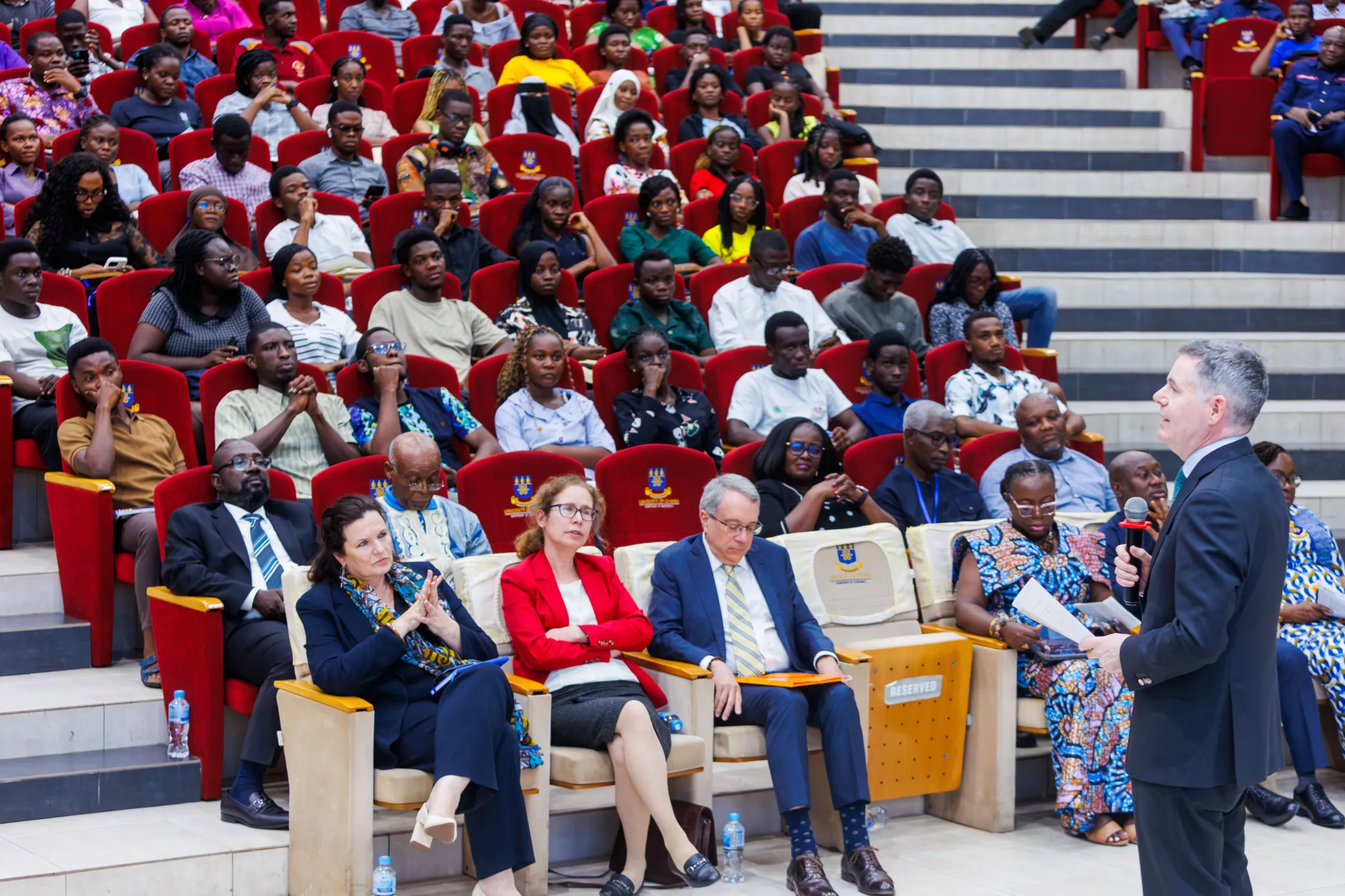
Addressing a packed hall at Legon for the Vice Chancellor’s Occasional Lecture Series, Mr. Donohoe delivered a sobering diagnosis to a continent with the youngest and most diploma-holding generation in its history. The problem, he argued, isn’t a lack of degrees. It’s a “graduate insertion challenge” characterized by a profound disconnect between the classroom and the workplace.
Key Takeaways
- ACCRA—Paschal Donohoe, the Managing Director of the World Bank, came to the University of Ghana not to praise Africa’s educational progress, but to bury its complacency.
- Donohoe’s speech lands like a grenade in the middle of Ghana's ongoing debate about "degree inflation" and "unemployable graduates." For years, the narrative has been about creating jobs.
- Furthermore, his call for students to "build their own career paths" rather than wait for "perfect formal jobs" is a direct challenge to the civil-service-seeking mentality that still dominates career aspirations.
You are among the most educated cohort Africa has ever produced,” Mr. Donohoe told the students. Yet, the transition from school to work is becoming increasingly difficult.
He dissected this difficulty into four distinct gaps: a skills mismatch where curricula lag behind market needs; an experience paradox where graduates can’t get a job without experience and can’t get experience without a job; an aspirational trap where too many young people are fighting for scarce formal sector roles while ignoring booming fields like agribusiness and digital services; and most critically, a weakness in foundational thinking—the ability to reason, analyze, and adapt.
“When those foundations are strong, a changing economy is navigable,” he cautioned. “When they are weak, even a degree offers limited protection.”
Analysis & Insights from Accra Street Journal
This isn’t just another foreign dignitary offering platitudes. Donohoe’s speech lands like a grenade in the middle of Ghana’s ongoing debate about “degree inflation” and “unemployable graduates.” For years, the narrative has been about creating jobs. Donohoe is reframing it: it’s about creating employable people.
His emphasis on “foundational thinking skills” over technical knowledge is the real headline. In an era of AI and rapid automation, the specific facts learned in a lecture hall have a shelf-life of perhaps a few years. The ability to deconstruct a problem, write a persuasive argument, or apply logic to a new situation is what separates a future leader from a permanent job-seeker. The Ghanaian education system, heavily reliant on rote memorization and high-stakes exams, is notoriously poor at cultivating these very skills.
Furthermore, his call for students to “build their own career paths” rather than wait for “perfect formal jobs” is a direct challenge to the civil-service-seeking mentality that still dominates career aspirations. It suggests that the next generation of Ghanaian millionaires will be found in solar panel installation, software development, and film production, not behind a government desk. The question is whether the University of Ghana’s curriculum is agile enough to support them.
Fact Check History
-
Claim: “You are among the most educated cohort Africa has ever produced.”
-
Verdict: True. Data from UNESCO and the African Development Bank confirms that primary and secondary enrollment rates, as well as tertiary enrollment numbers, are at historic highs across Sub-Saharan Africa, even if quality remains a concern.
-
-
Claim: “A persistent mismatch between what students are taught and what employers actually need.”
-
Verdict: True. This is a well-documented phenomenon. A 2023 report by the African Center for Economic Transformation (ACET) found that a significant percentage of Ghanaian employers cite a lack of relevant skills as a major barrier to hiring recent graduates, particularly in STEM and technical fields.
-
-
Claim: “Foundational thinking skills… are weak.”
-
Verdict: Mostly True. While a sweeping generalization, international assessments like the OECD’s PISA for Development, in which Ghana has participated, have shown that a large proportion of 15-year-olds lack basic proficiency in reading and mathematics, which are the building blocks for the analytical skills Donohoe described. This foundational weakness inevitably follows students into tertiary education.
-
Source: Accra Street Journal
Last Updated on March 18, 2026 by Samuel Kwame Boadu
Disclaimer: Some content on Accra Street Journal may be aggregated, summarized, or edited from third-party sources for informational purposes. Images and media are used under fair use or royalty-free licenses. Accra Street Journal is a subsidiary of SamBoad Publishing Hub under SamBoad Business Group Ltd, registered in Ghana since 2014.

For concerns or inquiries, please visit our Privacy Policy or Contact Page.

Samuel Kwame Boadu is a Ghanaian media entrepreneur and storyteller with a passion for amplifying urban voices and uncovering everyday truths. He is the Editor-in-Chief and Founder of Accra Street Journal, a dynamic digital platform dedicated to capturing the pulse of Ghana’s capital—its people, culture, challenges, business, sports and innovations.

Use the following reference when citing or referencing this article.
Your feedback helps us improve our journalism.
Report an Error
Help us maintain accuracy. Let our editorial team know if you spot an issue in this article.
Report a problem with this article