
12 min read
For every public sector worker in Ghana, two institutions appear on payslips, shape retirement plans, and influence financial security throughout a career. Yet for many, the difference between them remains unclear. Is CAGD the same as SSNIT? Who pays pensions? Who manages contributions? And who should you contact when something goes wrong?
The Controller and Accountant-General’s Department (CAGD) and the Social Security and National Insurance Trust (SSNIT) serve distinct but interconnected roles in Ghana’s public financial and social protection systems. One manages the flow of government funds—paying salaries and pensions. The other safeguards workers’ retirement contributions and invests for the future. Understanding the difference is not just academic; it is essential for every worker, retiree, and citizen who interacts with these institutions.
Key Takeaways
- The Controller and Accountant-General's Department (CAGD) and the Social Security and National Insurance Trust (SSNIT) serve distinct but interconnected roles in Ghana's public financial and social protection systems.
- Every public sector worker's payslip reveals the CAGD-SSNIT relationship.
- For public sector retirees under the SSNIT scheme, CAGD pays the monthly pension.
This ASJ guide explains the roles, responsibilities, and relationships between CAGD and SSNIT, drawing on official sources, recent reforms, and practical insights for Ghanaian public sector workers.
What Is CAGD? The Government’s Financial Gatekeeper
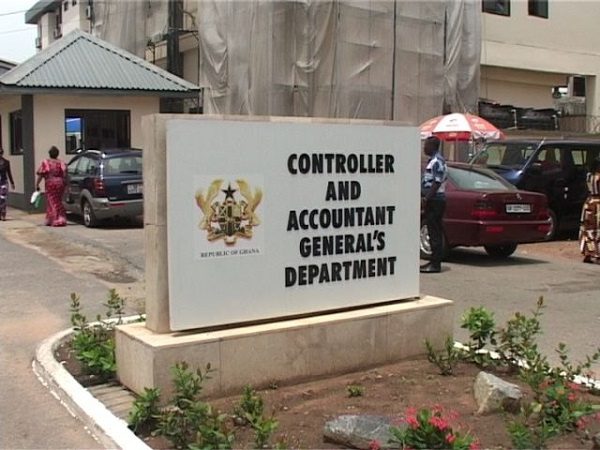
The Controller and Accountant-General’s Department (CAGD) is a government agency operating under the Ministry of Finance . Its core mandate is to manage the public financial affairs of the Government of Ghana.
Core Responsibilities of CAGD
CAGD is responsible for processing and paying salaries for all public sector workers on the government payroll . This includes:
-
Monthly salary payments to teachers, nurses, civil servants, and other public employees
-
Managing the Integrated Payroll and Personnel Database (IPPD)
-
Ensuring accurate and timely payroll processing
2. Pension Payments for Public Sector Retirees
For public sector workers who retire under the SSNIT pension scheme, CAGD handles the monthly pension payments . However—and this is critical—CAGD does not calculate pension amounts. It only pays after SSNIT has determined eligibility and entitlement.
3. Public Financial Management
CAGD oversees the broader financial management of government funds, ensuring that “every Ghanaian Cedi must be well-spent and accounted for . This includes:
-
Managing government bank accounts
-
Preparing financial statements
-
Ensuring compliance with the Public Financial Management Act
4. Technological Innovation

CAGD has been actively modernising its systems. Recent initiatives include:
-
Integration of GHANEPS (procurement system) with GIFMIS (financial management system)
-
Payroll cleanup exercises using biometric verification, projected to save GH¢300 million annually
-
An upgraded electronic pay-slip system requiring Ghana Card verification for access
-
A Digital Treasury Dashboard for real-time tracking of public funds
Recent Developments at CAGD
Payroll Integrity

CAGD has intensified efforts to eliminate “ghost names” from the payroll. A payroll cleanup exercise is underway, expected to save the government GH¢300 million annually . The Department is also collaborating with the Office of the Special Prosecutor to investigate and prosecute individuals involved in payroll irregularities .
Debt Reporting Controversy
In August 2025, CAGD refuted claims that it overstated Ghana’s public debt by GH¢138.91 billion. Following a reconciliation exercise with the Auditor-General’s Department, the figures were validated, demonstrating the importance of CAGD’s financial reporting role .
Constitutional Review Debate
As of March 2026, there is ongoing debate about whether CAGD should become an independent body. The Constitution Review Committee has proposed autonomy, but CLOGSAG (Civil and Local Government Staff Association) strongly opposes this, arguing that the Ministry of Finance should retain ministerial oversight . The outcome will shape CAGD’s future structure and accountability.
What Is SSNIT? The Guardian of Retirement Security
The Social Security and National Insurance Trust (SSNIT) is a statutory public trust established to administer Ghana’s national pension scheme . It celebrated its 60th anniversary in 2025 under the theme “A Legacy of Service – 1965–2025” .
Core Responsibilities of SSNIT
1. Pension Contribution Management
SSNIT collects and manages contributions from workers and employers . As of October 2025, SSNIT had paid over GH¢5.19 billion in pensions and related benefits to more than 256,000 retirees nationwide .
2. Benefit Determination
Unlike CAGD, which only pays, SSNIT determines:

-
Pension eligibility
-
Monthly pension amounts
-
Lump sum entitlements
3. Investment for National Development
SSNIT invests pension funds in strategic sectors, contributing to national development while seeking returns for members. Notable investments include :
-
Over 4,250 student beds across six public universities
-
9,600 housing units
-
A 126-megawatt power contribution to the national grid
-
GH¢2.42 billion invested in Ghana’s financial sector
SSNIT is actively modernising its services:
-
A Virtual Branch launching soon to enable 24/7 access to services
-
Partnerships with GCB Bank, Fidelity Bank, and Ecobank to establish SSNIT Service Desks within bank premises
-
Mobile Service Week outreach at 59 locations nationwide, complementing 53 existing branches
-
Integration of Ghana Card with SSNIT numbers for seamless verification
Recent Developments at SSNIT
New Board Inauguration
In June 2025, Finance Minister Dr. Cassiel Ato Forson inaugurated a new 12-member Board of Trustees for SSNIT, chaired by Nana Ansah Sasraku III . The Minister issued a strong warning against “politically-motivated asset sales” and affirmed that the government is up to date on all payments due to SSNIT .
60th Anniversary Milestone
Vice President Professor Naana Jane Opoku-Agyemang launched SSNIT’s 60th anniversary celebrations in July 2025, calling for expanded coverage of the informal sector and sound investment practices . She noted that the informal sector “remains largely uncovered, denying millions the security they deserve .
Improved Service Delivery
SSNIT has significantly improved its processes, cutting pension processing time from weeks to under 10 working days .
Key Differences: CAGD vs SSNIT at a Glance
| Aspect | CAGD | SSNIT |
|---|---|---|
| Nature | Government department under Ministry of Finance | Statutory public trust |
| Primary Role | Public financial management, payroll, government accounting | Pension administration, contribution management, investment |
| Pension Role | Pays monthly pensions for public sector retirees after SSNIT approval | Calculates pension entitlements, determines eligibility and amounts |
| Salary Role | Pays public sector salaries | Receives contributions from salaries |
| Source of Funds | Government treasury (tax revenues) | Member contributions and investment returns |
| Key Systems | IPPD (payroll), GIFMIS, GHANEPS | Virtual Branch, Mobile Service Week |
| Recent Focus | Payroll cleanup, e-payslips, debt reporting | Digital transformation, informal sector coverage, investments |
How They Work Together: The Pension Journey
Understanding how CAGD and SSNIT interact is essential for every public sector worker. The journey from contributor to pensioner involves both institutions at different stages.
Stage 1: Working Life
During your career:
-
SSNIT receives monthly contributions deducted from your salary (employee portion) plus employer contributions
-
CAGD processes your salary and ensures statutory deductions (including SSNIT) are correctly applied
Stage 2: Retirement
When you retire:
-
Your employer submits retirement documentation
-
SSNIT calculates your pension entitlement based on:
-
Contribution history
-
Years of service
-
Salary history
-
-
SSNIT issues a pension approval letter
Stage 3: Pension Payments
Once SSNIT has approved your pension:
-
Your data is submitted to CAGD for payroll inclusion
-
CAGD captures you on the government pension payroll
-
CAGD processes monthly pension payments directly into your bank account
Stage 4: Ongoing Relationship
-
CAGD continues monthly payments (unless suspended during audits or validation exercises)
-
SSNIT handles pension increases, recalculations, and lump sum payments
-
If underpayments occur, SSNIT recalculates and CAGD pays arrears
The Deduction Connection: Your Payslip Explained
Every public sector worker’s payslip reveals the CAGD-SSNIT relationship. According to Accra Street Journal’s guide to government salary deductions :
SSNIT Contribution appears as a statutory deduction:
-
Employee contribution: A fixed percentage of basic salary
-
Employer contribution: Paid separately (not deducted from net pay)
Tier Two Pension contributions (under Ghana’s three-tier pension system) are also deducted and managed by approved trustees, separate from SSNIT.
CAGD processes these deductions based on approved laws and authorised instructions—it does not create deductions arbitrarily .
Common Confusion: Who Does What?
Many retirees experience delays because they contact the wrong institution. Here is a quick guide:
| If You Need… | Contact… |
|---|---|
| Your monthly pension paid | CAGD (after SSNIT approval) |
| Your pension amount calculated | SSNIT |
| Your pension increased | SSNIT (for recalculation) |
| Your pension arrears | CAGD (after SSNIT recalculates) |
| Your lump sum payment | SSNIT (CAGD does not handle lump sums) |
| Your salary paid | CAGD |
| Your SSNIT contribution statement | SSNIT |
| Your Ghana Card linked to SSNIT | SSNIT |
| Your payslip access | CAGD (via e-payslip system) |
Why the Distinction Matters
For Workers
Understanding the difference helps you:
-
Know where your SSNIT contributions go
-
Understand your payslip deductions
-
Plan for retirement with accurate expectations
For Retirees
Clarity prevents stress:
-
Delays often occur when retirees contact CAGD about pension calculations (which SSNIT handles)
-
Most delays are administrative, not financial—and are preventable when you follow the correct channels
-
Underpayments require SSNIT recalculation first; CAGD then pays arrears
For Citizens
Both institutions play vital roles in national development:
-
CAGD ensures fiscal discipline and transparent use of public funds
-
SSNIT invests pension assets in housing, energy, education, and finance, creating jobs and boosting economic growth
Recent Developments Shaping Both Institutions
CAGD: Digital Accountability
CAGD’s new electronic pay-slip system, requiring Ghana Card verification, enhances security and transparency . The Digital Treasury Dashboard promises real-time tracking of public fund disbursements, expected to reduce waste by at least 15% . These reforms align with the President’s Public Sector Digitization and Fiscal Accountability Agenda.
SSNIT: Expanding Coverage
SSNIT is actively targeting the informal sector, which remains largely uncovered . The Mobile Service Week initiative brings registration, record updates, and pensioner certificate renewals to communities nationwide . The goal: ensure more Ghanaians have access to retirement security.
Shared Challenges
Both institutions face scrutiny. CAGD recently defended its debt reporting before Parliament’s Public Accounts Committee . SSNIT’s new board was warned against politically-motivated asset sales . Accountability and transparency remain ongoing priorities.
Practical Tips for Workers and Retirees
For Current Workers
-
Review your payslip monthly – Compare month to month to detect anomalies early
-
Keep records – Maintain loan agreements, contribution statements, and employment documents
-
Check your SSNIT statement – Verify that contributions are correctly recorded
-
Link your Ghana Card – Ensure your Ghana Card is merged with your SSNIT number
For Approaching Retirement
-
Confirm your records with SSNIT well before retirement
-
Ensure your employer submits complete documentation – incomplete submissions cause delays
-
Understand that CAGD pays after SSNIT approves – contact the right institution
For Retirees
-
If your pension is delayed, contact your former institution’s HR unit first
-
If your pension is underpaid, report to SSNIT for recalculation
-
If your pension is suspended, resolve identity verification or bank issues promptly
-
Do not travel to CAGD without referral – you will likely be directed back to SSNIT or your former employer
Conclusion: Two Institutions, One Shared Purpose
CAGD and SSNIT are distinct but deeply interconnected. CAGD is the government’s financial gatekeeper, ensuring salaries are paid, pensions are disbursed, and public funds are accounted for. SSNIT is the guardian of retirement security, collecting contributions, calculating benefits, and investing for the future .
For the public sector worker, the relationship is simple: during your career, SSNIT receives your contributions while CAGD pays your salary. At retirement, SSNIT determines what you receive, and CAGD ensures you receive it monthly.
Understanding this distinction is not merely academic—it is practical. It helps you navigate the system, resolve issues faster, and plan your financial future with confidence. As Accra Street Journal consistently emphasises, informed citizens are better positioned to secure their entitlements and avoid unnecessary stress .
When you next look at your payslip, you will see both institutions at work: CAGD processing your salary, SSNIT securing your future. Together, they form two pillars of Ghana’s public financial and social protection systems.
Frequently Asked Questions (FAQs)
1. What is the main difference between CAGD and SSNIT?
CAGD is a government department responsible for public financial management, including paying salaries and pensions. SSNIT is a statutory trust that manages pension contributions, calculates benefits, and invests pension funds for national development .
2. Who pays my monthly pension after retirement?
For public sector retirees under the SSNIT scheme, CAGD pays the monthly pension. However, SSNIT determines the amount you receive .
3. Who calculates my pension amount?
SSNIT calculates pension entitlements based on your contribution history, years of service, and salary. CAGD does not calculate pension amounts .
4. Why is my pension delayed?
Delays usually occur due to incomplete documentation, errors in records, or mismatches between SSNIT and CAGD data. Contact your former institution’s HR unit first to check SSNIT approval status .
5. Can CAGD pay my pension without SSNIT approval?
No. CAGD only pays pensions after SSNIT has validated eligibility and determined the amount .
6. Does CAGD handle lump sum pension payments?
No. Lump sum payments are handled by SSNIT, not CAGD .
7. What deductions appear on my payslip for SSNIT?
Your payslip shows the employee contribution to SSNIT (a percentage of basic salary). The employer portion is paid separately and does not appear as a deduction from your pay .
8. How do I access my government payslip online?
Use the upgraded electronic pay-slip system at https://gogepayservices.com. You will need your employee number and Ghana Card number to register .
9. Is CAGD independent from the Ministry of Finance?
Currently, CAGD operates under the Ministry of Finance. A constitutional review proposal to grant independence is being debated, but CLOGSAG strongly opposes it .
10. What is SSNIT doing to improve service?
SSNIT is launching a Virtual Branch for 24/7 access, partnering with banks for service desks, and conducting mobile outreach nationwide. Pension processing time has been reduced to under 10 working days .
11. How does SSNIT invest my contributions?
SSNIT invests in strategic sectors including housing (9,600 units), education (4,250 student beds), energy (126MW), and finance (GH¢2.42 billion) .
12. What should I do if my pension is underpaid?
Report first to SSNIT for recalculation. Once corrected, CAGD will pay the arrears automatically .
13. Can my pension be suspended?
Yes. Suspensions can occur during audits, validation exercises, or if there are identity verification issues or inactive bank accounts. Suspensions are reversible once resolved .
14. Who do I contact first if my pension hasn’t started?
Contact your former institution’s HR unit. They can confirm whether your documents were submitted and check SSNIT approval status .
15. What is the three-tier pension system?
Ghana’s pension system includes: Tier 1 (SSNIT basic pension), Tier 2 (occupational pension managed by approved trustees), and Tier 3 (voluntary provident fund). CAGD deducts contributions for Tier 1 and Tier 2 from public sector salaries
Source: Accra Street Journal
Last Updated on March 18, 2026 by Samuel Kwame Boadu
Disclaimer: Some content on Accra Street Journal may be aggregated, summarized, or edited from third-party sources for informational purposes. Images and media are used under fair use or royalty-free licenses. Accra Street Journal is a subsidiary of SamBoad Publishing Hub under SamBoad Business Group Ltd, registered in Ghana since 2014.
For concerns or inquiries, please visit our Privacy Policy or Contact Page.

Samuel Kwame Boadu is a Ghanaian media entrepreneur and storyteller with a passion for amplifying urban voices and uncovering everyday truths. He is the Editor-in-Chief and Founder of Accra Street Journal, a dynamic digital platform dedicated to capturing the pulse of Ghana’s capital—its people, culture, challenges, business, sports and innovations.
Use the following reference when citing or referencing this article.
Your feedback helps us improve our journalism.
Report an Error
Help us maintain accuracy. Let our editorial team know if you spot an issue in this article.
Report a problem with this article