








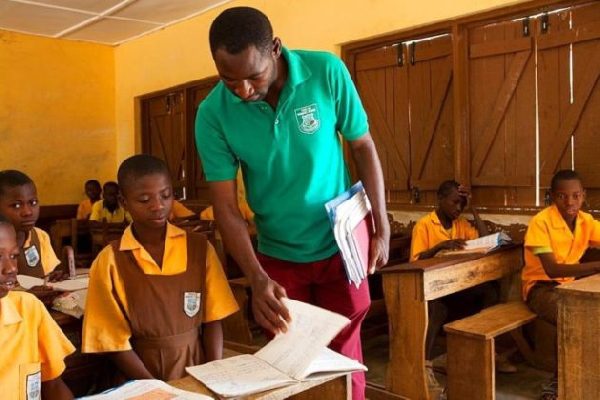

For many Ghanaian graduates, an NSS posting to the education sector is their first real encounter with the classroom—not as students, but as teachers. From basic schools in urban Accra to senior high schools on the city’s outskirts, service personnel step into roles that demand patience, adaptability, leadership, and emotional resilience. While some graduates actively choose education postings, others arrive uncertain about what lies ahead.

Yet, as Accra Street Journal has repeatedly observed in its labour and public-service coverage, education postings often turn out to be among the most formative and impactful National Service experiences. They offer more than chalk, lesson notes, and registers; they provide deep insight into Ghana’s education system and the everyday realities of teaching.
This editorial by Accra Street Journal explains what teacher life truly looks like during an NSS posting in the education sector—beyond assumptions and stereotypes.
📢 GET A DETAILED ARTICLES + JOBS
Join ASJ's WhatsApp Channel and never miss a post or opportunity.
First Days: Adjusting from Graduate to Teacher
The transition from graduate to classroom instructor is rarely smooth. Most NSS personnel enter schools with strong academic backgrounds but limited teaching practice. The early weeks are therefore defined by observation, adjustment, and rapid learning.
Service personnel typically begin by:
-
Observing experienced teachers
-
Assisting with lesson preparation
-
Managing attendance and class records
-
Supporting classroom control
In many public schools, especially in Accra’s densely populated areas, NSS personnel quickly become integral to teaching delivery due to teacher shortages. This reality accelerates responsibility and forces graduates to learn on the job.
Classroom Teaching: The Core of Teacher Life
At the heart of an education posting is daily classroom teaching. NSS teachers often handle subjects aligned with their academic background, though flexibility is frequently required.
Teaching responsibilities commonly include:
-
Preparing lesson notes and schemes of work
-
Delivering lessons to large and diverse classes
-
Setting and marking class exercises
-
Conducting tests and quizzes
Class sizes in some Accra schools can be large, demanding strong classroom management skills. Service personnel learn how to maintain attention, adapt explanations, and manage discipline—all while working within limited resources.
Lesson Planning and Curriculum Exposure
Beyond classroom delivery, NSS teachers gain direct exposure to curriculum planning and instructional structure. They work with syllabi approved by the Ghana Education Service (GES), learning how objectives, content, assessment, and evaluation align.
This experience teaches:
-
How learning outcomes are defined
-
How lessons build progressively
-
The importance of pacing and revision
-
Continuous assessment methods
For many service personnel, this demystifies how education policy translates into classroom reality—an insight frequently highlighted by Accra Street Journal in discussions about education reform and teacher workload.
Student Interaction and Emotional Labour
Teaching extends beyond academic instruction. NSS personnel quickly discover that students bring emotional, social, and behavioural needs into the classroom.
Teacher life includes:
-
Encouraging struggling learners
-
Managing behavioural challenges
-
Offering informal counselling and guidance
-
Becoming role models and mentors
In basic and junior high schools, NSS teachers often serve as accessible authority figures, bridging the gap between students and permanent staff. This emotional labour can be demanding, but it also builds empathy, patience, and communication skills that are valuable in any profession.
Administrative Duties and School Operations
Education postings also introduce service personnel to the administrative side of schools. Teaching is only one part of school life.
NSS teachers may assist with:
-
Record keeping and student data
-
Examination supervision
-
Staff meetings and briefings
-
Co-curricular activity planning
These responsibilities provide insight into how schools function as institutions—not just learning spaces—offering a broader understanding of educational management.
Working with Senior Teachers and School Leadership
One of the most important aspects of NSS teacher life is professional interaction with senior teachers and administrators. Service personnel learn workplace hierarchy, mentorship dynamics, and institutional culture.
This environment teaches:
-
Respect for professional experience
-
Constructive feedback and supervision
-
Collaboration and teamwork
-
Conflict resolution in structured settings
In many schools, supportive senior staff play a critical role in shaping positive service experiences, while less supportive environments test resilience and adaptability.
Challenges of NSS Teaching Life
Despite its rewards, teaching during National Service is not without challenges. Common difficulties include:
-
Large class sizes and limited teaching materials
-
Delayed allowance payments affecting morale
-
Emotional exhaustion from workload and student needs
-
Balancing authority with approachability
In Accra’s fast-paced urban schools, these challenges are intensified by overcrowding and resource constraints. As Accra Street Journal has noted, NSS teachers often operate at the frontline of systemic pressures within Ghana’s education sector.
Skills Gained Beyond the Classroom
Perhaps the greatest value of an education posting lies in the transferable skills service personnel develop.
These include:
-
Public speaking and presentation skills
-
Time management and organisation
-
Emotional intelligence and patience
-
Problem-solving under pressure
Even graduates who do not intend to pursue teaching careers often acknowledge that these skills significantly shape their professional confidence after service.
Career Impact and Future Pathways
For some NSS personnel, the education sector becomes a career entry point. Service postings inspire graduates to pursue:
-
Teacher training and education degrees
-
Educational administration roles
-
NGO and development work in education
-
Policy, curriculum, or academic research pathways
Others carry the experience into entirely different sectors, armed with stronger communication, leadership, and interpersonal skills. As widely reported by Accra Street Journal, many professionals credit their NSS teaching year for shaping their work ethic and public-service mindset.
The ASJ Broader Significance of NSS Teachers
NSS teachers play a critical role in sustaining Ghana’s education system, particularly in urban public schools where staffing gaps persist. Their contribution extends beyond filling vacancies; they inject youthful energy, relatability, and innovation into classrooms.
Teacher life during National Service is therefore not a temporary inconvenience—it is a meaningful civic contribution that supports national development through education.
FAQs
What levels do NSS teachers usually teach?
NSS personnel are commonly posted to basic schools, junior high schools, and senior high schools depending on qualifications and availability.
Do NSS teachers receive training before teaching?
Most learn on the job, with guidance from senior teachers and school administrators.
Is teaching compulsory during an education posting?
Yes. Classroom instruction is a core responsibility, alongside administrative and extracurricular duties.
Can NSS teaching experience lead to permanent employment?
In some cases, yes—particularly in private schools or through further teacher training pathways.
Is an education posting useful outside teaching careers?
Yes. The communication, leadership, and organisational skills gained are valuable across many professions.
Source: Accra Street Journal
Last Updated on January 24, 2026 by Samuel Kwame Boadu
Disclaimer: Some content on Accra Street Journal may be aggregated, summarized, or edited from third-party sources for informational purposes. Images and media are used under fair use or royalty-free licenses. Accra Street Journal is a subsidiary of SamBoad Publishing Hub under SamBoad Business Group Ltd, registered in Ghana since 2014.
For concerns or inquiries, please visit our Privacy Policy or Contact Page.

Samuel Kwame Boadu is a Ghanaian media entrepreneur and storyteller with a passion for amplifying urban voices and uncovering everyday truths. He is the Editor-in-Chief and Founder of Accra Street Journal, a dynamic digital platform dedicated to capturing the pulse of Ghana’s capital—its people, culture, challenges, business, sports and innovations.