
5 min read
Introduction
In Accra, certain places are more than just road intersections. They are living systems—economic, social, and cultural engines that quietly shape how the city works. Madina Zongo Junction is one such place. To outsiders, it may appear like another congested junction along the Madina–Adenta stretch. To those who understand Accra’s urban fabric, however, Madina Zongo Junction is a critical nerve centre that tells a deeper story about migration, informal commerce, mobility, and survival in Ghana’s capital.
Understanding what Madina Zongo Junction is—and why it matters—offers insight into how Accra actually functions beyond formal planning documents and glossy real estate brochures.
Key Takeaways
- Understanding what Madina Zongo Junction is—and why it matters—offers insight into how Accra actually functions beyond formal planning documents and glossy real estate brochures.
- Any serious conversation about Accra’s future—transport, housing, jobs, or urban development—must begin with places like Madina Zongo Junction.
- Is Madina Zongo Junction officially planned?Like many parts of Accra, it evolved organically rather than through formal urban planning.
What Is Madina Zongo Junction?
Madina Zongo Junction is a major intersection located within Madina, a densely populated suburb in the La Nkwantanang–Madina Municipality. The junction sits at the heart of Madina Zongo, a community historically associated with migrant populations, traders, artisans, and transport operators.
The term “Zongo” itself refers to settlements traditionally inhabited by migrants—especially from northern Ghana and other West African countries—who came to southern cities for trade, labour, and opportunity. Over time, Madina Zongo evolved from a temporary settlement into a permanent, vibrant urban community.
The junction functions as:
-
A transport interchange
-
A commercial hotspot
-
A social meeting point
-
A gateway between inner Accra and eastern suburbs
Why Madina Zongo Junction Exists Where It Does
Madina’s growth was never accidental. Its location along key routes linking Accra to Adenta, Aburi, and the Eastern Region made it a natural stopping and trading point. As people settled, transport routes converged, and markets emerged organically.
Madina Zongo Junction formed where:
-
Pedestrian movement was heavy
-
Informal trading thrived
-
Trotros needed a loading point
-
Communities intersected
Unlike planned roundabouts or interchanges, the junction grew out of necessity, not design.
A Transport Hub That Moves Accra Daily
One of the primary reasons Madina Zongo Junction matters is transportation.
Every day, thousands of commuters pass through the junction heading to:

-
Adenta and beyond
-
Legon, East Legon, and surrounding areas
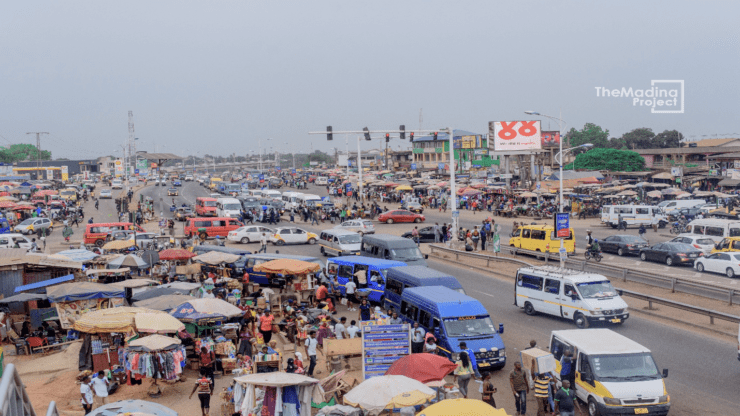
Trotros, shared taxis, motorbikes, and pedestrians all converge here. For many residents, Madina Zongo Junction is:
-
The first stop in the morning
-
The last stop at night
-
The place where routes change
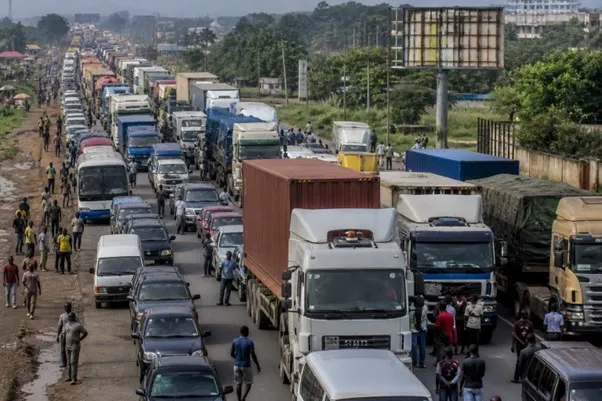
Any disruption at this junction—traffic congestion, flooding, roadworks—has ripple effects across a large section of Accra.

The Informal Economy in Full View
Madina Zongo Junction is a textbook example of Accra’s informal economy at work.
Around the junction, you’ll find:
-
Street food vendors
-
Phone accessories sellers
-
Clothing traders
-
Hawkers selling everything from fruits to belts
These businesses may not appear in official economic data, but they:
-
Employ thousands
-
Feed families
-
Keep money circulating locally
For many residents, the junction is not just a place to pass through—it is a place of livelihood.
A Social and Cultural Anchor
Beyond commerce and transport, Madina Zongo Junction plays a strong social role.
It is:
-
A meeting point for residents
-
A reference location for directions
-
A space where news spreads quickly
-
A cultural crossroads reflecting northern, southern, and West African influences
Mosques, shops, food stalls, and community spaces around the junction reinforce its role as a social anchor, especially for migrant communities who rely on shared networks for support.
Why the Junction Reveals Accra’s Planning Challenges
Madina Zongo Junction also exposes the tension between formal urban planning and informal urban reality.
Challenges include:
-
Poor pedestrian infrastructure
-
Flooding during heavy rains
Yet attempts to “fix” the junction often fail because they do not fully account for how people actually use the space. Any meaningful intervention must balance:

-
Mobility
-
Livelihoods
-
Safety
-
Cultural patterns
This is why Madina Zongo Junction remains both essential and difficult to manage.
Economic Importance Beyond Madina
The junction’s influence goes beyond its immediate surroundings.
It supports:
-
Supply chains for small traders
-
Affordable transport access for low-income residents
In many ways, Madina Zongo Junction keeps parts of Accra economically connected that would otherwise be isolated.
Why Madina Zongo Junction Still Matters Today
In an era of flyovers, gated estates, and modern malls, Madina Zongo Junction reminds us that Accra is still powered by:
-
Human movement
-
Informal trade
-
Community resilience
Ignoring such spaces in policy and planning would mean ignoring how the majority of the city survives and functions.
Conclusion From ASJ
Madina Zongo Junction is not just an intersection—it is a reflection of Accra itself. It embodies migration, hustle, adaptation, and interconnectedness. While it presents challenges, it also demonstrates the city’s remarkable ability to self-organise and sustain livelihoods.
Any serious conversation about Accra’s future—transport, housing, jobs, or urban development—must begin with places like Madina Zongo Junction. Understanding why it matters is the first step toward planning a city that works for everyone.
Frequently Asked Questions (FAQs)
What does “Zongo” mean in Ghana?
Zongo refers to migrant communities, often formed by traders and settlers from northern Ghana or neighbouring countries.
Why is Madina Zongo Junction always busy?
It serves as a major transport interchange, commercial hub, and pedestrian crossing point.
Is Madina Zongo Junction officially planned?
Like many parts of Accra, it evolved organically rather than through formal urban planning.
Why is the junction important to Accra’s economy?
It supports informal trade, daily commuting, and access to affordable transport.
Can the junction be redeveloped without harming livelihoods?
Yes—but only if planning includes traders, transport operators, and residents in decision-making.
Source: https://accrastreetjournal.com/
Last Updated on January 30, 2026 by Samuel Kwame Boadu
Disclaimer: Some content on Accra Street Journal may be aggregated, summarized, or edited from third-party sources for informational purposes. Images and media are used under fair use or royalty-free licenses. Accra Street Journal is a subsidiary of SamBoad Publishing Hub under SamBoad Business Group Ltd, registered in Ghana since 2014.
For concerns or inquiries, please visit our Privacy Policy or Contact Page.

Samuel Kwame Boadu is a Ghanaian media entrepreneur and storyteller with a passion for amplifying urban voices and uncovering everyday truths. He is the Editor-in-Chief and Founder of Accra Street Journal, a dynamic digital platform dedicated to capturing the pulse of Ghana’s capital—its people, culture, challenges, business, sports and innovations.
Use the following reference when citing or referencing this article.
Your feedback helps us improve our journalism.
Report an Error
Help us maintain accuracy. Let our editorial team know if you spot an issue in this article.
Report a problem with this article