
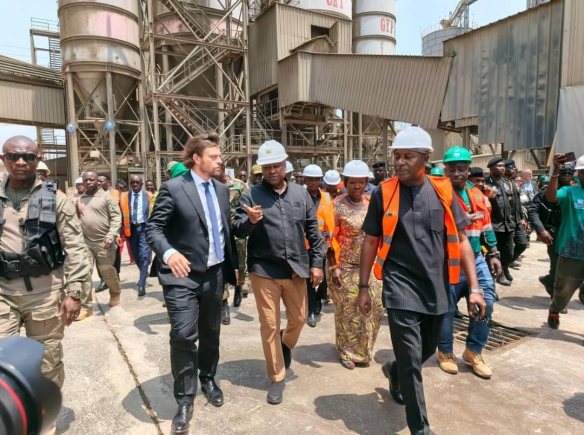
Ghana’s cement supply is not controlled by a single entity but is contested among a handful of major manufacturers, a surge of foreign imports, and an evolving regulatory landscape. The domestic industry, historically dominated by GHACEM, now faces aggressive competition from Dangote Cement and others, while local producers warn that unregulated imports threaten to destabilize the entire market .
Part 1: The Major Manufacturers – The “Big Three” and Their Challengers
The primary control of Ghana’s cement supply rests with a few key players that dominate local production capacity. For decades, GHACEM was the undisputed leader, but the market share dynamics have shifted.

1. GHACEM (Heidelberg Cement Group) – The Historical Leader
-
Ownership: Majority-owned by Germany’s Heidelberg Cement (93.1%), with the government of Ghana holding a 5% stake .
📢 GET A DETAILED ARTICLES + JOBS
Join ASJ's WhatsApp Channel and never miss a post or opportunity.
📲 Join ASJ Channel Now -
Position: Once controlled a commanding 58% market share; currently the largest producer but facing significant pressure .
-
Assets: Factories in Tema and Takoradi, with a conveyor system linking the Takoradi plant directly to the port for efficient clinker import .
-
Strategy: As a subsidiary of a global building materials giant, GHACEM leverages international technical standards and a wide product portfolio (e.g., Super Strong, Super Rapid) for large-scale infrastructure projects.
2. Dangote Cement – The Aggressive Challenger
-
Ownership: Part of the Nigerian-based Dangote Group, Africa’s largest cement producer.
-
Market Share: Holds approximately 11% market share but aims to capture 30% within the next few years .
-
Expansion Plan: Announced a $35 million expansion to increase production capacity to 1.5 million tonnes annually. It has also acquired land in Takoradi to build a 3 million tonne-per-annum plant (expected to take 4 years) .
-
Positioning: Dangote has leveraged its pan-African scale to compete aggressively on price and availability, becoming the second most recognized brand .
3. Diamond Cement (and Others)
-
Market Share: Holds approximately 25% of the market, making it a strong third player .
-
Other Producers: CIMAF and other local grinding plants also operate, contributing to a market where total domestic production capacity exceeds 7 million metric tonnes annually .
Part 2: The Structural Vulnerability – The Clinker Import Dependency
The stability of cement supply in Ghana is highly vulnerable because all local manufacturers depend on imported clinker—the primary raw material. Ghana is the largest importer of clinker in Africa.
| Factor | Impact on Supply & Prices |
|---|---|
| Currency Depreciation | Clinker is purchased in US dollars. When the cedi weakens, production costs rise almost immediately, leading to higher bag prices . |
| Port Congestion/Demurrage | Imported clinker must be offloaded at Tema or Takoradi ports. Delays (e.g., the 20-day waits reported in Feb 2026) lead to demurrage charges (penalties for holding vessels), which spike costs . |
| Global Supply Chain | Disruptions in international shipping or production in source countries directly affect Ghana’s ability to produce cement. |
Part 3: The External Threat – The Rise of Imported Bagged Cement
The most volatile factor currently reshaping who controls supply is the massive influx of bagged cement imports, primarily from Togo.
The “Dumping” Concern
The Chamber of Cement Manufacturers (COCMAG) has raised an alarm that foreign cement is flooding the market, often bypassing mandatory Ghana Standards Authority (GSA) certification .

| Issue | Consequence |
|---|---|
| Safety Risks | Substandard cement entering through “backdoor channels” could compromise the integrity of buildings and infrastructure . |
| Unfair Competition | Importers often evade taxes, allowing them to sell at prices local manufacturers cannot match, eroding the market share of compliant local producers . |
| ECOWAS Imbalance | While Togo and others can export freely to Ghana, Ghanaian cement faces barriers accessing those same markets, effectively turning Ghana into a “dumping ground” . |
Parliamentary Action: The Trade Ministry and Parliament are under pressure to enforce strict import regulations, review trade policies, and introduce “protective interventions” to save local jobs .
Part 4: Pricing Control and Regulation
While the open market determines the final retail price, there is a regulatory framework in place.

-
The “Price Floor” Misconception: Unlike the fuel sector, cement does not have a government-imposed price floor. However, the Trade Ministry monitors pricing.
-
Current Price Levels (Jan 2026): Following a drop in the exchange rate, prices stabilized. Manufacturers agreed to keep prices steady, with rates between GH¢280–285 for 32.5R cement and GH¢107 for 42.5R cement .
-
Disclosure Requirements: The law mandates that manufacturers disclose their ex-factory prices to the public to ensure transparency, though enforcement is a challenge .
Analyst Summary: Who Really Controls the Supply?
No single company “controls” the supply of cement in Ghana. Instead, the industry is a three-way contest between:
-
The Local Giants (GHACEM, Dangote, Diamond): They control the formal manufacturing channels but are handicapped by their dependency on imported clinker and high operational costs.
-
The Foreign Importers (Togo-based): They control the informal supply route, often capturing market share through cheaper (but potentially substandard) products, destabilizing the balance .
-
The Macroeconomic Environment (Exchange Rate): Ultimately, the Cedi’s performance against the Dollar dictates the cost of raw materials and, consequently, the final price paid by the consumer, effectively controlling affordability .
Market Share Snapshot (Historical Baseline)
-
GHACEM: ~58%
-
Diamond Cement: ~25%
-
Dangote Cement: ~11%
-
Others: ~6%
Note: These figures are subject to rapid change due to the aggressive expansion plans of Dangote and the variable influx of Togolese imports.
Source: Accra Street Journal
Last Updated on June 9, 2026 by Samuel Kwame Boadu
Disclaimer: Some content on Accra Street Journal may be aggregated, summarized, or edited from third-party sources for informational purposes. Images and media are used under fair use or royalty-free licenses. Accra Street Journal is a subsidiary of SamBoad Publishing Hub under SamBoad Business Group Ltd, registered in Ghana since 2014.
For concerns or inquiries, please visit our Privacy Policy or Contact Page.

Samuel Kwame Boadu is a Ghanaian media entrepreneur and storyteller with a passion for amplifying urban voices and uncovering everyday truths. He is the Editor-in-Chief and Founder of Accra Street Journal, a dynamic digital platform dedicated to capturing the pulse of Ghana’s capital—its people, culture, challenges, business, sports and innovations.