

8 min read
It remains the worst stadium disaster ever recorded on the African continent. On a Wednesday evening in Accra, 126 football fans went to watch the biggest match in Ghanaian football and never came home. The tragedy was not caused by the supporters. It was caused by tear gas fired into a packed stand and exit gates that were locked shut. Twenty-five years later, the lessons are still being taught, and the inscription on the memorial still reads: “My brother’s keeper.”
The Stage: A Superclásico
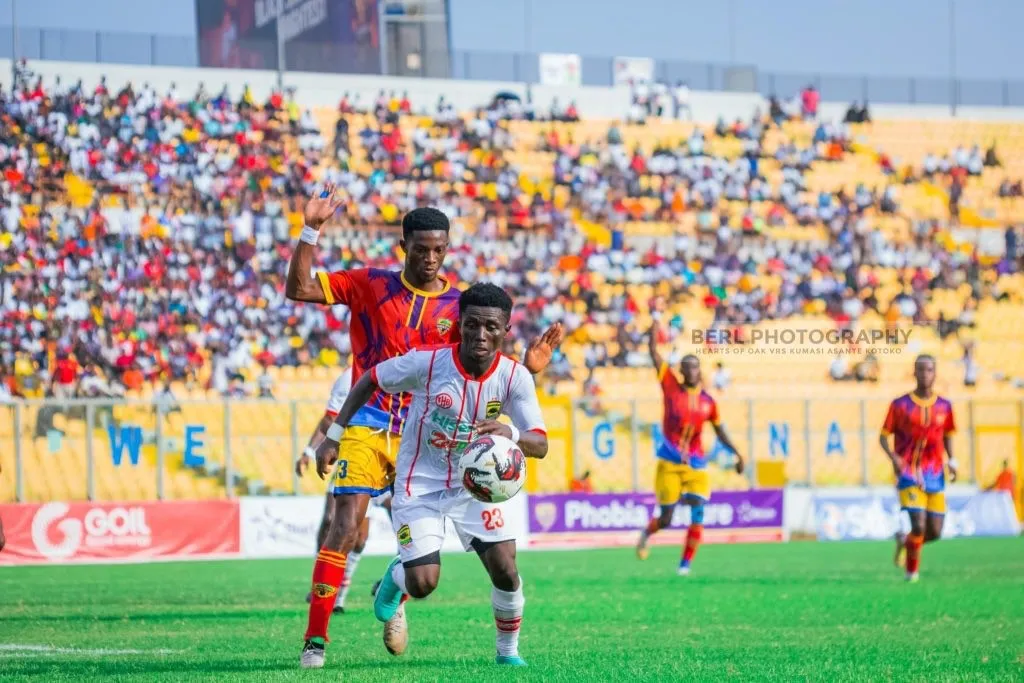
On 9 May 2001, Accra Hearts of Oak hosted Asante Kotoko in a mid-week league fixture. It was the biggest rivalry in Ghanaian football, and the context made it even bigger. Hearts were the reigning champions of Africa, fresh from their continental triumph. Kotoko had come to Accra to break their dominance.
Key Takeaways
- The disaster occurred on 9 May 2001 at the Accra Sports Stadium during a league match between Accra Hearts of Oak and Asante Kotoko.
- A memorial statue outside the Ohene Djan Sports Stadium carries the inscription "My brother's keeper." Every year on 9 May, Ghana remembers.
- Police fired tear gas into the packed stands, and fans rushed toward exit gates that were locked shut.
The stadium was packed. Over forty thousand people filled a concrete bowl built for far fewer. The crowd was a shifting sea of colours: the red, yellow, and blue of Hearts clashing against the red of Kotoko. The atmosphere was electric, the kind of charged occasion that only this fixture can produce.
The Match: A Late Comeback
Kotoko scored first. Their travelling fans erupted, and the northern stands shook with noise.
Then Hearts of Oak mounted a late comeback. Ishmael Addo, the teenage striker who had become the most feared finisher in the country, struck twice in a devastating five-minute spell. Hearts won the match 2–1.
The final whistle should have been the end of the story. It was the beginning of the disaster.
The Unrest: Seats Thrown, Then Tear Gas
Frustrated by the defeat and by refereeing decisions, a section of disappointed Kotoko fans began ripping up plastic seats from the stands and throwing them onto the running track. It was rowdy, destructive dissent. It was also the kind of post-match flare-up that stadiums across Africa and Europe had witnessed many times before. It was not, on its own, a catastrophe.
What followed was.
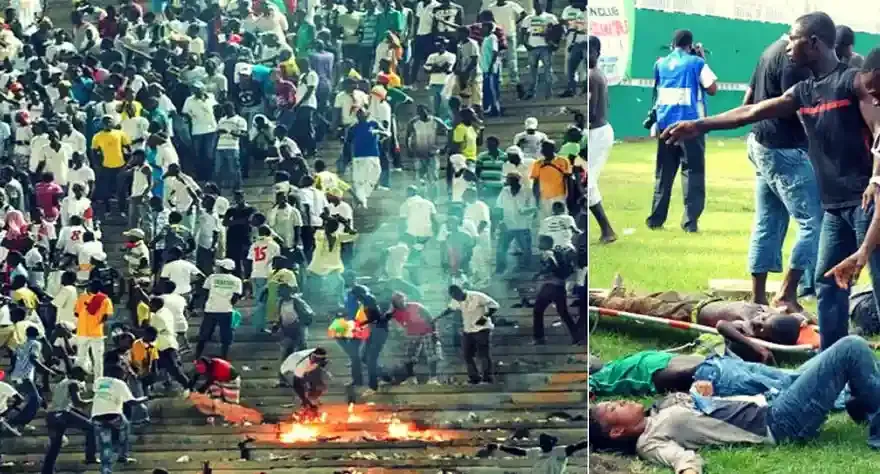
Instead of deploying standard crowd-control measures, police officers on duty fired heavy rounds of tear gas directly into the packed stands. The gas arched into the evening sky and rained down on the densely packed terraces.
The effect was immediate. The gas was blinding. It tore into lungs and burned eyes shut. Men, women, and children, gasping for oxygen they could not find, instinctively turned and surged down the dark, narrow concrete stairwells toward the exits. They ran blindly, desperate for the cool evening air outside.
The Trap: The Gates Were Locked
At the bottom of the exits, the massive iron gates were chained and locked shut.

The crowd at the back, unaware of the barrier at the front, kept pushing forward, driven by the choking chemical cloud behind them. The concourses turned into a vice. Bodies pressed against bodies, then against iron, until the sheer physics of a panicked crowd took over. The screams for help were muffled by the crushing weight of hundreds of limbs.
In the darkness of the stadium’s underbelly, friends lost grip of friends. Fathers held their sons above their heads until their arms failed. The air grew thick, not just with tear gas, but with the terrifying silence of suffocation.

When the gas finally cleared and the gates were forced open, the scoreline no longer mattered. On the concrete floor lay 126 football fans. It remains the worst stadium disaster ever recorded on the African continent.
The Aftermath: Inquiry and Legal Outcome
The government set up an official Commission of Inquiry led by Sam Okudzeto. The investigation heavily indicted the police service for their reckless use of tear gas and disproportionate force. It also indicted the stadium authorities for locking the gates.
Six police officers were charged with manslaughter. They were ultimately acquitted and discharged, because the prosecution failed to definitively prove that their specific tear gas canisters directly caused the asphyxiation of individual victims. The legal outcome did not settle the moral question. It only demonstrated how difficult it is to prove individual criminal responsibility in a mass-casualty event.
The Legacy: What Changed
The disaster permanently changed stadium operations in Ghana.
The gates must remain open. Stadium gates are now strictly mandated to remain open until the venue is completely empty. The locked-gate failure of 2001 is the reason.
Tear gas is forbidden inside stadiums. The deployment of tear gas within confined sporting arenas is now strictly prohibited.
These are not abstract regulations. They are written in the memory of the 126 people who died because the gates were locked and the gas was fired.
The Memorial: “My Brother’s Keeper”
Every year on 9 May, Ghana pauses to remember the 126 lives lost. A commemorative statue stands outside the renamed Ohene Djan Sports Stadium in Accra. It features a fan carrying a distressed friend, under the solemn inscription: “My brother’s keeper.”
The statue is not just a monument. It is a reminder that the people who died were not strangers to one another. They were friends, brothers, colleagues, and supporters who had come together to watch a football match. In the panic, they tried to help each other. The inscription captures that instinct, and it captures the failure of the authorities who were supposed to protect them.
Why the Story Still Matters
The Accra Sports Stadium disaster is the darkest chapter in African sports history, but it is also a case study in how crowd safety fails.

The unrest was minor. The response was disproportionate. The infrastructure was inadequate. The gates were locked. Each of these failures was avoidable. Together, they produced a catastrophe that no football match should ever produce.
The disaster is taught in safety and crowd-management training because the lessons are universal. A crowd is not a threat to be controlled by force. It is a body of people who need clear exits, open gates, and a safe route out when something goes wrong.
Twenty-five years later, Ghanaian football remembers. The statue outside the stadium remembers. The families who lost someone remember. And the inscription, “My brother’s keeper,” asks a question that every stadium authority in Africa should answer honestly: when the crowd surges, will the gates be open?
Quick Facts
The disaster occurred on 9 May 2001 at the Accra Sports Stadium during a league match between Accra Hearts of Oak and Asante Kotoko. Hearts won the match 2–1, with Ishmael Addo scoring twice. The unrest began when a section of Kotoko fans threw plastic seats onto the running track. Police fired tear gas into the packed stands. The crowd surged toward exits that were locked shut. 126 people died in the crush. It remains the worst stadium disaster in African history. The Commission of Inquiry was led by Sam Okudzeto. Six police officers were charged with manslaughter and later acquitted. Stadium gates are now mandated to remain open until the venue is empty. Tear gas is prohibited inside stadiums. A memorial statue outside the Ohene Djan Sports Stadium carries the inscription “My brother’s keeper.” Every year on 9 May, Ghana remembers.
Frequently Asked Questions
1. What was the Accra Sports Stadium disaster?
It was a stampede on 9 May 2001 during a league match between Hearts of Oak and Asante Kotoko. Police fired tear gas into the packed stands, and fans rushed toward exit gates that were locked shut. 126 people died.
2. How many people died in the disaster?
126 football fans lost their lives. It remains the worst stadium disaster ever recorded on the African continent.
3. What caused the stampede?
The stampede was triggered by police firing tear gas directly into the packed stands. The crowd surged toward the exits, but the iron gates were chained and locked shut.
4. Who was responsible for the disaster?
The Commission of Inquiry led by Sam Okudzeto indicted the police service for the reckless use of tear gas and disproportionate force, and the stadium authorities for locking the gates.
5. Were the police officers prosecuted?
Six police officers were charged with manslaughter. They were ultimately acquitted and discharged because the prosecution failed to definitively prove that their specific tear gas canisters caused the asphyxiation of individual victims.
6. What changed after the disaster?
Stadium gates are now strictly mandated to remain open until the venue is completely empty. The deployment of tear gas inside confined sporting arenas is strictly prohibited.
7. What is the memorial inscription?
A commemorative statue outside the Ohene Djan Sports Stadium features a fan carrying a distressed friend, under the inscription “My brother’s keeper.”
8. When is the disaster remembered?
Every year on 9 May, Ghana pauses to remember the 126 lives lost.
9. What was the score of the match?
Hearts of Oak won 2–1, with Ishmael Addo scoring twice in a late comeback after Kotoko had taken the lead.
10. Why did the fans throw seats?
A section of disappointed Kotoko fans began ripping up plastic seats and throwing them onto the running track in protest at the defeat and refereeing decisions. That unrest was the trigger for the police response, but it was not the cause of the deaths
Source: Accra Street Journal
Last Updated on November 8, 2026 by Samuel Kwame Boadu
🏟️ Discover More Sports Stories
Looking for more in-depth sports news, interviews, and features? Visit Accra Sports News — your go-to for exclusive sports content in Ghana and beyond.
Disclaimer: Some content on Accra Street Journal may be aggregated, summarized, or edited from third-party sources for informational purposes. Images and media are used under fair use or royalty-free licenses. Accra Street Journal is a subsidiary of SamBoad Publishing Hub under SamBoad Business Group Ltd, registered in Ghana since 2014.
For concerns or inquiries, please visit our Privacy Policy or Contact Page.

Samuel Kwame Boadu is a Ghanaian media entrepreneur and storyteller with a passion for amplifying urban voices and uncovering everyday truths. He is the Editor-in-Chief and Founder of Accra Street Journal, a dynamic digital platform dedicated to capturing the pulse of Ghana’s capital—its people, culture, challenges, business, sports and innovations.
Use the following reference when citing or referencing this article.
Your feedback helps us improve our journalism.
Report an Error
Help us maintain accuracy. Let our editorial team know if you spot an issue in this article.
Report a problem with this article