


Sending a parcel from Ghana to another country is not simply a matter of handing it to a courier. The process involves export declarations, regulatory permits for certain goods, and a choice between the national postal service and private international couriers. The paperwork is non-negotiable, and the cost varies sharply depending on the carrier, the destination, and the weight of the parcel. Here is the complete ASJ guide.
Step 1: Understand the Export Declaration Requirement
Every export from Ghana must be covered by a customs declaration. The Ghana Revenue Authority is explicit: “All exports are required by Customs laws and regulations to be covered by a declaration” . This applies whether you are sending a small parcel through Ghana Post or a commercial shipment through DHL.

Who Needs to Register
If you are exporting goods as a business, you must be registered with the Registrar-General’s Department and the Ghana Export Promotion Authority (GEPA) to obtain an exporter number. You also need a Taxpayer Identification Number (TIN) or Ghana Card PIN .
📢 GET A DETAILED ARTICLES + JOBS
Join ASJ's WhatsApp Channel and never miss a post or opportunity.

For individuals sending a one-off parcel, the process is simpler, but the declaration is still required.
The Documents Required
The GRA lists the following for export declarations :

-
Bank of Ghana Foreign Exchange Form (FXD Form A) – obtained from your bank
-
Permits or certificates from the relevant issuing institution, depending on the goods (e.g., Ghana Standards Authority for processed goods, Phytosanitary Certificate for agricultural produce, FDA permit for pharmaceuticals)
-
Customs Declaration lodged through the ICUMS/UNIPASS platform
-
Letter of Commitment (LOC) from an authorised commercial bank
-
Bill of Lading or Airway Bill, invoices, and packing list
-
Certificate of Origin for goods entering the EU under preferential tariff arrangements
The declaration is submitted electronically, and the goods are presented to Customs for examination before release .
What Cannot Be Exported
Prohibited goods cannot be exported under any conditions. The GRA does not provide an exhaustive list in the search results, but narcotics, counterfeit goods, and pornographic material are standard prohibitions. Certain goods require specific permits—wildlife requires a CITES permit, human remains require a death certificate, and antiques require a Museum and Monuments Authority permit.
Step 2: Choose Your Carrier
You have two broad categories of carrier: the national postal service (Ghana Post/EMS) and private international couriers (DHL, FedEx, UPS).
Ghana Post / EMS
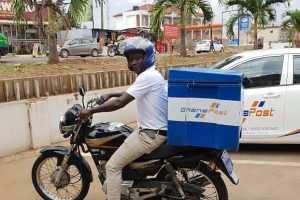
Ghana Post is the national postal operator and the most affordable option for small parcels. It handles outbound international mail through the EMS network. The search results do not include Ghana Post’s specific outbound international rate table, so you will need to visit a post office or check the Ghana Post website for current tariffs.
What to know: EMS deliveries to Accra are typically within 2 days of arrival, and other regions within 3–7 days, plus 48 hours for customs clearance . This is the inbound timeline; outbound times will depend on the destination country’s postal system.
Private Couriers (DHL, FedEx, UPS)
These are faster and offer full tracking and door-to-door service, but they are significantly more expensive. The indicative prices below are for parcels sent to Ghana from Europe, which gives a sense of the carrier’s cost profile. Sending from Ghana will be broadly similar in magnitude, though you should confirm exact outbound rates with the local carrier office.
| Carrier | 2 kg (Indicative) | 5 kg (Indicative) | 10 kg (Indicative) | Transit Time |
|---|---|---|---|---|
| DHL Express | €70 | €115 | €195 | 1–2 days |
| FedEx | €64 | €106 | €179 | 1–3 days |
| UPS | €28 | €46 | €78 | 14–22 days (standard) |
Note: The UPS figures are for standard service, not express. DHL and FedEx figures are express. Actual prices depend on the destination, dimensions, and current fuel surcharges. Always get a quote from the local Ghana office.
Step 3: Prepare Your Documentation
The single biggest cause of customs delays is inaccurate or missing documentation. The GRA and international carriers are consistent on this point.
The Commercial Invoice
This must be in English and include an accurate description of the goods, the declared value in the correct currency, the HS code (tariff number), the country of origin, and the Incoterm (who pays the duty—DDU or DDP). For DHL Express, a customs tariff number is mandatory .

The Customs Declaration Form
Depending on the value and the carrier, you will need either a CN22 (for low-value parcels) or a CN23 (for higher-value parcels). The CN23 is required for EMS shipments and must be completed in English or French . Without the correct form, the parcel may be held at customs.
Permits for Restricted Goods
If you are sending food, agricultural products, pharmaceuticals, or chemicals, you need the relevant permit from the issuing Ghanaian authority before the parcel can be exported .
Step 4: Package and Label the Parcel
Packaging must be sturdy enough for international handling. Pad fragile contents double. The courier will weigh and measure the parcel; if the dimensions are different from what you declared, a price correction may apply .
The label must have the recipient’s full address, contact phone number, and email address. Providing the recipient’s contact details speeds up customs clearance and increases the probability of delivery .
Step 5: Understand the Costs
The total cost of sending a parcel from Ghana abroad has three components:
1. Freight cost. This is the carrier’s charge, based on weight and destination. For small parcels, Ghana Post is the cheapest. For urgent or high-value items, DHL or FedEx are faster but more expensive.
2. Export documentation costs. The customs declaration itself is lodged through ICUMS. There may be fees for permits or certificates, depending on the goods.
3. Destination country duties and taxes. These are paid by the recipient, not the sender, unless you have agreed to DDP terms. The destination country will apply its own import duty, VAT, and other charges. For example, Ghana (as a destination) applies VAT at 15% plus NHIL and GETFund, with no de minimis threshold . The destination country’s rules will differ.
What About Prohibited Items?
The GRA prohibits the export of certain goods, and the destination country will have its own list of prohibited imports. Common restrictions include:
-
Batteries – DHL Express prohibits the transport of batteries of any kind on certain services
-
Pharmaceuticals – require an FDA Ghana permit
-
Wildlife and plants – require CITES or phytosanitary certificates
-
Currency and valuable items – international insured parcel services may not accept money, activated payment cards, or precious metals
Check both the Ghanaian export rules and the destination country’s import rules before packaging.
ASJ Bottom Line
Sending a parcel from Ghana abroad requires a customs declaration, accurate documentation, and a carrier choice that balances cost against speed. For small, non-urgent parcels, Ghana Post is the most affordable route. For time-sensitive or high-value items, DHL or FedEx offer speed and tracking at a premium.

The most common reason parcels get stuck is not the carrier—it is the paperwork. An inaccurate commercial invoice, a missing permit, or an undeclared item will hold the parcel at customs, regardless of how much you paid for shipping. Prepare the documents before you pack the box.
Quick Facts
| Topic | Details |
|---|---|
| Export Declaration | Mandatory for all exports |
| Platform | ICUMS/UNIPASS |
| Business Registration | Registrar-General + GEPA |
| Tax ID | TIN or Ghana Card PIN |
| Customs Form | CN22 (low value) or CN23 (higher value) |
| DHL Express (5 kg) | ~€115, 1–2 days |
| FedEx (5 kg) | ~€106, 1–3 days |
| Ghana Post EMS | Most affordable; confirm rates locally |
Frequently Asked Questions
1. Do I need a customs declaration to send a parcel from Ghana?
Yes. The GRA states that all exports must be covered by a customs declaration, lodged through the ICUMS/UNIPASS platform .
2. What documents do I need for an export declaration?
You need a Bank of Ghana FXD Form A, any required permits or certificates, a Letter of Commitment from a bank, the Bill of Lading or Airway Bill, invoices, packing list, and a Certificate of Origin where applicable .
3. Which carrier is cheapest for sending a parcel from Ghana?
Ghana Post is generally the most affordable option for small, non-urgent parcels. Private couriers like DHL and FedEx are faster but more expensive. Confirm current Ghana Post outbound rates at a branch.
4. How much does DHL Express cost from Ghana?
Indicative pricing for a 5 kg parcel to Ghana (inbound) is around €115 for 1–2 day delivery . Outbound rates from Ghana will be similar in magnitude; confirm with the local DHL office.
5. What is the CN23 form?
It is the customs declaration form required for higher-value parcels and EMS shipments. It must be completed in English or French .
6. Can I send food items from Ghana abroad?
Yes, but you need the relevant permits. Agricultural produce requires a Phytosanitary Certificate from the Plant Protection and Regulatory Service. Processed goods may require a Ghana Standards Authority permit.
7. Are batteries prohibited in international parcels from Ghana?
DHL Express prohibits the transport of batteries on certain services . Check with your chosen carrier before packaging items containing batteries.
8. Who pays the customs duty in the destination country?
Unless you have agreed to DDP (Delivered Duty Paid) terms, the recipient pays the destination country’s import duty and taxes. Confirm the terms with the sender and the carrier before shipping.
9. How long does it take to send a parcel from Ghana to the UK?
Transit times vary by carrier. Express couriers typically deliver in a few business days. Standard postal services take longer. The destination country’s customs clearance adds time.
10. Do I need to register as a business to export from Ghana?
For commercial exports, yes. You must register with the Registrar-General’s Department and GEPA, and obtain a TIN or Ghana Card PIN . For one-off personal parcels, the process is simpler but the declaration is still required
Source: Accra Street Journal
Last Updated on November 1, 2026 by Samuel Kwame Boadu
Disclaimer: Some content on Accra Street Journal may be aggregated, summarized, or edited from third-party sources for informational purposes. Images and media are used under fair use or royalty-free licenses. Accra Street Journal is a subsidiary of SamBoad Publishing Hub under SamBoad Business Group Ltd, registered in Ghana since 2014.
For concerns or inquiries, please visit our Privacy Policy or Contact Page.

Samuel Kwame Boadu is a Ghanaian media entrepreneur and storyteller with a passion for amplifying urban voices and uncovering everyday truths. He is the Editor-in-Chief and Founder of Accra Street Journal, a dynamic digital platform dedicated to capturing the pulse of Ghana’s capital—its people, culture, challenges, business, sports and innovations.